Person Jennifer McCabe Trial 1Trial 2← All People
🗣️ Witness

Jennifer McCabe

Also known as: Jen McCabe

Trial 1Trial 2

Testimony Impact

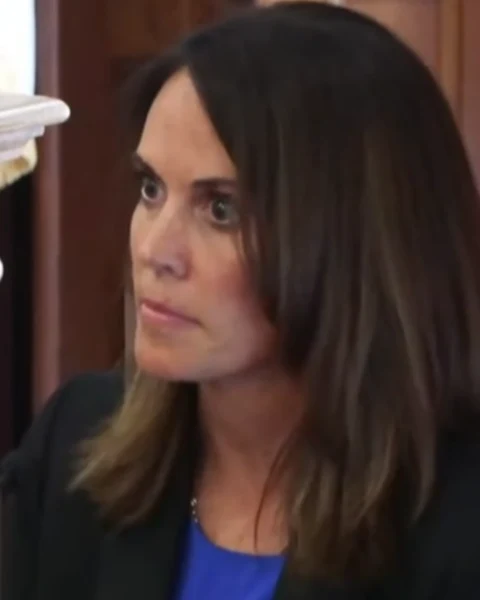
Jennifer McCabe is the sister-in-law of Boston Police officer Brian Albert, at whose Canton home John O'Keefe's body was found on January 29, 2022. She was among the group at the Waterfall bar that night and accompanied Karen Read and Kerry Roberts to 34 Fairview Road when O'Keefe was discovered. McCabe testified as a central prosecution witness in both trials, covering the events from the bar through the 911 call she placed, Karen Read's statements at the scene, and a Google search for hypothermia that became one of the most contested pieces of evidence in the case. Her testimony spans 5 proceedings in Trial 1 and 8 in Trial 2, making her the most extensively examined witness across both trials.

Trial 1 vs Trial 2

Trial 2 significantly expanded the cross-examination, stretching across three days (Days 7–8) compared to Trial 1's two (Days 15–16), with Jackson introducing additional Cellebrite data, GPS location records, and federal investigation materials not fully developed in the first trial. The prosecution in Trial 2 also devoted more time to direct examination — spanning Days 6 and 7 — to pre-emptively address the Google search and the 'I hit him' attribution before Jackson could challenge them. The recross in Trial 2 zeroed in more precisely on the absence of the declarative confession from any contemporaneous record, walking through six specific grand jury passages, whereas Trial 1's recross focused more broadly on deleted communications and McCabe's reaction to Kerry Roberts's cooperation.

Notable Quotes From The Record

“She proceeds to scream my name multiple times and she tells me that John didn't come home, they got into a fight, and that she left him at the Waterfall.”

Establishes Read's initial account to McCabe — that she and O'Keefe fought and she left him at the bar.

“She was saying, 'Did I hit him? Could I have hit him?' And then she proceeded to say that she had a cracked tail light.”

Links Read's concern about hitting O'Keefe to the physical evidence of tail light damage on her vehicle.

“I saw Kerry wiping the snow off of John's face, and I could not believe that that was John laying there.”

Establishes the condition of O'Keefe's body — lying flat on his back, covered in snow — when discovered.

“When she spoke to the paramedic it was crystal clear: 'I hit him.'”

McCabe distinguishes between Read's earlier equivocal questions and this definitive statement to the EMT, which the prosecution treats as an admission.

“She grabbed my hands and she said, 'Google hypothermia. Google how long it takes to die in the cold.'”

The Google search became one of the most contested pieces of evidence in the case, with the defense alleging it was actually made hours earlier at 2:27 AM.

“I'm not sure if it's in this document, but I can tell you — Today, with 100% clarity, she said 'I hit him, I hit him, I hit him' on that morning.”

McCabe insists on Read's declarative confession despite Jackson showing it appears nowhere in her grand jury testimony where she described Read's statements twelve times.

“She is telling them everything”

Group chat message McCabe sent to Brian Albert, Nicole Albert, and Matt McCabe while Kerry Roberts was being interviewed by police — evidence of witness monitoring.

“That's a very brief report.”

McCabe's response to the Lank report discrepancy — dismissing the documentation rather than explaining the contradiction

“Hos long to die in cold.”

McCabe reads aloud the Google search phrase from the Cellebrite extraction, confirming its existence on her phone

“I did not delete that search. I never made that search at 2:27. I never would have left John O'Keefe out in the cold to die, because he was my friend that I loved.”

McCabe's most direct denial of the defense's core allegation

“I went into what I already had open.”

McCabe explains she reused an existing Safari tab for the 6 AM Google search, supporting the prosecution theory that the 2:27 AM timestamp is a database artifact rather than a separate search.

“It changed multiple times. I'm not sure exactly. She said — oh, at one point, 'Oh my God, I don't even remember going there.' She was telling other people that he was dead, that a plow hit him. The story changed multiple times that morning.”

Establishes Karen Read gave multiple inconsistent accounts of what happened, undermining her credibility.

“I told them that Karen looked straight at me and said 'I hit him, I hit him, I hit him,' and I said that there was — I believe an EMT that overheard as well.”

McCabe confirms she testified consistently about the 'I hit him' statement in a prior June 2023 proceeding, addressing the cross-examination challenge that the statement was absent from earlier accounts.

“She said, 'Google hypothermia, Google how long it takes to die in the cold.' She was shaking me, screaming at me to do it.”

Reinforces McCabe's account that Karen Read initiated the Google search, not McCabe acting on her own knowledge.

“I have MS and I have, you know, issues with my hands, so I a lot of times Google and make errors. But the cold also makes my hands go completely numb, so I'm not surprised that that's how it would come out.”

Provides an explanation for the misspellings in the Google search, attributing them to her MS condition and cold weather rather than panicked typing at 2:27 AM.

“I didn't claim it's awful. It is awful.”

Shows McCabe pushing back against Jackson's characterization, reflecting the adversarial dynamic of this recross.

“Under oath, correct.”

McCabe concedes the "I hit him" attribution first appeared under oath in June 2023, implicitly acknowledging it was absent from all prior accounts.

“Because I wouldn't have seen him. I didn't know he was there. She did.”

McCabe maintains Read knew O'Keefe's location, central to both prosecution's consciousness of guilt theory and defense's counter-narrative.

“Because I loved John and I liked Karen.”

Establishes McCabe's relationship with both the victim and the defendant, framing her as a neutral witness rather than aligned against Read.

“She started saying, 'Could I have hit him? Did I hit him? I don't.' And then she was just all over the place, like screaming my name, screaming so many different things.”

Core prosecution evidence — Read's repeated statements suggesting she may have struck O'Keefe with her vehicle.

“I saw it in a few different locations... I saw the vehicle first straight out from the front door. Then I saw it up at the flag pole and then I saw it further up from the flag pole.”

Places Read's SUV at multiple positions near where O'Keefe's body was later found, supporting the prosecution theory that Read was near the scene.

“I just remember when I was doing the compressions... it just wasn't like normal. I can't think of how to describe the way it felt when I was trying to press down, but it was like resistance.”

Describes the physical condition of O'Keefe's body, consistent with prolonged cold exposure.

“It wasn't until I got very close over to them that I saw Kerry removing the snow from John's face.”

Establishes the poor visibility conditions and the moment of discovery — McCabe could not see O'Keefe's body until she was very close, relevant to her earlier inability to see anything on the lawn from inside the house.

“At that point, Miss Read started yelling and pulling on me to Google hypothermia and Google how long it takes for somebody to die in the cold.”

McCabe attributes the Google search entirely to Read's request, placing it after police arrival while outside the cruiser.

“I have multiple sclerosis. So when I am out in either extremely hot or cold temperatures, I lose the feeling and sensation in my fingers, which obviously made the googling very hard for me to do because of my motor skills.”

McCabe explains the misspelled search ('hos long to die in cold') and why she may have made multiple search attempts.

“She told the first responder, 'I hit him. I hit him. I hit him.'”

McCabe's account of Read's admission to the female first responder — a central disputed fact in the case.

“I think after the second or third time she was saying it, I was like, 'Karen, Karen, like what are you saying?'”

McCabe frames her reaction to Read's admission as concern for Read rather than belief in guilt, portraying herself as protective.

“Little by little as I sat there, things started coming back to me that had been said to me earlier.”

McCabe explains the delayed recall of Read's 'I hit him' statement — she says it came back to her while sitting at the Albert house processing events.

“Karen called us for help and we both answered the phone.”

McCabe frames the witness coordination with Roberts as trauma bonding rather than story alignment.

“We've grown into friends where we talk about many other things besides the case.”

McCabe admits to hundreds of conversations with Roberts about the case over three years while trying to minimize them as normal friendship.

“I explained that I had forgotten to mention a couple of people that I had reached out to.”

McCabe's explanation for lying to federal investigators — claiming she forgot calling Brian Albert, Peggy O'Keefe, and the DA's office just 30 minutes earlier.

“I don't remember seeing the dog. Doesn't mean it wasn't there or it was there. I just don't remember seeing it.”

McCabe cannot account for the Alberts' German Shepherd when she entered the house at 6:40 AM, which Jackson uses to suggest something was different inside the house.

“So there are different, you know, police officers getting statements from us, and at one point I'm standing with Miss Read and she's saying, 'Did I hit him? Could I have hit him?' And there was, I believe, an EMT, a female, standing right next to me, listening to her yelling, 'Did I hit him? Could I have hit him? Is he dead? Is he dead? Is he dead?' Was pretty non-stop.”

McCabe's own grand jury testimony in the EMT scene — the same scene where she now claims Read said 'I hit him' three times — attributes only questions to Read, not declarations

“It took me hours and in some cases days to remember all the things that Miss Read had said. My mind — I was in a state of shock. But the minute I remembered she said, 'I hit him, I hit him, I hit him,' I called Officer Lank.”

McCabe's explanation for the discrepancy — she claims delayed recall due to shock — which Jackson then undercuts by noting Lank's report also omits 'I hit him'

“Kerry talked to the cops and kept it simple.”

McCabe's text to Nicole Albert on the evening of January 29th suggests awareness of and interest in how witnesses were presenting information to police.

“Eating, I assume. Ask Chris to ask some questions. Tell them the guy never went into the house.”

Matt McCabe directing Chris Albert to tell Channel 4 reporters that John O'Keefe never entered 34 Fairview — a central disputed fact in the defense theory.

“I love it.”

McCabe's response to Matt McCabe's observation that Kerry Roberts 'could write a book' during her police interview, suggesting McCabe was pleased with the content Roberts was providing to investigators.

“She is telling them everything.”

McCabe texted this to the family group chat while Kerry Roberts was being interviewed by state police in McCabe's house, demonstrating real-time monitoring of a witness interview.

“My memory is we did drive from One Meadows. I know what this piece of paper says. I'm telling you that my memory is we left Meadows and went down Fairview and then went to Michael Lank's, but this paper is saying we stopped at my house first. I don't remember that.”

McCabe acknowledges GPS records contradict her testimony but maintains her memory differs from the documented evidence, highlighting the tension between her account and objective location data.

“I think I was going back and forth to the door. I was texting him. I think I put my phone in my pocket. I think I inadvertently maybe called him.”

McCabe's 'butt dial' explanation for seven missed calls in 19 minutes, which Jackson systematically dismantles by walking through iPhone mechanics.

“Yes. And I stand by that 110%.”

McCabe's emphatic but uncorroborated insistence that Read demanded the Google search.

“No, I told them everything I knew.”

McCabe affirms she was never evasive with police, countering defense suggestions of concealment

“I was relaxed. Just playing on my phone, looking at things before I went to bed.”

Contrasts her calm state at 2:27 AM with the panic of the morning, supporting the prosecution theory that the Google search occurred at 6:23 AM, not 2:27 AM

“Miss Read asked me to Google it.”

Direct testimony attributing the 'how long to die in cold' search to Karen Read's request

“We never went in.”

Clarifies the January 30 Fairview drive-by was not a visit inside the house, countering the implication she returned to coordinate with the Alberts

“My mind is racing. I have that awful feeling in my gut like I am about to puke. Besides seeing the awful image, trying to wrap my head around what happened to him.”

Text message from January 29 presented to show genuine distress rather than calculated behavior

“Correct. I welcomed them in my house, sat with them, and then I stopped. And then I met with them a few times after, and I answered all their questions that they asked. I helped clear up some misconceptions that they had been told, and as you know, they're no longer investigating. So I think I helped them well.”

McCabe's unsolicited editorial about federal investigators no longer investigating draws attention to the federal probe

“Correct. I said I'm going to stop and I'm going to seek some counsel. Yes.”

Admits she terminated the federal interview and sought counsel, undermining redirect's portrayal of full cooperation

Key Moments

Locations Touched By This Testimony

Appearances (13)