Person David Yannetti Trial 1Trial 2← All People
🛡️ Defense · Defense team

David Yannetti

Trial 1Trial 2

Courtroom Impact

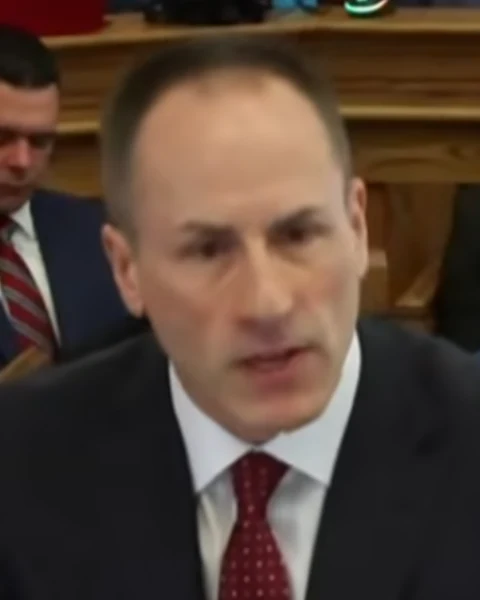
David R. Yannetti is a Boston-based criminal defense attorney and one of Karen Read's two lead trial counsel alongside Alan Jackson and Elizabeth Little. Yannetti delivered the defense's opening statement in Trial 1, laying out the theory that Read was framed by people connected to the Albert family and lead investigator Trooper Michael Proctor. Across 69 proceedings in both trials, he handled a broad portfolio of cross-examinations — first responders, eyewitnesses, Albert family members, law enforcement, and forensic witnesses — using a methodical, leading-question style focused on extracting favorable admissions rather than confrontational attacks. His cross-examinations consistently advanced two pillars of the defense case: establishing the Albert family's deep ties to Canton law enforcement, and documenting what witnesses did and did not observe on the front lawn of 34 Fairview Road in the early morning hours of January 29, 2022.

Notable Quotes From The Record

“Karen Read was framed. Her car never struck John O'Keefe. She did not cause his death. And that means that somebody else did.”

The defense thesis stated plainly in the opening line.

“He told his friends that he was searching her phone for nude photos of Karen Read, and he was disappointed he hadn't found any yet. That is the professional and unbiased investigator who was chosen to lead the investigation into the death of John O'Keefe.”

Establishes Proctor's misconduct and bias as the lead investigator to undermine the credibility of all evidence he collected.

“Michael Proctor assured his buddies that the homeowner would not catch a lot of grief because, quote, 'the homeowner's a Boston cop, too.'”

Proctor's own words used to demonstrate investigative bias favoring the Albert family.

“Jennifer McCabe typed in the following Google search: 'how long did die in the cold.' Now she misspelled the first word, so the actual search was 'H-O-W long to die in the cold,' but you'll get the point.”

Central piece of the defense case — a Google search made hours before O'Keefe's body was found, suggesting foreknowledge.

“Brian Loughran confirms that at about 2:30, when he went by that house, John O'Keefe was not on that front lawn.”

Eyewitness testimony directly contradicting the Commonwealth's timeline that O'Keefe was struck and left on the lawn around 12:30 a.m.

“And it's fair to say that at no point in time did you ever hear her say "I hit him, I hit him, I hit him"? Correct?”

Directly challenges the prosecution's theory that Karen Read made an admission at the scene.

“And that is because the truth does not change? Correct?”

Yannetti uses Kelly's own consistency to frame his account as the reliable version of events.

“I just want to ask you about the woman that you saw on scene who appeared to be screaming and crying — would you agree with me that she stood out to you because she appeared to be the most upset?”

Frames the woman's emotional state as the central takeaway from this witness's testimony

“And what you heard her say — I understand your testimony was that she just said 'is he alive,' correct?”

Emphasizes that her only words were a desperate question about O'Keefe's condition, suggesting genuine concern

“it was the statements that you heard repetitively, over and over and over again: 'Is he dead? Is he dead? Is he dead? Is he dead?'”

Yannetti frames Read's repeated question as the only substantive statement she made — emphasizing grief and shock rather than any incriminating admission.

“Your memory of what Karen Read told you about whether she had had anything to drink the night before would have been much better on February 14th of 2022 when you were talking to Trooper Michael Proctor than it would be today, correct?”

Sets up the prior statement impeachment by establishing the witness's own memory was better closer to the event.

“She didn't specify whether it was a text message exchange back and forth?”

Part of a systematic series establishing that Read's mention of a last interaction had zero detail about its nature.

“And she didn't specify whether it was an angry voicemail that she left?”

Final question in the series, highlighting that the prosecution cannot characterize the 'argument' based on Becker's testimony.

“And he turned around — well, I'll just cut to the chase. You all ended up charging him with a misdemeanor?”

Establishes the lenient outcome — misdemeanor for a hit-and-run with possible impairment

“Is there anything on Exhibit 44 — that face sheet of your report — that indicates that it applies to some supplemental report that was later filed?”

Establishes that the altered report contains no disclosure that the photo was added later, making the modification appear deceptive.

“Sergeant Lank was actually able to follow the trail of fluid from the accident scene right to 34 Fairview, correct?”

Establishes that 34 Fairview Road was directly linked to Tim Albert's hit-and-run by physical evidence — reinforcing the address's repeated connection to criminal matters.

“Despite the fact that he was charged, are you aware that the case was just flat out dismissed upon restitution?”

The question itself — though stricken — plants the suggestion that the Albert family received lenient treatment despite strong evidence of criminal conduct.

“There was nothing about her demeanor or her interaction with you that would lead you to believe that she was under the influence of alcohol at that time?”

Capstone question establishing Read appeared sober, with Roberts answering no.

“But if I suggested to you that there was a receipt for a total of $16.58 worth of drinks, and John put a tip down of ten bucks, that would be — a pretty good tip, right?”

Establishes O'Keefe's relaxed, generous demeanor that evening — consistent with someone in a normal social mood.

“And with regard to the group that came in — the receipts for which you were shown today — nobody really seemed highly intoxicated to you, correct?”

Establishes that the Albert group, including key figures in the case, did not appear highly intoxicated to a trained bartender.

“You would agree with me that your brother Brian Albert only moved from Canton after John O'Keefe was found dead on his front lawn?”

Establishes that Brian Albert left Canton after the incident, suggesting consciousness of guilt.

“One of your wife's best friends is Michael Proctor's sister, Courtney Proctor, correct?”

Establishes a direct personal connection between the Albert family and the lead investigator's family.

“When you spoke to Trooper Proctor on February 10th, 2022, you would agree with me that you never mentioned that Colin Albert was at your brother Brian's house that night.”

The closing question — Chris withheld from investigators that his teenage son was at the house where O'Keefe was found dead.

“Were you using Courtney Proctor as an intermediary to communicate with Michael Proctor about this case?”

Directly alleges a back channel between the witness family and the lead investigator

“Are you aware that between February 1st of 2022 and September 6th of 2022, you and Courtney Proctor spoke by phone 67 times?”

Confronts Albert with phone records contradicting her claim of rare contact with Proctor's sister during the investigation period

“You spoke to Courtney Proctor three times that day before my client's publicly televised arraignment at 9:00 a.m., did you not?”

Suggests Albert had advance knowledge of or was communicating about case developments through the Proctor connection

“Rarely doesn't mean to you 67 phone conversations within a 7-month period, does it?”

Directly impeaches Albert's prior testimony characterizing her calls with Courtney Proctor as 'rare' against documented phone records showing frequent contact.

“And one last question — you were interviewed by Trooper Proctor, and it's fair to say you never told him that Colin was there that night, correct?”

The culminating question of the cross — establishing that Albert withheld from the lead investigator that her son was at the house where O'Keefe was found dead.

“We have a witness who has admitted that her statement has evolved, and she's admitted that her statement evolved after she learned the identity of the house that she was at, which happens to be the house that Caitlin Albert grew up in.”

Core of the defense impeachment theory — connecting McLaughlin's changing testimony to the Albert family relationship

“Katie McLaughlin's testimony, you know, it's like she's wearing a suit of armor. We can't get through it. We have the tools and the evidence to get through it.”

Defense framing the stakes of the evidentiary ruling for effective cross-examination

“McCabe herself testified in the grand jury that that's not what happened— that she said at that moment, 'Did I hit him? Could I hit him?'”

Defense highlighting the critical discrepancy between McLaughlin's account and McCabe's grand jury testimony about Read's exact words

“So if somebody testified that you hadn't seen each other in three years prior to January 29th of 2022, that would be wrong, right?”

Directly impeaches prior testimony about the McLaughlin relationship using photographic evidence

“That was the first time you've ever said that — just now, before this jury — would you agree with that?”

Highlights that Albert's claim Tristin planned to make multiple round trips was never previously disclosed in two and a half years

“Did you see 45 pieces of red tail light plastic?”

Core defense point — Albert walked out the front door facing the lawn and saw no physical evidence

“Two years ago would be May 14th of 2022 — three years ago would have been May 14th of 2021, correct?”

Pins the Proctor children encounter to a date range contemporaneous with or just before O'Keefe's death, undermining the redirect's framing of it as distant and insignificant.

“Were you and the Alberts and the McCabes celebrating the indictment of Karen Read?”

Provocative question about the Ned Devine's photo, sustained on objection but heard by the jury, linking the families' social gathering to the case timeline.

“And you certainly did not see a 6'2" man on the lawn of your girlfriend's parents' home, correct?”

The culminating question in a sequence establishing that none of the physical evidence or the victim was visible when Morris was at the scene.

“Did you see a 6'2", 220-pound man sprawled out right in front of you on that lawn?”

The central question of the cross — if O'Keefe was on the lawn at 2 AM, four people walked past without noticing.

“Did you see 45 pieces of red plastic?”

References taillight debris that was later found on the lawn — its absence at 2 AM challenges the prosecution timeline.

“And the second time that Matt McCabe came out, he didn't point at anything in the front lawn, correct?”

Establishes that Matt McCabe exited the house twice and noticed nothing, doubling the observation opportunity.

“You never saw that car back up, correct?”

Directly challenges the prosecution theory that Karen Read's SUV reversed into O'Keefe — Nagel observed the vehicle only moving forward.

“Who was that?”

Sets up the reveal that Jennifer McCabe — a fellow witness, not an investigator — was the one who collected Nagel's text message screenshots.

“And you did not notice any broken tail light on that SUV, correct?”

Key defense point — witness with headlights aimed at the SUV's rear from 20 yards saw no broken taillight.

“And you never saw anybody lying outside that SUV, is that fair to say?”

Final question establishing no person was visible outside the SUV when this witness departed the scene around midnight.

“You're also aware that it is possible to change the timestamp on any individual message, correct?”

Core question of the voir dire — challenging the reliability of timestamp evidence from McCabe's phone

“In fact, all of 2022, no investigator ever approached you to say, 'Can I have a copy of that screenshot,' correct?”

Establishes that law enforcement never sought this evidence for over a year despite an active homicide investigation.

“But if you had changed the time on that from a screenshot, we'd have no way of knowing, correct?”

Establishes that the screenshot evidence is unverifiable since no phone extraction was ever performed.

“And when you looked out at that black SUV and saw the v-shaped tire tracks, you did not see a 6'2" man lying on the front lawn, correct?”

Central defense point — McCabe had clear sightlines to the lawn and saw nothing, raising questions about when O'Keefe ended up there.

“And then you texted your wife, Brian Albert, and Nicole Albert — quote: "Tell them the guy never went in the house" — correct?”

Establishes McCabe was actively directing the group on what narrative to convey about O'Keefe's whereabouts.

“And in response to you saying "the guy never went in the house," Brian Albert's response was "exactly," correct?”

Brian Albert's one-word confirmation to a directive about what to tell his brother reads as story coordination to the defense.

“We're done here.”

Yannetti ends abruptly after landing the Brian Albert 'exactly' response — letting the implication sit with the jury without further elaboration.

“So with regard to your statement "tell them the guy never went in the house" — who's the "them"?”

Forces McCabe to identify the specific audience he was directing the family to speak to.

“the answer is: you were instructing people on the group chat to tell Channel 4 that the guy never went in the house, correct?”

Reframes McCabe's text as an instruction to coordinate a media narrative — directly contradicting his redirect testimony that he never told anyone what to say.

“You were not present at the Waterfall Bar and Grill on January 28th of 2022 in Canton.”

Establishes Sullivan has no firsthand knowledge of events at the bar that night.

“You were not present at 34 Fairview Road in Canton on January 29th of 2022.”

Establishes Sullivan was not at the Albert residence where O'Keefe was found.

“You'll agree with me that Michael Proctor, the state police Trooper, visited you at your home — all the way in Pembroke, Massachusetts — on February 8th of 2022?”

Highlights Proctor's investigative reach and the fact that Sullivan was interviewed despite having no presence at the key locations.

“You knew when you were throwing that phone and the destroyed SIM card in the dumpster that from that day forward no one would ever be able to access the content of what you and Brian Albert had discussed by text messages on your old phone. Correct?”

Final question — locks in Higgins's awareness that destruction was permanent and irreversible

“Well, you used a passive voice — 'it went in a trash bag.' Did it fly out of your hand unexpectedly into a trash bag, sir?”

Forces Higgins to take ownership of deliberate phone destruction rather than describe it passively

“So the only place you knew they existed was on your old phone, correct?”

Establishes that Higgins's texts with the Albert family existed only on the phone he destroyed

“So for those months you kept the same phone number and kept the same phone, correct?”

Establishes that Higgins lived with the supposed security concern for two months without acting, undermining the justification for phone destruction.

“September 29th of 2022, you changed your phone number and got a new phone, and... Then September 30th, the next day, you were served with the preservation order, correct?”

The one-day gap between phone destruction and preservation order is the central point of the recross — implication of anticipatory evidence destruction.

“He never came down to the DPW to meet you in person. Correct?”

Establishes Proctor's investigation of plow operations was limited to a single phone call

“After that couple or three-minute phone conversation, you'll agree with me that Michael Proctor never followed up again with you personally?”

Highlights the lack of investigative follow-up on plow truck activity near the scene

“Did any state trooper ever ask you to download and preserve that footage so that it would exist longer than that 30 to 60-day period?”

Central question establishing that police failed to request preservation of potentially exculpatory surveillance footage.

“And one last question — you cannot testify about whether any video was removed from the footage after you provided it, correct?”

Establishes that no one can verify the integrity of the footage once it left Jutras's possession.

“Were you aware that the scene had been abandoned by the police and investigators at about 7:50 in the morning?”

Establishes the scene was unsecured for nearly 10 hours before the SERT search, raising contamination concerns.

“Did the lead investigator, Trooper Michael Proctor, ever call you on one of those six dates to come back to the scene to conduct a further search?”

The final question — establishing Proctor never requested a daylight follow-up despite the offer, suggesting investigative neglect.

“I'd like to contrast some of those pieces with some of the pieces that were found days and weeks later by Michael Proctor”

Frames the central defense theory of the cross — that the timeline of evidence recovery is suspicious

“And you do not know what Michael Proctor did or didn't do with those evidence bags of pieces of tail light prior to March 14th of 2022, when your lab received them, correct?”

Directly challenges chain of custody by establishing a gap in evidence accountability

“We pulled the tape from that February 15th hearing. Here is what was -- here is what was actually said.”

Yannetti directly challenges the Commonwealth's characterization of his prior statements about canine DNA, reading the actual transcript into the record.

“When we -- that's essentially -- we've, we've -- spoken to them only for the purposes of coordination of their testimony and their background — that's it. We have not been able to interview them regarding their findings, which are outlined in detail in the reports.”

Reveals the unusual posture of the defense calling federal investigation experts they were barred from prepping with under Touhy restrictions.

“Your analysis of the phone does not rule out that the user of that phone performed that Google search at or before 2:27 a.m.”

The central question of the cross — Yannetti frames reasonable doubt around the search timing.

“And you would agree with me that if you were allowed or instructed to examine the call logs, that could reveal deletion of calls that morning?”

Final question before sustained objection — plants the suggestion that McCabe's phone contained evidence of deleted calls that police chose not to examine.

“You're aware, however, that McCabe was using iOS version 15.2.2, correct?”

Establishes that Whiffin's simulation did not use the same iOS version as McCabe's phone, creating a variable in his analysis.

“The only remaining option was selective deletion by a user, or there's some internal mechanism for record deletion that is not fully understood, correct?”

Forces Whiffin to acknowledge that if no unknown internal mechanism exists, user deletion is the only explanation for the deleted record.

“Prior to today, have you ever heard of spontaneous deletion?”

Frames the prosecution's deletion explanation as novel and unsupported by established forensic terminology.

“There's zero probative value to that, other than she's presumed to be innocent and she's seeking an attorney to defend that presumption of innocence.”

Defense successfully argued against admission of Read's DUI attorney search, framing it as protected right to counsel rather than consciousness of guilt.

“You chose not to major in computer science, correct?”

Opening salvo undermining Guarino's qualifications as a digital forensics expert

“Before Rick Green submitted that affidavit, no member of the State Police homicide investigation team — including you — had ever looked at, or at least reported on, the location data for anyone present at 34 Fairview. Correct?”

Establishes that investigators ignored location data for over a year until the defense pointed it out

“And how many Google searches were deleted by Ms. Read at any point on January 29th of 2022?”

Contrasts Read's phone (no deleted calls, no overnight searches) with McCabe's phone (deleted searches and calls)

“You were asked a question by Mr. Lally — "Are you sure you didn't see a black Lexus at around 5:00 a.m. in front of Fairview?" — and your answer was no. And my question to you is: does that mean that you're not sure if you saw one, or that you didn't see one?”

Identifies and resolves the ambiguity in Loughran's cross-examination answer

“I have not seen a verdict slip where not guilty is not an option.”

Co-counsel contradicts the judge's assertion that this format is standard, reinforcing the defense's position.

“The word 'exhaustive' is the word I think that's operative here. They're communicating to the court that they exhausted all manner of compromise, all manner of persuasion, and they're at an impasse.”

The defense's argument that the jury's own characterization should be taken at face value, supporting a Tuey-Rodriguez instruction.

“they have fundamental disagreements about what the evidence means, and it's a matter of opinion — it's not a matter of lack of understanding”

Defense characterizes the deadlock as substantive disagreement rather than confusion, supporting the instruction to either reach consensus or declare inability to do so

“In that patient care record, it's recorded that Karen was found sitting in the front passenger's seat of a friend's car, crying and visibly upset, but cooperative. Right?”

The only contemporaneous written record describes Read as cooperative, directly contradicting the 'snarky' narrative.

“But on February 8th of 2022, just 10 days after these events, you never mentioned to the police during that interview that Karen was snarky in any way. Correct?”

Establishes that the 'snarky' characterization was absent from the earliest police interview, undermining its reliability.

“She was a stranger to you on January 29th, 2022.”

Crystallizes the contrast between Whitley's deep Canton connections and his complete unfamiliarity with Read.

“So she would have to use the bathroom in front of hospital personnel — some medical personnel — with people watching her — while she was on her period with no tampon. Correct.”

Provides an innocent explanation for Read's reluctance to provide a urine sample, undermining the prosecution's framing of her as uncooperative.

“So 2022 there was no mention of many hours. 2024, now that's the first time that you mention the words many hours in your testimony regarding this case.”

Establishes the central impeachment — a key detail appeared in testimony two years after the events but was absent from the earliest sworn account.

“And during the month before John's passing, that January of 2022, um, you observed their relationship in your presence to be normal, caring, and affectionate, right?”

Capstone question extending the characterization beyond just the night in question to the entire month preceding O'Keefe's death.

“There is no substitute for your own two eyes. As we all know, photos and videos sometimes can be misleading in terms of relative distances depending upon the perspective from which the photo is taken.”

Defense frames the view as superior to photographic evidence, suggesting photos may distort the jury's understanding of distances at the scene.

“As you testify here today, you have no information that the lab at Good Samaritan Hospital is an accredited lab. Correct?”

Key foundational question that sets up the entire credibility challenge to the BAC evidence.

“Were you ever asked to determine the blood alcohol level of Brian Albert?”

Implies selective prosecution — only Read's BAC was analyzed despite other party attendees also drinking that night.

“You certainly didn't see a 6'1" man in the SUV in the passenger seat.”

Directly challenges the prosecution's theory that John O'Keefe was in the vehicle with Karen Read at that time.

“You just testified on cross-examination before Mr. Brennan stood up again that you saw that the passenger seat was empty. Do you remember that?”

Directly reasserts the defense's key point from cross — that John O'Keefe was not visible in the SUV.

“Fair to say you were more focused on hopefully getting Julie in the car so you could leave than anything that was going on in the SUV, right?”

Establishes Maxon's attention was directed away from the SUV during the critical window

“And you certainly did not see a 6-foot tall off-duty police officer in the SUV at any point on Fairview Road.”

Final question frames the absence of observation as consistent with the defense theory while highlighting the implausibility of missing a large person

“Other than the police officers standing there on February 3rd, the lawn was open to anyone who wanted to look at it, just like any other lawn on the street. Right.”

Frames the unsecured scene as fundamentally compromising the evidentiary value of anything found there.

“February 18th, nearly 3 weeks after January 29th, you were not asked to go back to 34 Fairview to document or photograph anything on the lawn that day. Correct.”

Highlights that evidence was being recovered from the lawn weeks later without crime scene documentation by the assigned photographer.

“Were you ever asked to do any buccal swabs of Chief Berkowitz of the Canton Police Department?”

Names the Canton police chief as someone whose DNA was never collected

“Were you ever asked to do any buccal swabs of Detective Kevin Albert of the Canton Police Department?”

Highlights that Kevin Albert — a member of the Albert family central to defense theories — was never swabbed

“Were you ever asked to do any buccal swabs of Lieutenant Brian Tully of the Massachusetts State Police?”

Names the lead state police investigator as another figure excluded from DNA collection

“Were you ever asked to compare DNA samples from either Canton Police Detective Kevin Albert or Canton Police Chief Kenneth Berkowitz to the DNA profile that you analyzed from that passenger side tail light?”

Establishes that police never sought DNA comparisons against individuals connected to the Albert family

“Were you ever asked with regard to that broken drinking glass to compare the DNA profile that you analyzed with the DNA of either Boston police sergeant Brian Albert or ATF agent Brian Higgins?”

Points to the drinking glass from 34 Fairview Road — the Albert home — and the failure to compare DNA against its occupants

“Did you send those reports to Michael Proctor?”

Attempted to connect Porto's work to the lead investigator whose conduct is central to the defense theory, though the question was sustained

“Were you ever provided or told about any pieces recovered from One Meadows Street in Canton?”

Introduces the alternate location (One Meadows Street) where tail light debris may have originated, suggesting evidence was not comprehensively collected or disclosed.

“She's going to go down for this. We're going to pin it on the girl. We're going to make sure that there are some serious charges. She's effed.”

Yannetti quotes Proctor's own texts about Karen Read to demonstrate investigator bias from the earliest stages of the investigation

“It's unheard of in a murder case that you don't call the lead investigator. But that's what's happened in this case.”

Yannetti highlights that the prosecution chose not to call Proctor, undermining Brennan's argument that bias evidence should come through Proctor directly

“There is no best witness rule in this case.”

Yannetti's rebuttal to Brennan's core argument — the defense has the right to choose how to authenticate and introduce evidence

“Michael Proctor was the one revealing those details about the case to you and anybody on the chat who cared to read them. Correct?”

Establishes Proctor as the source of confidential case information flowing to civilians

“Were you aware that he was fired for revealing confidential information about an investigation?”

Introduces the specific grounds for Proctor's termination that Brennan's cross had only referenced obliquely

“Did you see a 6'1", 216-pound man lying on that lawn?”

Direct question framing the defense theory — that O'Keefe was not on the lawn during Loughran's passes.

“How soon after January 29th, 2022 was that?”

Establishes the defense PI interview occurred two weeks post-incident, when memory was freshest

“The questioning about the attention that you received in 2023, when you received secondhand the information from the blogger — was that before or long after you were interviewed and gave a statement to the defense investigator in February of 2022?”

Frames the timeline to show Loughran's account existed before any alleged outside influence

“Um, your honor, it's late in the day. We would like to renew our motion for required finding on all evidence.”

Defense preserves its directed verdict motion before the case goes to the jury.

“In what type of murder case would a judge ever allow a motion for required finding of not guilty? In a murder case where expert testimony on both sides is that the evidence is inconsistent completely with the Commonwealth's theory of the case.”

Core defense argument that both sides' experts agree O'Keefe was not hit by a vehicle, which should be dispositive.

“We understand the distinction you're drawing, and we're strictly going with Bowden.”

Defense accepts the limitation, confirming their closing will focus on investigative failure rather than directly accusing Higgins or Albert.

Key Moments

Appearances (63)

Trial 1

Day 1 Opening_statement Opening Statement - David Yannetti April 29, 2024 Day 3 Cross Matthew Kelly - Cross of Matthew Kelly May 2, 2024 Day 3 Recross Matthew Kelly - Recross of Matthew Kelly May 2, 2024 Day 3 Cross Frank Walsh - Cross of Frank Walsh May 2, 2024 Day 4 Cross Greg Woodbury - Cross of Greg Woodbury May 3, 2024 Day 4 Cross Daniel Whitley - Cross of Daniel Whitley May 3, 2024 Day 4 Cross Jason Becker - Cross of Jason Becker May 3, 2024 Day 5 Cross Sean Goode - Cross of Sean Goode May 6, 2024 Day 6 Cross Sean Goode - Cross of Sean Goode May 7, 2024 Day 6 Recross Sean Goode - Recross of Sean Goode May 7, 2024 Day 7 Cross Curt Roberts - Cross of Curt Roberts May 8, 2024 Day 7 Cross Rebecca Trayers - Cross of Rebecca Trayers May 8, 2024 Day 8 Cross Chris Albert - Cross of Chris Albert May 9, 2024 Day 8 Cross Julie Albert - Cross of Julie Albert May 9, 2024 Day 9 Cross Julie Albert - Cross of Julie Albert May 10, 2024 Day 11 Cross Caitlin Albert - Cross of Caitlin Albert May 14, 2024 Day 11 Recross Caitlin Albert - Recross of Caitlin Albert May 14, 2024 Day 11 Cross Tristin Morris - Cross of Tristin Morris May 14, 2024 Day 11 Cross Sarah Levinson - Cross of Sarah Levinson May 14, 2024 Day 11 Cross Julie Nagel - Cross of Julie Nagel May 14, 2024 Day 12 Cross Ricky D'Antuono - Cross of Ricky D'Antuono May 15, 2024 Day 12 Voir Dire Allison McCabe - Voir Dire of Allison McCabe May 15, 2024 Day 12 Cross Allison McCabe - Cross of Allison McCabe May 15, 2024 Day 14 Cross Matthew McCabe - Cross of Matthew McCabe May 17, 2024 Day 14 Cross Matthew McCabe - Cross of Matthew McCabe May 17, 2024 Day 14 Recross Matthew McCabe - Recross of Matthew McCabe May 17, 2024 Day 16 Cross Laura Sullivan - Cross of Laura Sullivan May 22, 2024 Day 18 Cross Brian Higgins - Cross of Brian Higgins May 28, 2024 Day 18 Recross Brian Higgins - Recross of Brian Higgins May 28, 2024 Day 18 Cross Michael Trotta - Cross of Michael Trotta May 28, 2024 Day 18 Cross Louis Jutras - Cross of Louis Jutras May 28, 2024 Day 19 Cross Kevin O'Hara - Cross of Kevin O'Hara June 3, 2024 Day 20 Cross Ashley Vallier - Cross of Ashley Vallier June 5, 2024 Day 25 Cross Jessica Hyde - Cross of Jessica Hyde June 14, 2024 Day 26 Cross Ian Whiffin - Cross of Ian Whiffin June 17, 2024 Day 26 Recross Ian Whiffin - Recross of Ian Whiffin June 17, 2024 Day 28 Cross Nicholas Guarino - Cross of Nicholas Guarino June 20, 2024 Day 29 Direct Brian Loughran - Direct of Brian Loughran June 21, 2024 Day 29 Redirect Brian Loughran - Redirect of Brian Loughran June 21, 2024 Day 29 Direct Richard Green - Direct of Richard Green June 21, 2024

Trial 2

Day 2 Cross Daniel Whitley - Cross of Daniel Whitley April 23, 2025 Day 3 Cross Daniel Whitley - Cross of Daniel Whitley April 24, 2025 Day 3 Cross Michael Camerano - Cross of Michael Camerano April 24, 2025 Day 8 Cross Hannah Knowles - Cross of Hannah Knowles May 2, 2025 Day 9 Cross Hannah Knowles - Cross of Hannah Knowles May 5, 2025 Day 9 Cross Ryan Nagel - Cross of Ryan Nagel May 5, 2025 Day 9 Recross Ryan Nagel - Recross of Ryan Nagel May 5, 2025 Day 9 Cross Heather Maxon - Cross of Heather Maxon May 5, 2025 Day 11 Cross Connor Keefe - Cross of Connor Keefe May 7, 2025 Day 15 Cross Zachary Clark - Cross of Zachary Clark May 14, 2025 Day 15 Cross Evan Brent - Cross of Evan Brent May 14, 2025 Day 15 Cross Ryan Gallerani -- Cross of J. Ryan Gallerani May 14, 2025 Day 17 Cross Andre Porto - Cross of Andre Porto May 16, 2025 Day 17 Cross Ashley Vallier - Cross of Ashley Vallier May 16, 2025 Day 24 Voir Dire Jonathan Diamandis - Voir Dire of Jonathan Diamandis May 30, 2025 Day 25 Direct Jonathan Diamandis - Direct (Continued) of Jonathan Diamandis June 2, 2025 Day 25 Redirect Jonathan Diamandis - Redirect of Jonathan Diamandis June 2, 2025 Day 27 Direct Brian Loughran - Direct of Brian Loughran June 4, 2025 Day 27 Redirect Brian Loughran - Redirect of Brian Loughran June 4, 2025 Day 27 Redirect Brian Loughran - Re-redirect of Brian Loughran June 4, 2025 Day 27 Direct Karina Kolokithas - Direct of Karina Kolokithas June 4, 2025 Day 29 Direct John Tedman - Direct of John Tedman June 9, 2025 Day 29 Direct John Tedman - Direct (Continued) of John Tedman June 9, 2025