Person Alan Jackson Trial 1Trial 2← All People
🛡️ Defense · Defense team

Alan Jackson

Trial 1Trial 2

Courtroom Impact

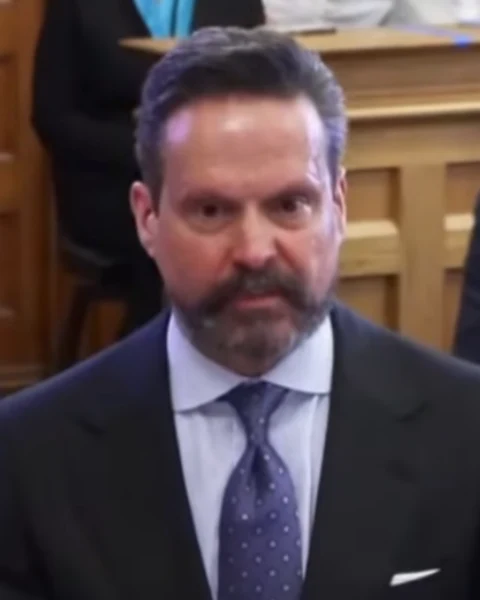
Alan Jackson, a partner at the Los Angeles firm Werksman Jackson & Quinn LLP, served alongside David Yannetti and Elizabeth Little on Karen Read's defense team in both her first trial (which ended in mistrial) and her second trial (which resulted in acquittal). Jackson functioned as the defense's primary cross-examiner, handling 109 proceedings and confronting the prosecution's most consequential witnesses — among them Jennifer McCabe, Brian Albert, Colin Albert, and the first responders whose accounts of Karen Read's alleged admissions formed the backbone of the Commonwealth's case. His approach was methodical and document-driven: he typically used prior inconsistent statements, contemporaneous records, and surveillance or dashcam video to force incremental concessions before pivoting to a broader theme of investigative failure or witness bias.

Notable Quotes From The Record

“So right off the bat, the official Canton Police Department dispatch log — one of the first documents generated in any investigative event — that's completely wrong, right?”

Establishes that foundational investigative documents contained basic factual errors

“In the two times that you were asked to reflect back on exactly what happened that morning — on January 29th and January 30th — both times you attributed only three words to my client, having been repeated continually in her distraught state: 'is he dead.' Right?”

Pins down the timeline showing Read's alleged incriminating statements appeared only months later at the grand jury

“And to this day, no law enforcement officer ever conducted a search of that house?”

Final question drives home the defense theory that 34 Fairview was never investigated

“During the time that you were on scene and you heard Karen Read screaming and yelling in this distraught and hysterical manner, you never once heard her say 'I did it,' correct?”

Core defense point — the officer closest to Read for two hours never heard any incriminating admission

“At any point in time, either before or after the leaf blower was taken out by Lieutenant Gallagher, did you see 45 pieces of bright red, black, and clear plastic pieces scattered all over the scene?”

Directly challenges the prosecution's physical evidence timeline — debris allegedly from Read's taillight was not observed during the initial search

“And at no point in time did you ever hear Karen Read ask Jennifer McCabe to Google anything?”

Challenges the prosecution claim that Read asked McCabe to search 'how long to die in cold' — the officer on scene heard no such request

“Do you recall on February 8th telling Trooper Proctor specifically that while you were rendering aid, you heard Karen say 'I hit him' to another female on the scene, and the other female told Karen to be quiet?”

Establishes that Nuttall's original account had Read speaking to another bystander, not directly to him

“So the first time you ever repeated that statement was on February 8th, with Trooper Proctor, correct?”

Highlights a ten-day gap where Nuttall told no one — not hospital staff, not Canton PD, not State Police — about the alleged admission

“Did you see any place in that video where you had any sort of detailed conversation with my client?”

After walking through the entire dashcam footage, Flematti concedes no such conversation is visible.

“Can you point to that portion of your report where you indicate that my client said the words 'I hit him'?”

The central impeachment moment — forcing Flematti to acknowledge three times that critical claims appear nowhere in his written report.

“Nowhere in that conversation did you ever suggest "you hit him with your car"?”

Establishes that Flematti himself did not interpret Read's statement as a vehicular admission at the time of the conversation.

“And you're aware that none of those have that statement?”

Points out the complete absence of any hospital documentation of Flematti's claimed relay about a possible vehicle strike.

“You told Trooper Proctor, the day after the event, on January 30th, that the statement that you attribute to my client was actually made to the female — not to you, in response to your questioning — that's what you told Trooper Proctor, correct?”

Establishes that in McLaughlin's original account, Read's statement was directed at the civilian woman, not at McLaughlin in response to medical questioning.

“In fact, what you told Trooper Proctor was, quote, 'Karen then turned to her friend and stated I hit him, I hit him, I hit him, I hit him,' is that correct?”

Pins down the exact wording from McLaughlin's prior statement to law enforcement, which differs from her trial testimony.

“Are you aware that the female standing to your left reported that exact same statement as 'Could I have hit him? Did I hit him? Did I hit him?'”

Introduces the civilian witness's version of the statement as questions rather than admissions, suggesting Read may have been asking rather than confessing.

“So you've had so many socializing events with Caitlin and other folks that you can't pinpoint this one as opposed to any of the others that you've had?”

Jackson highlights that the volume of social events contradicts the 'mere acquaintance' characterization

“When you went to 34 Fairview, you knew that that was the Albert family home. Correct?”

Tests whether McLaughlin concealed her knowledge of the Albert connection when responding to the scene

“You agree, Ms. McLaughlin, the statement that you gave to Trooper Proctor is not the same as the statement that you gave to these jurors yesterday. Right?”

Jackson secures a direct admission that McLaughlin's trial testimony differs from her original statement, undermining the reliability of her account.

“You recall being contacted by a completely different officer to say, 'Hey, Trooper Proctor wants to talk to you, come on in to Canton PD, want to have an interview'?”

Suggests the interview was arranged through a third party rather than standard investigative channels, implying coordination.

“Does the name Kevin Albert sound familiar?”

Jackson introduces Kevin Albert — a Canton PD officer and Brian Albert's brother — implying he may have coordinated McLaughlin's interview with Trooper Proctor, connecting another Albert family member to the investigation.

“Of those 500 friends on social media, how many of those have you taken day trips with?”

Reframes the redirect's 500-friend talking point by forcing McLaughlin to acknowledge she cannot name others with whom she shares the same activities she shared with Albert

“Miss McLaughlin, all of those things that I just mentioned, you have done with this Caitlin Albert.”

Jackson's concluding statement tying together the series of questions, sustained by the judge before McLaughlin can respond

“Rule 14 does not require such disclosure when the exhibits are used for impeachment only, and that's exactly what those four exhibits were going to be used for and what we intended to use them for.”

Core legal argument — impeachment evidence is exempt from Rule 14 disclosure requirements.

“What she said was, "I went to high school with a person named Caitlin Albert," which is a bastardization of the truth — that's not the truth — and those four photographs are what got her to admit that she in fact does know Caitlin Albert and knows her on a very, very different level than she first suggested.”

Establishes the defense theory that McLaughlin minimized her relationship with Caitlin Albert during testimony.

“A defendant has a constitutional right to bring to a jury's attention any circumstance which may materially affect the testimony of an adverse witness, which might lead the jury to find that the witness is under an influence to prevaricate.”

Jackson cites Commonwealth v. Agar (400 Mass. 508) to support the constitutional basis for admitting the impeachment exhibits.

“Would you agree that having unsealed and unsecured blood next to the right rear portion of the SUV is a recipe for cross-contamination?”

The culminating question of the cross — photographs show blood evidence in Solo cups stored in a grocery bag beside the vehicle, and Gallagher concedes the contamination risk.

“So what you did instead was you gathered red Solo cups from a neighbor, unsterilized, and scooped up the snow with what you thought was blood, and just carried them back to the truck?”

Crystallizes the defense argument that evidence collection was far below professional standards for a homicide investigation.

“So your investigative technique is just to ask a witness how'd that dead body get there, and if they say I have no idea, your job's just done, right?”

Frames Canton PD's approach as passively accepting witness accounts rather than actively investigating

“Absolutely none of that was done here, though.”

Jackson's closing point summarizing the defense theory that Canton PD failed to investigate the scene

“And the DA's office threw out the witness intimidation charges because they were meritless, isn't that right?”

Establishes that Lank's retaliatory arrest of the Lalo brothers was baseless, undermining his credibility.

“Isn't it true that what you actually did, Sergeant Lank, in that particular circumstance was you came to the aid of a friend and you used your position as a police officer to further that assistance and that protection?”

Jackson's closing question encapsulates the defense theory — that Lank abuses his police authority to protect the Albert family.

“And you didn't have much choice — I mean, there you have it, the evidence is right in front of you, you can't really cover that one up, right?”

Implies Lank would have covered it up if he could, suggesting a pattern of protecting the Albert family

“So no DUI investigation was really undertaken?”

Directly challenges the thoroughness of Lank's investigation of Tim Albert's hit-and-run

“I don't have to prove beyond a reasonable doubt or to clear and convincing evidence that there's a bias or prejudice, but if the evidence suggests that there could be bias or prejudice, that is proper fodder for the jury to consider.”

Sets the legal standard Jackson is arguing — low threshold for admissibility of bias evidence under the Agar decision.

“He was the very first officer to walk in that front door. He absolutely knew what he was going to find when he walked in the front door, which was the homeowners and possibly other witnesses.”

Frames Lank's decision to enter 34 Fairview as deliberate given his personal relationships, undermining the neutrality of initial witness interviews.

“So when the only parties left at the scene are members of the Albert family, Jen McCabe, and the Canton Police Department representatives — that's when the lights inside 34 Fairview finally came on. Okay?”

Establishes suspicious timing — the house only showed signs of activity after all independent witnesses had departed.

“The fact is, they were never convicted of anything having to do with this case — the case that you're describing — is that true?”

Establishes that the Lalo brothers Lank accused were never convicted, undermining Lank's version of the 2002 incident.

“Is it true that what was actually said was — you said to them, 'I don't know who you are, but I'm going to make your life miserable'?”

Suggests Lank was the aggressor making threats, contradicting his portrayal as a victim defending a friend.

“I wouldn't even call it bickering, it would just be banter together.”

Camerano's own grand jury characterization of the couple's interactions, used by Jackson to establish absence of conflict.

“Were you aware that her phone had been seized shortly thereafter from her?”

Plants the idea that Read's silence wasn't voluntary — her phone was taken by investigators, providing an alternative explanation for the lack of contact.

“You testified previously at another hearing that Karen Read — quote — was actually singing John's praises about how good of a person he was, a father figure for taking in the kids several years ago, and you know, being there for them, and praising them, and sacrificing his life to raise them — end quote. Do you remember saying that?”

Introduces prior sworn testimony establishing Read spoke admiringly of O'Keefe's role as guardian to his niece and nephew

“She didn't say "You and John come with me"?”

Isolates McCabe's invitation as directed only to Read, implying O'Keefe's decision to go to 34 Fairview was independent of Read.

“So just after these statements were made, they went to 34 Fairview Road — five minutes later, seven minutes later — we'd be sitting in front of 34 Fairview. Correct?”

Establishes the short timeframe between leaving the bar and arriving at 34 Fairview, compressing the window in which the prosecution alleges Read's motive shifted from affection to violence.

“But what you did observe between the two of them that night — to use your words — they were lovey-dovey?”

Jackson uses the witness's own characterization to lock in the affectionate-relationship point on the final question the jury hears from this witness.

“So you now claim that you got rid of the phone on September 22nd, 2022, hours before you were ordered to preserve it — that's your testimony, correct?”

Establishes the suspicious timing of Albert's phone disposal one day before the court preservation order.

“Yeah, it's only possible that it's me.”

Albert's prior testimony acknowledging he was the only person who could have answered the 2:22 AM call from Higgins, undermining the butt-dial explanation.

“What refreshed your memory between then and now?”

Suggests Albert's suddenly improved recall about the prep location came from coaching during the break

“You had already gotten rid of your phone a month earlier, hadn't you?”

Reframes the denied defense motion as irrelevant — the phone was already gone before the court ruled

“Oh, right — the day before.”

Punctuates the phone disposal timeline — Albert traded in his phone the day before the preservation order issued

“And it was about a year and a half after January 29th of 2022, correct?”

Emphasizes the extreme delay between the events and Trooper Proctor's first interview of this witness

“And your testimony today is that you realized it was a body the very next day, correct?”

Sets up the contradiction between recognizing the significance of the object and taking no action.

“Miss Nagel, the first time you've mentioned to anybody that that object was 5 to 6 feet long was yesterday — to this jury — two and a half years after you supposedly saw it. Correct?”

Highlights that the specific size estimate — critical because it matches a human body — was never mentioned in any prior statement.

“So to be clear — in your conclusion, you're not testifying today that there was no dog DNA on that source shirt that was swabbed; you're saying that the two swabs that you got did not detect the DNA.”

Jackson's closing point reframes Kun's testimony from 'no dog DNA found' to 'testing was inconclusive due to limitations.'

“Are you aware that Miss Hartnett had also failed certain proficiency —”

Jackson attempted to challenge the competence of the MSP analyst who collected the swabs, implying the sample collection itself was unreliable. The question was struck before completion.

“And it's not just that you didn't see that SUV hit a pedestrian — that did not happen while you were sitting there, did it?”

Jackson pushes beyond 'didn't see' to 'didn't happen' — drawing out the witness's affirmative statement that no collision occurred.

“So it was a full 19 months after the events in question that you were first contacted by law enforcement. Correct?”

Highlights the delayed investigation and questions why this eyewitness was not interviewed sooner.

“So that's your recollection as you sit here. Did you notice anything wrong with the back of the SUV?”

Establishes from a close-range eyewitness that the SUV rear appeared undamaged.

“You certainly did not see a full-sized Jeep Wrangler outfitted with a snowplow between the SUV and Ricky's truck?”

Confirms no other vehicle was between the truck and the SUV, eliminating alternative explanations for the close observation.

“The only person I saw as we were pulling away was the female driver.”

Confirms the male passenger was no longer visible when they departed, relevant to the timeline of O'Keefe's movements that night.

“We are not only renewing our objection to the alleged harassment testimony that came in yesterday, but we're specifically moving to strike that testimony and specifically asking the court, before we get started today, to instruct the jury that they are to disregard that evidence.”

Frames the defense's core motion — seeking both to strike the testimony and obtain a curative instruction.

“I opened no door. I didn't even approach the door. And yet that evidence came in.”

Defense's central argument that the harassment testimony was improperly admitted.

“Right. But you do remember, two and a half years ago, you left 34 Fairview at 12:10 a.m., correct, down to the minute?”

Highlights the selective nature of Albert's memory — precise recall of the night in question but inability to remember recent events like his prep meeting with the prosecutor.

“Isn't it true, Mr. Albert, that you either switched platforms or deleted the texts because you did not want your text communications with Allie McCabe to be discovered?”

Direct accusation that Albert destroyed or concealed post-incident communications — a central defense theme about evidence spoliation.

“John O'Keefe looks like he had been beaten to death. He's got two black eyes, a laceration over his right eye, laceration over his nose, a giant wound on the back of his head. And he doesn't look like he was hit by a car — he looks like he was in a physical altercation.”

Jackson states the defense theory explicitly during sidebar — O'Keefe's injuries are consistent with a beating, not a vehicle strike

“Colin Albert was hidden — specifically and intentionally hidden — from all of law enforcement for the first several months of this investigation. Nobody was willing to even say he was at the house.”

Argues Albert was concealed from investigators, supporting the defense theory of a cover-up

“And in that hearing, you said you believed that was taken closer to your junior year or senior year in high school. Correct?”

Impeaches Albert's redirect testimony that the videos were from sophomore year, using his own prior sworn testimony to place them in 2021-2022

“That time you said, oh no, I didn't fall down on black ice and slip and break my fall with my knuckles like you've said here — you said I hit a heavy bag and busted my knuckles up on a heavy bag, right?”

Exposes a second inconsistent explanation for Albert's injured knuckles — ice fall at trial versus heavy bag at the July 2023 hearing

“And after that SUV was gone and you looked out that window with that clear and good view, there was no body, was there?”

Central defense argument — McCabe looked at the lawn repeatedly with an unobstructed view during the timeframe O'Keefe allegedly lay there, yet saw nothing.

“Every single one of those 12 separate times, you indicated that she asked a question — something like 'could I have hit him' or 'did I hit him.' Not one time in that testimony did you say she declared 'I hit him, I hit him, I hit him,' did you?”

Impeachment showing McCabe's trial testimony of a declarative confession contradicts her own prior sworn testimony where Read's statements were always framed as questions.

“So according to you, you literally butt-dialed John O'Keefe's phone six times in the span of 19 minutes.”

Challenges McCabe's explanation for repeated deleted calls to O'Keefe during the exact timeframe the prosecution alleges he was struck and incapacitated.

“Isn't it true that at that time you didn't tell Sergeant Lank that my client said 'I hit him'— what you said was that my client said 'I hope I didn't hit him'? Correct?”

Confronts McCabe with a contemporaneous police report that contradicts her trial testimony about Read's alleged confession

“Miss McCabe, you made that search at 2:27 a.m. because you knew that John O'Keefe was outside on your sister's lawn, dying in the cold, didn't you?”

The central accusation of the defense theory — that McCabe had knowledge of O'Keefe's condition hours before his body was officially found

“And in not one of those instances — not one — is there a report that says you said she said "I hit him," correct?”

Crystallizes the defense argument that the most damaging statement attributed to Read was never documented until over a year later.

“Nowhere in that text chain did you say something along the lines of "oh my goodness, I'm so horrified." Did you?”

Contrasts McCabe's trial testimony about being horrified with her contemporaneous written reaction of "I love it."

“And yet Trooper Proctor drove all the way to Pembroke to interview you on February 8th of 2022, did he not?”

The pivotal question of the cross — frames Proctor's interview of a witness unconnected to the night's events as evidence of misdirected investigation or bias.

“And you did not see a 217-pound man bleeding out on the side of the road, in the lawn, or in the yard just to your right by that flag pole, correct?”

Establishes that a trained observer with headlights on drove past the exact spot where O'Keefe's body was later found and saw nothing, supporting the defense theory that the body was not yet there when Higgins left.

“Did you remove the SIM card from that phone, drive onto a military base, throw the SIM card in one dumpster, and the phone in a different dumpster?”

The dramatic final question of the day, alleging deliberate, methodical destruction of evidence across separate locations to prevent recovery.

“If you take one more look at what's been marked for identification as UU — that's the evidence submission form — correct?”

Identifies the specific exhibit Jackson is targeting — the evidence submission form at the center of his chain-of-custody challenge.

“With that, I have no further questions.”

Jackson opts not to pursue the sidebar, ending the examination rather than pressing the point further.

“The single piece of glass under 7-14 neither matches the cup, nor does it match any of the nine pieces found in 7-12. In other words, it stands alone. Is that correct?”

Jackson's framing isolates 7-14 as an orphan piece, suggesting it has no clear evidentiary connection to the broken glass at the scene.

“And yesterday, during the entirety of your questioning by Mr. Lally, not once did you mention that this video is actually completely inverted?”

Highlights that the prosecution presented a mirrored sallyport video without disclosing the inversion, potentially misleading the jury about which side of the vehicle was shown.

“On Thursday, Mr. Lally finished his questioning on Wednesday, then came back on Thursday. You continued on direct examination under questioning by Mr. Lally again to start the day, correct? And during that testimony on Thursday morning, you also, under direct examination, did not mention that this video was inverted, did you?”

Establishes that neither the witness nor the prosecutor disclosed the inversion across two days of direct testimony

“So that means that about two-thirds of the video is missing, correct?”

Frames the motion-triggered recording gaps as a significant evidentiary problem

“This video, Sergeant — you will agree — if that 42-minute period existed, that would have been the only video that would establish the actual condition of the tail light the moment the SUV arrived in police custody in that sallyport.”

Pinpoints the evidentiary consequence of the gap — no video exists showing the taillight condition upon arrival

“In other words, Trooper Proctor, you don't get to pick a suspect and then try to find evidence to support your choice, right?”

Jackson's thesis statement for the defense — that Proctor targeted Read rather than following evidence impartially.

“Hopefully she kills herself.”

Texted to his sister about Karen Read on February 4, 2022, the most extreme expression of Proctor's animus toward the defendant he was investigating.

“Proctor, you're the one responsible for gathering the evidence, correct?”

Establishes that Proctor's claim of 'no evidence' against alternative suspects is undermined by his own role controlling what evidence was gathered.

“Sort of like the fox guarding the hen house, isn't it?”

Jackson's closing characterization of Proctor as lead detective investigating people he has personal connections to — sustained by the judge but heard by the jury.

“But you also admitted that you didn't seek consent, for which you don't have to have probable cause if you get consent, correct?”

Establishes that even without probable cause, investigators could have simply asked to search 34 Fairview and chose not to.

“So had you known that — had you had the information, for instance, that Brian Higgins admitted to having seen a tall, dark-haired man walk into the house — that might have changed the complexion of your investigation at that time.”

Highlights that a known witness inside 34 Fairview was not interviewed until February, and potentially possessed information relevant to probable cause.

“You're saying no because that would require the device to travel at 135,000 miles an hour.”

Callback to the cross-examination calculation challenging the physical plausibility of the ranging data as presented.

“Where are they, sir?”

Jackson's final line of questioning — Tully cannot produce the Verizon records key that would resolve the dispute over data interpretation.

“Did you or did you not ever do a test where you backed the Lexus up against the Traverse?”

Beginning of a series establishing Paul conducted zero physical testing to support his opinion

“Did Mr. Lally ask you to create a report of some sort that you then turn over to the defense so that we would know that you have a new opinion that you're going to testify about?”

Highlights potential discovery violation — a new expert opinion developed two weeks before trial with no supplemental report disclosed to defense

“This has become a pattern of conduct by the Commonwealth, over and over and over. We're finding these witnesses getting on the stand — finding out that there's been a sort of preemptive strike in some sort of a prep interview where they're coming up with new opinions, new conclusions, new facts.”

Defense frames the discovery issue as part of a systematic pattern rather than an isolated incident.

“This officer gets on the stand and now has a new central opinion about whether or not we're right and that tail light lens could be cracked. That's something that should have at least been reduced to writing.”

Identifies the specific undisclosed opinion at issue — the officer's assessment of whether video-depicted force could cause the observed taillight damage.

“Isn't it true, Trooper Paul, you came to these opinions and conclusions because Trooper Proctor told you to come to these opinions and conclusions in furtherance of his investigation?”

Jackson directly accuses Paul of confirmation bias, tying the reconstruction conclusions to direction from the lead investigator.

“My point is: your analysis that's based on the odometer reading — 36 miles here, 12 miles there, 2 miles here, 5 miles there — if you got the route of travel wrong, and the route of travel was different, your assumptions about the odometer readings would be incorrect as well, correct?”

Establishes that the odometer fallback is itself dependent on unverifiable route-of-travel assumptions

“I've done the damage that needed to be done on Jennifer McCabe. I don't need to call her back. The point is that what's good for the goose is good for the gander.”

Jackson argues the Commonwealth also engaged in late disclosure, citing the McCabe/Tully report withheld until after McCabe's testimony.

“I let the Commonwealth and the court know about Dr. Marie Russell three days after I learned about her, which was the 17th of May.”

Jackson establishes the defense's timeline for disclosing Russell, arguing prompt disclosure after discovery.

“Exclusion is the highest form of punishment. It's the highest form of sanction that the court has available to it — just to put a fine point on it, it is a dire, dire remedy.”

Jackson frames the stakes of the Commonwealth's motion to set a high bar for exclusion.

“So a third party agency hired you and commissioned you or ARCCA with the responsibility of doing an accident reconstruction in this case, correct?”

Establishes Wolfe's independence from both prosecution and defense — retained by a neutral third party.

“You were not hired by the defense — by me or anybody on the defense side in this case. Correct?”

Jackson establishes Rentschler as an independent expert, not a defense hire — a strategic credibility move.

“Number four is their opinion that there is currently insufficient evidence to determine the cause of Mr. O'Keefe's brain injuries or the circumstances surrounding them. That is well within the scope of their expertise, obviously.”

Frames the contested opinion as a negative finding about evidentiary sufficiency rather than an affirmative medical diagnosis, arguing it stays within the experts' lane.

“There has been no competent evidence presented in the Commonwealth's case that Karen Read's vehicle actually struck John O'Keefe. There's been conjecture, there's been speculation, but no actual competent evidence.”

Core defense argument that the Commonwealth failed to prove the vehicle-strike element required for all three charges.

“Where the Commonwealth's evidence is entirely circumstantial, it cannot meet its burden if the evidence equally supports inconsistent propositions, as resolution of such a case necessarily requires conjecture or surmise.”

Defense cites Commonwealth v. McCormick (2023) as the legal standard for evaluating circumstantial evidence.

“Are you also aware that there was pig DNA?”

Brief attempt to raise the pig DNA finding from UC Davis testing, implying a connection to a dog (pig ear chew toys), though the objection was sustained.

“Does any of that change your opinions and conclusions in this case?”

Framing question that lets Wolfe dismiss all cross-examination evidence in a single answer

“With that, Defense rests.”

Marks the close of the defense case — all evidence has been presented by both sides.

“Look the other way. Look the other way. Four words that sum up the Commonwealth's entire case.”

The rhetorical framework Jackson builds the entire closing argument around — that the prosecution depends on jurors ignoring inconsistencies.

“The Commonwealth wants you to believe that she murdered this man, and then after that murder she called him — not once, not twice — 53 times.”

Key argument about Karen Read's post-incident behavior being inconsistent with guilt.

“There's no evidence whatsoever that Karen Read's vehicle ever struck John O'Keefe, or that Karen Read ever wanted to strike John O'Keefe.”

Direct statement of the defense's core factual claim — no evidence of vehicle contact.

“He wished for her to commit suicide. That, ladies and gentlemen, is how you frame someone.”

Jackson connects Proctor's personal animus toward Read, revealed in group chat messages, to his thesis of investigative corruption.

“Ladies and gentlemen, Karen Read is innocent. Do justice and find her not guilty.”

Final direct statement to the jury — notably asserts innocence rather than merely reasonable doubt.

“I don't really care how it always is in Massachusetts. I care about whether or not it's appropriate.”

Sets the tone of the defense's challenge to the court's reliance on standard practice over fairness.

“How do they decide that she's not guilty of involuntary manslaughter on that verdict slip?”

Core of the defense argument — the jury has no mechanism to affirmatively find not guilty on lesser included charges.

“If they come back guilty on, for instance, involuntary manslaughter, that's immediately appealable. They didn't have an option on the verdict form to find her not guilty. It's almost like the court is directing a verdict to the subordinate charges.”

Defense explicitly preserves the appellate issue and articulates the legal theory — absence of a not guilty option amounts to a directed verdict.

“Not guilty of the offense charged or any lesser included offense. I think the clarifying language that I proposed is important.”

The specific amendment Jackson requested to ensure jurors have a clear path to full acquittal on count two.

“There was no collision with John O'Keefe. There was no collision. There was no collision. John O'Keefe did not die from being hit by a vehicle. Period.”

The triple repetition establishes the defense's central thesis from the first moments of the statement

“Is the homeowner going to catch any shit? Answer: Nope. He's a Boston cop, too. That quote defines the lack of integrity of the Commonwealth's entire case, its entire investigation, and this prosecution.”

Frames the Proctor text message as the defining evidence of investigative corruption

“A Google search that was timestamped, according to their own data, at 2:27 a.m., 5 minutes after that 2:22 a.m. call that Higgins and Albert denied having. And that Google search on Jennifer McCabe's phone read, 'Hos long to die in cold.'”

Key piece of defense evidence suggesting knowledge of O'Keefe's condition hours before his body was officially discovered

“Before Michael Proctor had access to that tail light, not a single piece was ever recovered at 34 Fairview.”

Implies evidence planting — two prior searches found nothing, then 46 fragments appeared after Proctor had the vehicle

“The Commonwealth's own medical examiner will not deem the manner of death in this case a homicide. She won't do it.”

Previews that the prosecution's own expert undermines their theory — a powerful reasonable doubt argument

“Your memory is clearer now as you sit here — that it was three times you heard that — than it was a year ago when you testified that it was two times.”

Frames the central inconsistency: Nuttall's memory allegedly improved over time rather than fading

“Everything was the way that Mr. Brennan wanted it to be.”

Jackson implies the prosecution coached Nuttall's changed testimony through three meetings

“So your memory is fading even after three weeks.”

After Nuttall forgot discussing the coat issue with Brennan just three weeks earlier, Jackson uses it to further undermine his claimed memory improvement

“What you said to Trooper Proctor on February 8th, 10 days after this, was you overheard Miss Read say, 'I hit him one time,' to another female that she was talking to. Correct?”

Confronts Nuttall with a prior version where the statement was made to another woman, not in response to Nuttall's question — a fundamentally different account.

“And my client is nowhere near you. Correct — at least for this clip.”

Uses dash cam video to show Karen Read was not positioned near Nuttall during the CPR window when he claims the statement was made.

“So generalized commotion is very different than hearing her say 'I hit him' to other people. Correct. You'd agree with that?”

Forces Nuttall to concede the distinction between hearing specific words and hearing general chaos at the scene.

“And at no point after he started giving CPR did my client come anywhere near you. Isn't that what the video shows?”

The culmination of Jackson's video timeline argument — the dash cam contradicts Nuttall's description of when Read allegedly approached him.

“Would you consider a black eye an injury?”

Forces Nuttall to acknowledge left-side facial injuries after redirect suggested injuries were confined to the right side.

“When you were asked to recite your memory of that day on February 8th, 2022, just 10 days after this incident, did you ever say that you heard in the background, "I hit him," over and over again?”

Directly challenges whether the background repetition claim existed in Nuttall's earliest account to investigators.

“But again, your memory is better now than it was then.”

Sardonic closing that highlights the implausibility of remembering more detail years later than ten days after the event.

“So what you told the grand jurors was in fact false.”

Direct confrontation forcing Roberts to acknowledge her grand jury testimony about the Google search was not based on firsthand knowledge.

“And that was a false statement, wasn't it?”

Forces Roberts to characterize her grand jury testimony

“What did you mean by 'how long'? What were you about to start?”

Jackson probes whether Roberts knew the full search phrase 'how long to die in cold,' implying coordinated knowledge

“In Massachusetts, you can't call a witness just for the purposes of impeaching them. What this clip would be doing is purporting to impeach Mrs. O'Keefe, who just testified, 'I never said that.'”

Defense's legal basis for exclusion — the clip contradicts the prosecution's own witness.

“This is simply a wolf in sheep's clothing. They're trying to get it in because it makes my client look bad.”

Defense framing the prosecution's consciousness of guilt argument as a pretext for prejudicial evidence.

“When she was having this conversation with you about her last words to him, she did actually take out her phone and show you a bunch of missed calls to him at the same time. Didn't she?”

Links Read's 'last words' statement directly to phone calls/voicemails rather than an in-person argument.

“And earlier in the night could have been 6:00 p.m.”

Expands the temporal window beyond prosecution's framing, undermining the suggestion that the argument occurred at the Albert house

“That's when she said about the argument, she said those were the last words, the argument. Right.”

Attempt to link the missed calls and the 'last words' statement — sustained objection prevented this from standing

“That does not cure the hearsay aspect. I understand Mr. Brennan's argument about the relevance to his case of what Miss Read said and her statements — that's obviously an admission of a party statement — that does not do anything to cure the hearsay that was being asked or requested by this witness”

Defense's hearsay objection is noted but ultimately overruled on the narrower offer.

“So the entire family and this friend network that we're talking about — with whom you discussed all these events — everybody was entitled to and did coordinate their statements without any separation and without any law enforcement oversight. Correct.”

Jackson's central thesis — that the Albert-McCabe family coordinated their accounts freely without investigative controls.

“Yesterday, you testified that it was white out conditions. You had to leave the car, walk all the way over, and get quote-unquote 'very close' to John before you recognized that it was even a body. Is that right? ... But last year you testified that you were still at the car when you noted the detail of Karen basically giving lifesaving aid to John.”

Impeaches McCabe with her own prior testimony — visibility conditions changed between Trial 1 and Trial 2 in a way that benefits the prosecution's narrative

“At no time during any of this interaction with the door — meaning going back and forth to the storm door, texting, looking outside, seeing the SUV in position one, seeing the SUV in position two, seeing the SUV in position three — at no time did you hear anything, any noise that was unusual, did you?”

Establishes McCabe heard no collision, screaming, or disturbance during the window when the prosecution alleges Read struck O'Keefe

“Not one time — not one time, Miss McCabe — did you utter the phrase 'I hit him' as it relates to my client in front of that grand jury on April 26th, 2022. Did you?”

The culmination of Jackson's impeachment — McCabe was asked twelve times about Read's statements at the grand jury and never once reported the declarative 'I hit him'

“And you're well aware that an extraction was done on your phone, and not one of those butt dials appears on your phone extraction.”

Establishes that seven calls to O'Keefe visible on his phone were absent from McCabe's extraction — implying deletion of call records.

“So, it's your word and your word only, Miss McCabe, that my client demanded a Google search. Is that right?”

Isolates McCabe as the sole witness claiming Read requested the hypothermia search — no video, no audio, no corroborating witness.

“And you could have walked 25 feet to the front door, walked in the house and screamed for Brian Albert to come out and help in those precious seconds and minutes, couldn't you?”

Central to the defense theory — McCabe's failure to summon a trained first responder from inside 34 Fairview suggests she knew the house's occupants had reason to avoid the scene.

“You would agree that there was a cacophony of diesel engines and gasoline engines and internal combustion engines that were running right outside of 34 Fairview. Although no sirens, correct?”

Establishes the chaotic, noisy scene when first responders arrived — relevant to what could or could not be heard clearly

“And that includes Kerry Roberts. She was not included in that group chat where you talked about the case and talked about what she was and wasn't doing with law enforcement. Right.”

Drives home that the family was discussing Roberts's cooperation with police in a chat that excluded Roberts — reframing redirect's innocent text messages

“You've never met — or you had never met — going into uh January 29th, 2022, you had never met their dog, had you?”

Establishes that the Albert family dog Chloe was kept away from visitors despite Levinson's 20+ visits, relevant to whether the dog could have caused injuries.

“I went to high school with somebody named Caitlin Albert.”

Jackson confronts McLaughlin with her minimizing prior testimony about the Albert relationship, then establishes extensive social ties including vacations, baby showers, and overnight trips.

“Even though she just confessed in front of a police officer, according to you.”

Highlights the implausibility of the prosecution's narrative — if Read truly confessed, Officer Saraf took no law enforcement action.

“It was important enough, as you say, to go back and report the statement, but not important enough to write it down with that pen very conveniently in your right hand.”

Crystallizes the core credibility challenge — McLaughlin documented demographics on her glove but not the most significant statement at the scene.

“You're also aware that not a single police officer at the scene wrote that down either.”

Jackson's closing point — the alleged four-time confession was documented by no one present at the scene.

“And that's when things start getting missed. When emotion starts playing a role, correct?”

Sets up the argument that McLaughlin's certainty about Read's exact words is unreliable given the chaotic scene.

“Did he tell you that the reason we're here, the reason we set this is because Kevin Albert texted me that he had already coordinated with you?”

Implies Trooper Proctor's interview of McLaughlin was arranged through Canton police officer Kevin Albert rather than through normal channels.

“You did not see a single piece of bright red plastic tail light material either, did you?”

Establishes that despite a thorough 50-square-foot excavation of the scene, no taillight debris was found — central to the defense theory that taillight evidence was planted.

“So you are familiar enough that you decided that it wasn't important to capture the footage, but you're not familiar enough to know whether or not the footage is actually saved onto the Arlo system.”

Highlights the contradiction in Gallagher's reasoning for not securing potentially exculpatory surveillance evidence.

“Might have been a good idea, Mr. Gallagher, since you happened to be there — no sweat off your brow — to sit Mr. Albert down and say, 'By the way, I got a pen and paper. Who was here last night just before John O'Keefe was found dead on your lawn? Who was here?'”

Frames the failure to interview Brian Albert as a missed opportunity that required minimal effort.

“There's a dead guy on the lawn that looked like he potentially could have been in a physical altercation. How about that? Might that be of some concern — to go inside the house and see if there was a struggle that started in the house?”

Jackson articulates the defense theory that the physical evidence itself warranted investigating inside the Albert home.

“And you did not find 40 pieces of tail light at or near or on that street or the lawn or any place else.”

Highlights the discrepancy between the SERT team's recovery of 6-7 pieces and the 40+ pieces later found at the scene.

“The only thing that you found was concentrated in one area, maybe a foot or 2 ft in diameter. You said six or seven pieces and a shoe.”

Emphasizes how small the evidence cluster was relative to the large search area, a point central to the defense's theory about evidence placement.

“When Trooper Tully told you that the vehicle was en route and could not provide you a photograph at, let's call it, 5:50 p.m., did he tell you that the vehicle had actually been secured at Canton PD about a mile and a half away at 5:35 p.m.?”

Establishes that Tully withheld or misrepresented the vehicle's location, preventing O'Hara from obtaining a reference photograph before the search.

“You just made my point. Even as the supervisor, you don't know everything that Michael Proctor was doing, do you?”

Establishes that Bukhenik's supervision of Proctor was incomplete despite his insistence the investigation had integrity.

“If these three individuals were involved in the death of John O'Keefe, or knew others who were involved in the death of John O'Keefe who they were close to, they would have a motive to lie about that.”

Frames the Albert/McCabe witnesses as potential suspects whose statements were accepted without independent verification.

“The fact is we don't have a single document establishing the chain of custody for those items between January 29th and February 4th. That's correct, isn't it?”

Directly challenges the evidentiary integrity of O'Keefe's clothing — key physical evidence — over a six-day gap.

“So, you had the evidence and turned it over to someone whom you don't know and can't identify. Is that what we understand?”

Highlights that a supervisor in a homicide investigation cannot identify who handled critical physical evidence.

“So he would have been driving by, windows up, water on the windows in the rain, and saw the red piece.”

Challenges the plausibility of Chief Berkowitz spotting a small piece of taillight plastic from a moving car in the rain.

“Motorcycles? Handbags? A pair of shoes? Or naked pictures of Miss Karen Read?”

Rhetorical demolition of Bukhenik's claim that he didn't know what Proctor meant by 'no nudes so far.'

“You certainly didn't take any action to investigate forensically what those stains actually were.”

Highlights another forensic avenue the investigation left unexplored — stains on O'Keefe's jeans characterized as grass without testing.

“You did not realize that Trooper Guarino had information that John O'Keefe took 36 steps covering a distance of some 84 ft. That would have placed Mr. O'Keefe inside the residence at 12:32:16.”

The closing salvo of the recross — phone health data placing O'Keefe inside 34 Fairview, which Bukhenik was unaware of, undermining the prosecution's narrative.

“So when you say that there is strong support for the exclusion of Michael Proctor in that DNA sample, you're not suggesting that he's completely excluded as a potential contributor?”

Forces the witness to acknowledge the gap between 'strong support for exclusion' and definitive exclusion.

“Were you asked to compare a known sample from a person by the name of Brian Higgins?”

First in a series of four names — all central to the defense theory — whose DNA was never compared to the taillight sample.

“Because the hair could have come from his mom, it could have come from his maternal nephew, or anybody in his maternal line. Correct?”

Drives home the range of people who could be the source of the hair.

“You can't tell this jury how the hair got to where it was found.”

Establishes the analysis says nothing about transfer — a key gap for the defense's alternative theory.

“But not a single piece of glass — nothing that you analyzed coming from that bumper matched the cup. Did it?”

Jackson's closing question drives home the central defense point: zero connection between bumper glass and the drinking cup.

“So in sum, not a single piece of glass on that bumper can be connected to that cup. Correct.”

Frames the glass evidence as failing to link the vehicle to the drinking cup found at the scene.

“But the one piece of glass that did match something came from the same source. It was consistent with coming from the same source as the single piece of glass recovered from — the possession of, or bagged by — Trooper Michael. Correct.”

Links the only bumper-to-scene glass connection to Trooper Proctor's collection, supporting the defense theory about evidence handling.

“The Commonwealth has simply not proven, even in a light most favorable to them, that there was a collision on January 29th, 2022 at 34 Fairview in Canton, Massachusetts.”

Core defense argument — the Commonwealth failed to establish the basic factual predicate for all charges.

“The Commonwealth also put on an expert who said that she found no injuries, none mind you, indicative of a vehicle strike on John O'Keefe's body.”

Uses the Commonwealth's own medical examiner against them, undermining the collision theory.

“There is evidence, however, that Brian Higgins and Brian Albert were sparring at 34 Fairview. There is evidence that that was just minutes, not hours, not days, minutes before John O'Keefe ultimately met his fate.”

Defense signals its alternative theory — a physical altercation inside the Albert home.

“So if anything is wrong with your analysis, would it be based on Mr. Burgess being wrong in his analysis?”

Frames any analytical flaw as originating with the prosecution's own expert, not DiSogra

“Garbage in, garbage out — basic scientific postulate. Correct?”

Frames any data-quality attack on DiSogra as equally applicable to the prosecution's own analysts who generated the data.

“Did you tell those law enforcement agents on August 9th, 2023 that you saw Brian Higgins and Chief Berkowitz go into the Sallyport together and alone with the SUV for a wildly long time?”

The core prior statement — placing Higgins and Berkowitz alone with the evidence vehicle for an extended period.

“Have you ever seen a defense attorney charge anybody with a crime?”

Undermines Dever's claim of a perjury threat by establishing defense attorneys lack charging authority

“Did you also say on that phone call something to the effect of, 'I know you're going to tear me a new one because I'm changing my testimony'?”

Reframes the phone call dynamic — Dever anticipated pushback for changing her account, suggesting she knew the retraction was problematic

“If you agreed with that statement here on the witness stand, you would be implicating two officers as having been in the Sallyport weirdly for a wildly long time with the SUV, implicating not one but two fellow officers. Correct. That's what you would be doing.”

Jackson makes explicit the career cost of maintaining her original statement — implicating Higgins and Berkowitz.

“And your entire job revolves around what you say on that witness stand. That's what you said. Correct.”

Jackson turns Dever's own credibility argument from recross back against her, suggesting the same career pressure could motivate protecting fellow officers.

“The fact that you can't remember the day of the week, does that mean that you have a bad memory?”

Reframes the memory issue — forgetting trivial details does not equal unreliable observation of significant events

“Was that your vehicle that was being seized?”

Establishes Barros had no duty to photograph the vehicle, neutralizing the cross-examination suggestion that his failure to take photos undermines his account

“Did I ever tell you how I wanted you to testify?”

Directly addresses the hotel meeting implication, with Barros confirming no coaching occurred

“Was the condition of that tail light the same as the photo that I showed you on my direct examination?”

Final question — Barros reaffirms the tail light condition he observed does not match the later photograph, the central point of his testimony

“Ryan Nagel and Heather Maxon saw Karen Read in her vehicle alone. The passenger seat was illuminated and empty. John was nowhere in the area of that vehicle... There's only one other place that he could be, and that is in the house.”

Defense articulates the theory underlying the garage photographs — O'Keefe must have entered the house because witnesses saw Read alone in her car.

“The Commonwealth waited until June 5th to even bring this up, to file a motion regarding Dr. — and all reciprocal — That's number 45. And the Commonwealth was ordered to file whatever motions they wanted — whatever motions in limine they thought were appropriate — by March 7th.”

Defense preserving objection that Commonwealth's late Daubert challenge prejudiced the defense by sandbagging

“They used it tactically as a sword and a shield, and that's burden shifting.”

Core of defense argument that Commonwealth cannot elicit testimony about Laposata's dog bite opinions then move to exclude that very testimony.

“Dr. Laposata's opinion has never wavered. Those injuries on John O'Keefe's arm are from a dog. Period. Full stop.”

Defense states on the record what Laposata would testify to if permitted, preserving the issue.

“That's what I can get. I'll take what I can get.”

Defense accepts the limited ruling after losing the broader motion, signaling strategic pragmatism.

“She resisted and said, 'I will never, ever sacrifice quality for speed. I want the highest quality coming out of this office.'”

Defense reframes the audit as a principled stand by Laposata rather than negligence

“Does a body, as it's cooling — does it know if it's indoors or outdoors?”

Frames the body cooling issue to counter prosecution's implication that cooling proves prolonged outdoor exposure

“Not a single medical expert — think about this — not a single medical expert called by the defense or called by the Commonwealth has testified that John was hit by a car. Not one.”

Frames the absence of any medical testimony supporting a collision as the most important point in the trial

“The Commonwealth's own medical examiner, Dr. Scordi-Bello, performed the autopsy. She did it personally. She's the only one to have personally examined John's body, and she found no evidence of an impact site on his entire body.”

Central defense argument that the Commonwealth's own expert undermines the collision theory

“Is the homeowner going to catch any shit? Nope. He's a Boston cop, too.”

Proctor's own text messages used to demonstrate bias and preferential treatment toward Brian Albert

“My entire career depends on what I say here on the stand.”

Kelly Dever's statement used to illustrate alleged police pressure to change testimony

“If you convict Karen Read of anything, if you convict her of anything, science, the physics, the data, they lose. But tragically, Michael Proctor wins.”

Final emotional appeal linking acquittal to rejecting investigative corruption

“Every single piece of evidence is weighed in and of itself. It's individual to the piece of evidence that's presented. For instance, they can weigh the statements by Ms. Read. They could give it no weight.”

Defense argues jurors must understand they can entirely discard Read's interview statements.

“I don't think the court can say, or should say, I can't answer the question, because the court absolutely can answer it... if that question remains in their minds, we're going to end up in the exact same position that we were in last year.”

Jackson explicitly invokes the first trial's hung jury as the consequence of mishandling this question.

Key Moments

Appearances (109)

Trial 1

Day 2 Cross Steven Saraf - Cross of Steven Saraf April 30, 2024 Day 2 Cross Steven Mullaney - Cross of Steven Mullaney April 30, 2024 Day 2 Recross Steven Mullaney - Recross of Steven Mullaney April 30, 2024 Day 2 Cross Tim Nuttall - Cross of Tim Nuttall April 30, 2024 Day 3 Cross Anthony Flematti - Cross of Anthony Flematti May 2, 2024 Day 3 Recross Anthony Flematti - Recross of Anthony Flematti May 2, 2024 Day 4 Cross Katie McLaughlin - Cross (Part 1) of Katie McLaughlin May 3, 2024 Day 4 Voir Dire Katie McLaughlin - Voir Dire of Katie McLaughlin May 3, 2024 Day 4 Cross Katie McLaughlin - Cross (Part 2) of Katie McLaughlin May 3, 2024 Day 4 Recross Katie McLaughlin - Recross of Katie McLaughlin May 3, 2024 Day 5 Cross Paul Gallagher - Cross of Paul Gallagher May 6, 2024 Day 5 Recross Paul Gallagher -- Recross of Paul Gallagher May 6, 2024 Day 5 Voir Dire Michael Lank - Voir Dire of Michael Lank May 6, 2024 Day 5 Voir Dire Michael Lank -- Voir Dire (Defense Continued) of Michael Lank May 6, 2024 Day 6 Cross Michael Lank - Cross of Michael Lank May 7, 2024 Day 6 Recross Michael Lank - Cross of Michael Lank May 7, 2024 Day 7 Cross Michael Camerano - Cross of Michael Camerano May 8, 2024 Day 7 Cross Katie Camerano - Cross of Katie Camerano May 8, 2024 Day 7 Cross Nicholoas Kolokithas - Cross of Nicholas Kolokithas May 8, 2024 Day 7 Recross Nicholoas Kolokithas - Recross of Nicholas Kolokithas May 8, 2024 Day 7 Cross Karina Kolokithas - Cross of Karina Kolokithas May 8, 2024 Day 7 Recross Karina Kolokithas - Recross of Karina Kolokithas May 8, 2024 Day 10 Cross Brian Albert - Cross of Brian Albert May 13, 2024 Day 10 Recross Brian Albert - Recross of Brian Albert May 13, 2024 Day 10 Cross Caitlin Albert - Cross of Caitlin Albert May 13, 2024 Day 12 Cross Julie Nagel - Cross of Julie Nagel May 15, 2024 Day 12 Cross Teri Kun - Cross of Teri Kun May 15, 2024 Day 12 Recross Teri Kun - Recross of Teri Kun May 15, 2024 Day 12 Cross Ryan Nagel - Cross of Ryan Nagel May 15, 2024 Day 12 Cross Heather Maxon - Cross of Heather Maxon May 15, 2024 Day 13 Cross Colin Albert - Cross of Colin Albert May 16, 2024 Day 13 Recross Colin Albert - Recross of Colin Albert May 16, 2024 Day 15 Cross Jennifer McCabe - Cross of Jennifer McCabe May 21, 2024 Day 16 Cross Jennifer McCabe - Cross of Jennifer McCabe May 22, 2024 Day 16 Recross Jennifer McCabe - Recross of Jennifer McCabe May 22, 2024 Day 16 Cross Marietta Sullivan -- Cross of Marietta Sullivan May 22, 2024 Day 17 Cross Brian Higgins - Cross of Brian Higgins May 24, 2024 Day 19 Cross Maureen Hartnett - Cross of Maureen Hartnett June 3, 2024 Day 19 Recross Maureen Hartnett - Recross of Maureen Hartnett June 3, 2024 Day 20 Cross Christina Hanley - Cross of Christina Hanley June 5, 2024 Day 21 Cross Yuri Bukhenik - Cross of Yuri Bukhenik June 6, 2024 Day 22 Cross Yuri Bukhenik - Cross of Yuri Bukhenik June 10, 2024 Day 22 Recross Yuri Bukhenik - Recross of Yuri Bukhenik June 10, 2024 Day 22 Cross Michael Proctor - Cross of Michael Proctor June 10, 2024 Day 23 Cross Michael Proctor - Cross of Michael Proctor June 12, 2024 Day 23 Recross Michael Proctor - Recross of Michael Proctor June 12, 2024 Day 24 Cross Brian Tully - Cross of Brian Tully June 13, 2024 Day 24 Recross Brian Tully - Recross of Brian Tully June 13, 2024 Day 26 Cross Joseph Paul - Cross of Joseph Paul June 17, 2024 Day 26 Recross Joseph Paul - Recross of Joseph Paul June 17, 2024 Day 27 Voir Dire Marie Russell - Voir Dire of Marie Russell June 18, 2024 Day 27 Voir Dire Daniel Wolfe - Voir Dire of Daniel Wolfe June 18, 2024 Day 27 Voir Dire Andrew Rentschler - Voir Dire of Andrew Rentschler June 18, 2024 Day 29 Direct Marie Russell - Direct of Marie Russell June 21, 2024 Day 29 Redirect Marie Russell - Redirect of Marie Russell June 21, 2024 Day 30 Redirect Daniel Wolfe - Redirect of Daniel Wolfe June 24, 2024 Day 30 Redirect Daniel Wolfe - Redirect of Daniel Wolfe June 24, 2024 Day 30 Direct Andrew Rentschler - Direct of Andrew Rentschler June 24, 2024

Trial 2

Day 1 Opening_statement Opening Statement - Alan Jackson April 22, 2025 Day 1 Cross Tim Nuttall - Cross of Tim Nuttall April 22, 2025 Day 1 Cross Tim Nuttall - Cross (Continued) of Tim Nuttall April 22, 2025 Day 1 Recross Tim Nuttall - Recross of Tim Nuttall April 22, 2025 Day 1 Recross Tim Nuttall -- Recross (2nd) of Tim Nuttall April 22, 2025 Day 2 Cross Kerry Roberts - Cross of Kerry Roberts April 23, 2025 Day 2 Recross Kerry Roberts - Recross of Kerry Roberts April 23, 2025 Day 4 Cross Jason Becker - Cross of Jason Becker April 25, 2025 Day 4 Recross Jason Becker - Recross of Jason Becker April 25, 2025 Day 5 Voir Dire Daniel Wolfe -- Voir Dire (Defense) of Daniel Wolfe April 28, 2025 Day 7 Cross Jennifer McCabe - Cross of Jennifer McCabe April 30, 2025 Day 7 Recross Jennifer McCabe - Recross of Jennifer McCabe April 30, 2025 Day 8 Cross Jennifer McCabe - Cross of Jennifer McCabe May 2, 2025 Day 8 Cross Jennifer McCabe - Cross (Continued) of Jennifer McCabe May 2, 2025 Day 8 Recross Jennifer McCabe - Recross of Jennifer McCabe May 2, 2025 Day 9 Cross Sarah Levinson - Cross of Sarah Levinson May 5, 2025 Day 9 Cross Katie McLaughlin - Cross of Katie McLaughlin May 5, 2025 Day 9 Recross Katie McLaughlin - Recross of Katie McLaughlin May 5, 2025 Day 9 Cross Paul Gallagher - Cross of Paul Gallagher May 5, 2025 Day 10 Cross Paul Gallagher - Cross (Continued) of Paul Gallagher May 6, 2025 Day 10 Recross Paul Gallagher - Recross of Paul Gallagher May 6, 2025 Day 10 Cross Kevin O'Hara - Cross of Kevin O'Hara May 6, 2025 Day 10 Recross Kevin O'Hara - Recross of Kevin O'Hara May 6, 2025 Day 12 Cross Yuri Bukhenik - Cross of Yuri Bukhenik May 8, 2025 Day 13 Cross Yuri Bukhenik - Cross of Yuri Bukhenik May 9, 2025 Day 13 Cross Yuri Bukhenik - Cross (Continued) of Yuri Bukhenik May 9, 2025 Day 14 Cross Yuri Bukhenik - Cross (Continued) of Yuri Bukhenik May 12, 2025 Day 14 Recross Yuri Bukhenik - Recross of Yuri Bukhenik May 12, 2025 Day 18 Cross Nicholas Bradford - Cross of Nicholas Bradford May 19, 2025 Day 18 Cross Carl Miyasako - Cross of Carl Miyasako May 19, 2025 Day 20 Cross Christina Hanley - Cross of Christina Hanley May 21, 2025 Day 20 Recross Christina Hanley - Recross of Christina Hanley May 21, 2025 Day 24 Direct Matthew DiSogra - Direct of Matthew DiSogra May 30, 2025 Day 24 Redirect Matthew DiSogra - Redirect of Matthew DiSogra May 30, 2025 Day 24 Redirect Matthew DiSogra - Re-redirect of Matthew DiSogra May 30, 2025 Day 25 Direct Kelly Dever - Direct of Kelly Dever June 2, 2025 Day 25 Redirect Kelly Dever - Redirect of Kelly Dever June 2, 2025 Day 25 Redirect Kelly Dever - Re-redirect of Kelly Dever June 2, 2025 Day 26 Direct Nicholas Barros - Direct of Nicholas Barros June 3, 2025 Day 26 Redirect Nicholas Barros - Redirect of Nicholas Barros June 3, 2025 Day 28 Direct Daniel Wolfe - Direct of Daniel Wolfe June 6, 2025 Day 28 Redirect Daniel Wolfe - Redirect of Daniel Wolfe June 6, 2025 Day 29 Redirect Daniel Wolfe - Redirect (continued) of Daniel Wolfe June 9, 2025 Day 29 Redirect Daniel Wolfe - Re-redirect of Daniel Wolfe June 9, 2025 Day 29 Voir Dire Elizabeth Laposata - Voir Dire of Elizabeth Laposata June 9, 2025 Day 29 Direct Elizabeth Laposata - Direct of Elizabeth Laposata June 9, 2025 Day 30 Direct Elizabeth Laposata - Direct (continued) of Elizabeth Laposata June 10, 2025 Day 30 Redirect Elizabeth Laposata - Redirect of Elizabeth Laposata June 10, 2025 Day 30 Direct Andrew Rentschler - Direct of Andrew Rentschler June 10, 2025 Day 31 Direct Andrew Rentschler - Direct of Andrew Rentschler June 11, 2025 Day 31 Redirect Andrew Rentschler - Redirect of Andrew Rentschler June 11, 2025