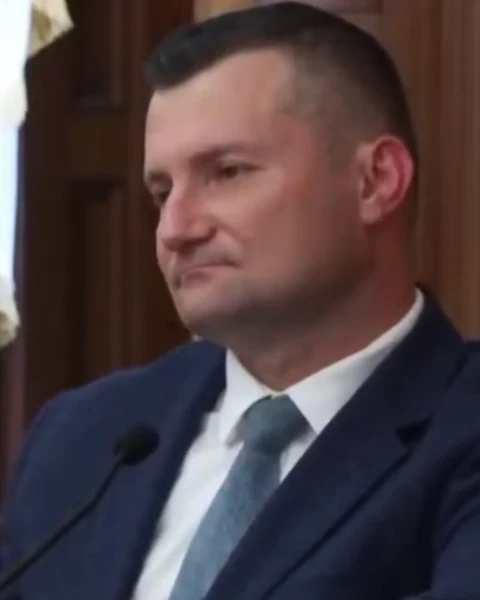
Yuri Bukhenik
Testimony Impact
Sergeant Yuri Bukhenik of the Massachusetts State Police served as the senior supervisor on the Karen Read investigation, working alongside lead investigator Trooper Michael Proctor. His testimony spans the full arc of the investigation: the initial response on January 29, 2022, multiple evidence searches at 34 Fairview Road in February, interviews with Karen Read and Brian Higgins, and review of surveillance footage from Ring cameras and Canton-area bars. Across fourteen proceedings in both trials, Bukhenik was the prosecution's primary witness for establishing the investigative timeline and chain of custody for physical evidence, while the defense used his testimony to surface what it characterized as systematic investigative failures and conflicts of interest.
Trial 1 vs Trial 2
Trial 2 expanded significantly on the Proctor misconduct thread: Jackson introduced Proctor's explicit text messages, Bukhenik's thumbs-up response to them, and affidavit discrepancies about the vehicle seizure time — evidence not available or not fully developed in Trial 1. The Trial 2 cross also ran three days compared to two in Trial 1, adding new material on Brian Higgins as an uninvestigated alternative suspect, the Albert family dog's untraceable rehoming, phone step-count data from O'Keefe's device, and bar surveillance showing Higgins and Colin Albert roughhousing on the night in question. The sallyport video inversion remained central in both trials but was more extensively litigated in Trial 2.
Notable Quotes From The Record
“I'm pretty sure we would have hooked up.”
Read's text to Higgins suggesting willingness to be intimate, establishing the depth of her pursuit of Higgins while still with O'Keefe.
“At any point in time, were pieces of clear and red plastic that were recovered from 34 Fairview Road ever placed inside the same evidence bag as any piece of clothing that you recovered? ... No, absolutely not.”
Prosecution preemptively addressing potential defense argument about evidence cross-contamination
“I observed a damaged rear right tail light fixture on the vehicle. From my vantage point I also told Trooper Proctor to approach the vehicle closer and confirm what I was seeing, which he did.”
First law enforcement observation of the taillight damage on Read's vehicle at the Dighton residence
“She was asked how she found out about the damage to her vehicle, to which she stated, quote, 'I don't know, it happened last night,' end quote.”
Read's own statement acknowledging the vehicle damage occurred the night of the incident
“She stated that she was having stomach issues and did not want to enter the residence.”
Read's stated reason for not going inside 34 Fairview Road — a key point in the timeline of events
“I asked her to walk through step by step her operating the vehicle and exactly what she did. Prior to that I asked — excuse me — she was asked to give a step-by-step recollection of what she did maneuvering the vehicle and leaving the scene.”
The interview was terminated when Bukhenik pressed for details about Read's vehicle movements — suggesting Read stopped cooperating at a critical point
“The video shows nine drinks being consumed by the defendant, and that's between when she arrives at C.F. McCarthy's until the time she leaves the Waterfall.”
Establishes Read's alcohol consumption on the night in question from surveillance evidence.
“The data returned had video that would have been captured from the defendant arriving home after midnight on the 29th, after she dropped Mr. O'Keefe off at 34 Fairview Road. That video was not present in the data that was returned from Ring.”
Highlights missing Ring footage during the critical window when Read allegedly dropped O'Keefe off — a key point for both prosecution and defense theories.
“There was also video missing of the defendant showing Miss McCabe and Miss Roberts the damage to her right rear tail light.”
Second missing Ring video involves Read displaying the very taillight damage central to the case.
“We located Mr. O'Keefe's baseball hat. We located a drinking straw from a cocktail glass. We located items of colored plastic and other shards of colored plastic at the location.”
Catalogues the physical evidence recovered from the lawn at 34 Fairview Road, linking O'Keefe and vehicle debris to the scene.
“I advised the defendant not to speak further.”
Bukhenik's reaction to Read's recorded statement about her taillight suggests the statement was potentially incriminating.
“Nothing provided by Ring proved or suggested any evidence of that type of activity, no.”
Establishes that Ring activity logs showed no evidence Karen Read ever accessed or deleted Ring doorbell videos.
“I communicated our suspicions to the medical examiner's office, and that was at 10:41, or thereabouts, in the morning. Correct.”
Establishes that by 10:41 a.m. on January 29th — before interviewing any civilian witnesses — investigators already suspected a physical assault, yet never searched inside 34 Fairview.
“First portion — we did not secure the home as a crime scene. And the second portion — yes, I do know how to do that.”
Bukhenik concedes he knew how to secure 34 Fairview as a crime scene but chose not to — central to the defense theory that investigators never treated the house as a potential crime scene.
“To the best of my knowledge, those items are drying on the butcher paper for six days — if that's what the label maker says.”
Reveals O'Keefe's clothing evidence sat unsecured for six days before being logged, undermining chain of custody.
“It's just a mirror image.”
Bukhenik's minimizing characterization of the inverted video became a recurring point of contention
“It's not missing, it's just not recorded. It's not there.”
Bukhenik's repeated semantic distinction between 'missing' and 'not recorded' highlighted his defensive posture on the video gaps
“There was no manipulation, alteration of the video between when we received it from Canton Police Department, when I played it, and when it was played for you now.”
Direct rebuttal to the defense suggestion that the prosecution deliberately presented a misleading video
“Outside of it being a mirror image of itself, it accurately depicts any activity or action in the sallyport.”
Concedes the inversion while maintaining the video's substantive accuracy
“We absolutely did not.”
Emphatic denial that he or Trooper Proctor touched or manipulated the taillight area while the vehicle was in the sallyport
“I could tell that the glass was most likely not the object — the weapon — which was used to cause the injury to the back of Mr. O'Keefe's head.”
Shows the investigation's theory evolved after physical observation, contextualizing the early domestic assault report as preliminary
“That there was a possibility that the deceased was struck to the face with a glass.”
Bukhenik's own report to the medical examiner described a facial glass injury, not a blow to the back of the head — undercutting the prosecution's theory of how O'Keefe was struck.
“He never told me that.”
Bukhenik confirms EMT Flatley never told him about Read's 'I hit him' statement, narrowing the source to Sergeant Goode alone.
“I don't believe so.”
No written report documents Goode telling Bukhenik about Read's statement before 10:41 a.m., leaving a critical piece of evidence undocumented.
“That video was never secured by me. I was not asked to secure it. I was just asked to review it.”
The lead MSP investigator had no role in securing key video evidence, which instead passed through the recused Canton PD.
“It came from the Canton Police Department.”
The sallyport video was provided by the very department that recused itself from the investigation, raising chain-of-custody and conflict-of-interest concerns.
“Canton police, out of overwhelming precaution of impropriety — not that there was one — decided to step away from any interview or investigation assistance with us.”
Prosecution proactively addresses Canton PD's recusal, framing it as routine precaution rather than evidence of conflict
“We are not ruling people in as much as we're ruling people out. So we need to get as much information as possible — in physical form, statement form, and circumstantial factors as well.”
Bukhenik frames the investigation as open-ended fact-finding, countering defense claims of tunnel vision
“At that point, our theory had evolved to a vehicle strike, based on the injuries. And I was suspecting that he was hit out of his shoes.”
Establishes early investigative reasoning for the vehicle-strike theory based on the missing sneaker
“She was asked about the damage to her rear tail light, to which she stated quote, 'I don't know how I did it last night.' End quote.”
Key admission attributed to Read connecting her to the taillight damage on the night O'Keefe was found
“It's the accumulated snow that was being excavated at the scene where we located Mr. O'Keefe's hat, flattened and frozen to the ground, with portions of it exposed from underneath the piled-up snow.”
Establishes the hat was found embedded under snow at 34 Fairview, placing O'Keefe at that location
“I directed my members to go by the scene every day as the temperatures rose. Snow would expose more evidence on the lawn, with the hopes of finding each and every item that was present.”
Shows systematic evidence collection protocol over multiple days as snow melted
“I glanced at it, took part of the information that came through, and acknowledged it with a thumbs up emoji, indicating that I read it.”
Bukhenik's explanation for his involvement in the Proctor text chain — minimizes his participation to a reflexive acknowledgment on his Apple Watch
“She was asked about the damage to her rear tail light, to which she stated, quote, 'I don't know how I did it last night.' End quote.”
Karen Read's own statement about the taillight damage during the Dighton interview — key admission used by prosecution
“In his right hand, he's holding a short-style cocktail glass with a black drinking straw protruding from it, as it is backdropped on the snow on the hood of the car that's parked outside.”
Links the cocktail straw found at 34 Fairview to O'Keefe carrying a drink with a straw when leaving the Waterfall
“It's impossible to know everything somebody was doing.”
Bukhenik concedes the limits of his oversight of the case officer who controlled nearly all evidence.
“We did not create a log to document the documentation. So, that'd be redundant, really.”
Bukhenik dismisses the chain-of-custody gap as unnecessary documentation, undermining his credibility on evidence handling.
“The exact location where each item was recovered from was not documented with a picture or GPS location.”
Concedes that allegedly crucial impact-site evidence was collected with no photographic or coordinate documentation.
“I'm sorry. English is like a third language for me. So if you can bring up the Webster's dictionary, I can read it out.”
Bukhenik's deflection when pressed on whether investigators worked from a 'theory' — a word he himself used moments earlier.
“My opinion is that it's an angry girlfriend trying to set up a hookup — to her John. To her John.”
Bukhenik volunteers an interpretive opinion characterizing Read's motive rather than neutrally describing the evidence, revealing investigative bias.
“We did not try to get Brian Albert's phone for any reason whatsoever.”
Confirms investigators made no effort to examine Brian Albert's communications despite his home being where the body was found.
“We never sought to get Brian Higgins's phone. He was not looked at as an individual that we would need to get his information for any reason at that point.”
Establishes investigators never independently verified Higgins's phone records despite his proximity to the victim and romantic involvement with the defendant.
“Logically speaking, the two vehicles had to have come into contact for the tire to move.”
Bukhenik concedes the SUV struck the Traverse after years of testimony that it merely came near — a significant change establishing right-rear contact.
“Year and a half later, we did the best we can.”
Bukhenik's explanation for the 18-month delay in interviewing eyewitnesses D'Antuono and Maxon undercuts claims of a thorough investigation.
“Correct. He did not tell me that he was going through — uh, for naked pictures through the phone. He wrote 'No nudes so far.'”
Bukhenik tries to distinguish between being told directly and reading the text, but effectively concedes the content.
“The investigation was handled with integrity and honor.”
Bukhenik doubles down on defending Proctor's integrity despite the text messages, undermining his own credibility as a supervisor.
“That text message does not show integrity... That text message does not show honor.”
Bukhenik forced to concede Proctor's texts lacked the very qualities he praised in the performance review written after the texts.
“This footage, the way it is depicted right now, very accurately represents what I remember from being there.”
Bukhenik confirms the corrected (non-inverted) video is accurate, establishing that Proctor walked to the right rear taillight — opposite of what the prosecution's version showed.
“I looked into that matter. It produced the fact that it had been recording that way prior to January 29th.”
Establishes the sallyport camera inversion was a pre-existing condition, countering the defense's manipulation theory
“Not obviously tied at the hip, but we were within eyesight, traveling together.”
Bukhenik accounts for Proctor's whereabouts during the entire sallyport visit, countering the suggestion Proctor could have removed taillight pieces
“That would be absurd.”
Bukhenik's reaction to the suggestion Proctor placed taillight pieces in his folder — attempting to make the defense theory seem far-fetched
“My understanding is that nobody else was with him.”
Bukhenik acknowledges Proctor was alone when recovering taillight evidence on three dates — a fact the prosecution addresses head-on rather than letting the defense exploit it
“It suggests that Mr. O'Keefe impacted the grass area with his left glute, transferring green staining onto his pants.”
Prosecution uses grass stains on O'Keefe's jeans to support the theory he landed on grass with minimal snow cover, consistent with being struck by a vehicle
“There's a possibility there, but I didn't see it.”
Bukhenik concedes the possibility of Higgins having a jealousy motive but admits he never explored it — key to the defense argument that investigators had tunnel vision.
“We did not follow up on that aspect based on the totality of the entire investigation.”
Acknowledges that the jealousy motive for Higgins was never investigated despite being identified as a possibility.
“Giving you courage that truly shouldn't be there. That you might not otherwise have if you weren't drinking.”
Bukhenik's own definition of 'liquid courage' applied by Jackson to Higgins's state of mind on the night in question.
Key Moments
- On direct examination, Bukhenik testified that he directed Trooper Proctor to approach Read's Lexus to observe the damaged rear right taillight at the Dighton residence — establishing the first law enforcement observation of the vehicle damage central to the prosecution's theory.
- Bukhenik testified that surveillance footage documented Read consuming nine drinks across two bars on the night of January 28-29, 2022, and that Ring doorbell video critical to the timeline — including footage of Read showing the taillight damage to Jennifer McCabe and Kerry Roberts — was missing from what Ring Corporation provided.
- During cross-examination in both trials, defense attorney Jackson demonstrated that the sallyport surveillance video Bukhenik had authenticated on direct examination as 'true and accurate' was in fact mirror-inverted, meaning investigators and jurors had been viewing it backwards — a disclosure that had not been made during direct and that concealed Trooper Proctor's proximity to the damaged taillight during the vehicle seizure.
- Jackson confronted Bukhenik with the fact that reports documenting three separate evidence searches at 34 Fairview Road in February 2022 were not written until November 2023 — approximately twenty-one months after the searches occurred — raising questions about documentation practices throughout the investigation.
- At the close of Trial 2, Jackson introduced phone step-count data from Trooper Guarino's extraction showing movement consistent with O'Keefe entering 34 Fairview Road — data Bukhenik acknowledged he had been entirely unaware of, ending his testimony on a disclosure about uninvestigated digital evidence.