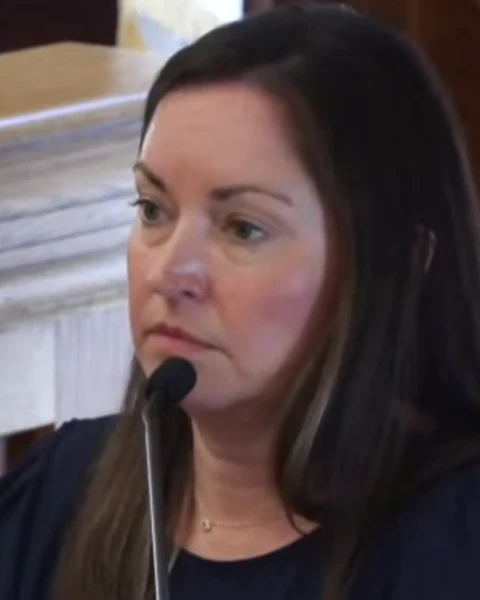
Kerry Roberts
Testimony Impact
Kerry Roberts was a close personal friend of John O'Keefe who received a series of frantic calls from Karen Read in the early morning hours of January 29, 2022. She drove with Read and Jennifer McCabe to 34 Fairview Road, where she witnessed Read identify O'Keefe's snow-covered body, performed CPR, and observed his injuries firsthand. Roberts testified in both trials, and in Trial 2 faced substantial cross-examination about her grand jury testimony, her coordination with Jennifer McCabe before law enforcement interviews, and a false statement she gave to the grand jury regarding a Google search.
Trial 1 vs Trial 2
In Trial 1, Roberts's examination was brief and her cross was waived entirely by the defense. In Trial 2, the defense conducted an extensive multi-day cross-examination that had not occurred in the first trial, introducing Ring camera evidence, grand jury transcripts, and federal investigation statements to challenge her account. The false grand jury testimony admission — which Roberts acknowledged directly under oath — was the central new development in Trial 2, transforming Roberts from an unchallenged prosecution witness into one whose prior sworn statements became a focus of the defense's narrative about witness coordination.
Notable Quotes From The Record
“I answered the phone and she said, 'John's dead, Kerry, Kerry, Kerry,' and then she hung up.”
Read's first communication declared O'Keefe dead before his body had been found, a key prosecution point about her state of knowledge.
“She said, 'I'm driving. Can I come to your house? Will you drive my car? I don't remember anything from last night. We drank so much. I don't remember anything.'”
Establishes Read's claimed memory blackout and heavy drinking on the night in question.
“Karen said, 'My tail light — look at my tail light.' And I looked at it, and I said, 'You told me you don't remember anything from last night.' She said, 'Do you think I hit him? Do you think I hit him?'”
Read drew attention to her own vehicle damage and asked whether she had struck O'Keefe, which the prosecution used to suggest consciousness of guilt.
“He had blood coming out of his nose and his mouth, and his right eye — it looked like a golf ball. His left eye was fine.”
Firsthand description of O'Keefe's injuries as found in the snow, corroborating medical evidence about the nature and asymmetry of his injuries.
“She was saying to me, if anything happens to John I'm going to kill myself, you need to take care of these kids.”
Shows Read's extreme emotional state and attachment to O'Keefe's children after his body was found.
“Karen called and — the first thing she said was, 'Kerry, Kerry, Kerry, John's dead.' And then she hung up.”
Establishes Read's first communication about O'Keefe — a declarative statement of death before anyone had found him.
“She said, 'We drank so much I don't remember anything from last night.'”
Read's own admission of heavy intoxication and memory blackout on the night in question.
“At some point Karen said, 'I left him at Waterfall,' and I heard Jen say, 'No, I saw you pull up in front of my sister's.'”
Conflicting accounts between Read and McCabe about where O'Keefe was last seen — central to both prosecution and defense theories.
“Karen from the back seat is now screaming, 'There he is. There he is. Let me the f*** out of this car.' And she's now kicking the back door to get out.”
Read spotted O'Keefe in the snow before anyone else could see him, which the prosecution uses to suggest prior knowledge.
“I looked at Jen and I said, 'She's crazy.' And then I turned around and watched, and she ran over to a mound of snow.”
Roberts could not see anything where Read was pointing, emphasizing that Read identified the snow-covered body when others could not.
“Karen pointed it out and said, 'Look, my tail light.' She said, 'Do you think I hit him?' And I said, 'No, I don't think you hit him. What are you talking about? Let's just go find him.'”
Establishes Read drew attention to her own tail light damage and repeatedly asked whether she hit O'Keefe before the body was found.
“She was running around and saying, 'Did I hit him? Did I hit him? Is he dead? Is he dead?'”
Read's repeated statements at the scene, a central piece of prosecution evidence regarding consciousness of guilt.
“When they lifted him up, there was grass underneath him and I could see his phone. So I went over and picked up the phone and the two baby blankets that were left on the ground.”
Grass beneath O'Keefe's body — no snow accumulation under him — bears on how long he was in that position relative to the storm.
“Karen was saying, 'I left him at a party.' And Mrs. O'Keefe said, 'And you just left him?'”
Read's statement to the O'Keefe family about leaving John at a party, establishing her account of the evening's events.
“When I brushed the snow off his face, his left eye was fine. It had an ice cube on it that I pulled off, but the right eye was out to here like — like a golf ball. When I got to the hospital, both eyes were swollen — it looked like blood.”
Documents the progression of O'Keefe's eye injuries between the scene and the hospital, relevant to cause-of-death analysis.
“Yes, we were putting together the events of what had happened.”
Roberts confirms she and McCabe collaboratively constructed a timeline before her second police interview, establishing the coordination pattern.
“She called to wish me good luck today.”
Demonstrates ongoing contact between Roberts and McCabe up to and including the morning of Roberts's testimony.
“I did not hear her ask that. I was told she was asked that.”
Roberts admits she never personally heard Karen Read ask McCabe to Google hypothermia, contradicting her sworn grand jury testimony.
“Nobody told me to say it. I knew it happened at that time, which is why I said it.”
Roberts's explanation for testifying to something she never witnessed — she relied on the timeline she created with McCabe rather than her own memory.
“I didn't know at what time it was done.”
Roberts explains her 'at one point' phrasing before the grand jury — she was conveying temporal uncertainty, not claiming to have personally witnessed the Google search.
“When she first called, she said, 'John's dead. Kerry, Kerry.' And hung up.”
Independent recollection of Read's first call, untainted by McCabe's influence — establishing Read's earliest statement about O'Keefe's death.
“She said, 'John, I think he got hit by a plow. He did not come home last night. He would never not have come home. I wasn't supposed to stay in Canton. And Kaye was here. He would never leave Kaye by herself.'”
Read's second call — the 'hit by a plow' statement is critical prosecution evidence of Read's early consciousness of guilt or knowledge of events.
“I didn't think it had anything to do with John. I didn't want to point fingers at anybody.”
Explains why Roberts didn't immediately tell others about the tail light damage — reframes the delay as protective instinct rather than concealment.
“Because Jen and I were standing there for about a good two minutes trying to get our boots off and she had already gone in the house.”
Establishes Read's departure from O'Keefe's house rules — a detail suggesting Read's agitated mental state that morning.
“Technically.”
Roberts's hedged admission that her sworn testimony was false
“I did.”
Roberts explicitly admits she lied under oath when pressed by Jackson
“I don't recall.”
Roberts deflects three consecutive questions about the 'how long' phrase, refusing to engage with Jackson's implication
Key Moments
- Roberts testified that Read's first phone call declared O'Keefe dead — 'Kerry, Kerry, Kerry, John's dead' — before his body had been located, a moment the prosecution used to suggest Read had prior knowledge of his death.
- At the scene on Fairview Road, Roberts could not see anything in the snow where Read was pointing, yet Read identified the snow-covered body before anyone else and kicked the car door open screaming 'There he is' — testimony that became a central prosecution data point about Read's state of knowledge.
- Roberts described O'Keefe's injuries at the scene and hospital in detail: blood from his nose and mouth, his right eye swollen like a golf ball while his left eye was unaffected — firsthand corroboration of the asymmetric injury pattern at the center of the medical evidence.
- During cross-examination in Trial 2, Roberts admitted that her grand jury testimony — that she heard Karen Read ask Jennifer McCabe to Google hypothermia — was false, stating she had never actually heard Read say that.
- Jackson established through cross-examination that Roberts was in contact with or physically present alongside Jennifer McCabe before virtually every law enforcement interview she gave, a pattern the defense used to suggest coordination of witness accounts.