Person Beverly J. Cannone Trial 1Trial 2← All People
⚖️ Judge · Norfolk Superior Court

Beverly J. Cannone

Trial 1Trial 2

Judicial Impact

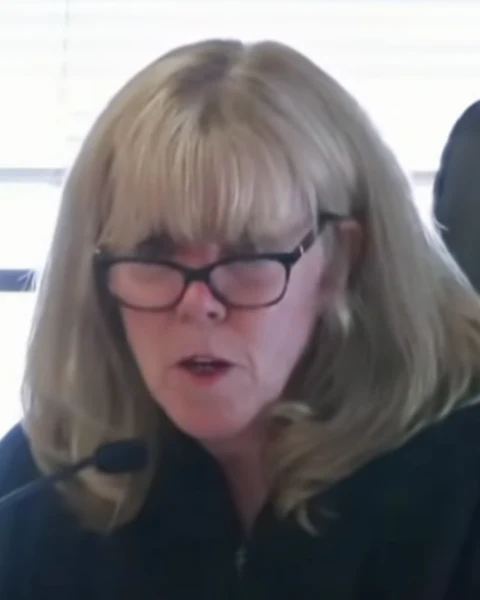
Judge Beverly J. Cannone of Norfolk County Superior Court presided over one of the most high-profile Massachusetts criminal cases in recent memory, steering both trials through complex evidentiary disputes, expert witness challenges, and intense public scrutiny. In Trial 1, she denied a March 2024 defense motion to dismiss despite argued conflicts of interest, allowed the defense to develop its third-party culprit theory through evidence while barring it from opening statements, and ultimately declared a mistrial on July 1, 2024 after the jury deadlocked. In Trial 2, which concluded with Karen Read acquitted on all three major charges and convicted only of operating under the influence, Judge Cannone again managed a sprawling evidentiary record and contentious pretrial and mid-trial motions over expert testimony and discovery compliance.

Notable Quotes From The Record

“So I agree. So the exhibits don't come in. But based on this voir dire and the answers, I'm going to let you — I'm going to give you some leeway on exactly what you did.”

Judge's ruling: photos excluded under Rule 14 but defense gets limited questioning on the relationship — sets the scope for Jackson's continued cross.

“All right. So that request is denied. The record's clear.”

Court maintains its ruling excluding the four exhibits despite the defense's constitutional argument.

“I disagree that it has nothing to do. If it weren't involving the Alberts, then under the grand jury case — the decision by Justice Gant, Chief Justice Gant at the time — it wouldn't commend. But it does, so it comes in for different purposes or different reasons.”

Judge explicitly rejects the Commonwealth's relevance objection and signals the Albert connection is the key factor making this admissible.

“Because of the chilling effect that Mr. Kearney's presence — I find — will have on the witnesses' testimony, I'm going to excuse him while the named witnesses in the Commonwealth's motion testify.”

The court's ruling and stated legal basis — chilling effect on witness testimony

“I am going to strike that. The objection is sustained.”

The court blocked Jackson's attempt to introduce Hartnett's proficiency testing record during this recross.

“I'm going to allow this testimony in. Your argument goes to the weight of the evidence, not its admissibility.”

Ruling that ends the voir dire — evidence comes in but defense can argue tampering to the jury

“Before you consider any electronic communication in your deliberations, you must find first that it is more likely true than not that the person who authored or sent the communication was in fact either Colin Albert or Miss Allie McCabe.”

Authentication instruction following the defense's voir dire challenge to the admissibility of the phone screenshots.

“I remember clearly the lines of inquiry that you initiated, so I disagree with you in the strongest way possible. You've made your record. Your motion is denied.”

Judge's emphatic ruling that the defense did open the door, preserving the harassment testimony for the jury.

“That testimony was not offered, nor may you consider it as evidence that Miss Read has bad— —character or propensity to commit crime. In fact, there's no evidence before you that the defendant is responsible for that conduct that was described by Miss McCabe.”

The judge explicitly prohibits the jury from using rolling rally testimony as character evidence against Karen Read.

“The evidence is relevant only insofar as it goes to the witnesses, or to explain the witness's state of mind — so Miss McCabe's state of mind — and that is, to the extent it explains Miss McCabe's conduct, or statements, or actions at any particular time.”

Defines the narrow permitted use of the testimony — limited to explaining McCabe's behavior and credibility.

“Jackson, it's the same question. Do you want to come up? Do you want to come up to sidebar?”

Judge recognizes Jackson's rephrased question as substantively identical and shuts it down, indicating the court views the line of inquiry as improper in this form.

“So you can't, but you haven't. So I am left with — you haven't complied. So we need to get everybody here for a voir dire.”

Judge acknowledges the Touhy constraint but still finds the defense has not met Rule 14 obligations, ordering voir dire as the remedy.

“What about the non-disclosure to the defense — showing this video and asking for an opinion? What about that?”

Judge signals concern about the prosecution's disclosure obligations, pressing Lally directly on the non-disclosure issue.

“So I do find that there is a violation of the reciprocal discovery obligations of Rule 14.”

Judge formally finds the defense violated discovery rules regarding Dr. Russell.

“I am not prohibiting the Commonwealth from anything on their examination of the witness, Mr. Jackson. The alternative is she doesn't testify.”

Judge frames the remedy as unlimited voir dire or exclusion, giving the Commonwealth broad examination rights.

“So I received information that you also viewed all reports associated with Chloe, a dog, a prior bite history. Did you review those?”

Judge Cannone identified a gap in Russell's review — she had not seen records about Chloe the dog or UC Davis DNA testing, materials potentially relevant to her dog-bite opinion.

“She struggled with to what degree of certainty she held an opinion, she struggled to what she viewed, she didn't write a report. I have to consider all of these things too as the gatekeeper as to whether she can actually assist the jury.”

Judge signals significant concerns about Russell's reliability even if permitted to testify.

“All right, I'll take a look at this more closely. Give you a decision Thursday.”

Reserves ruling, signaling the judge wants to compare the report's cover page summary against the detailed conclusions before deciding scope.

“I did find, and do find, that there was a violation of the reciprocal discovery obligations of the defendant's.”

Formal finding of a Rule 14 discovery violation by the defense, though the judge opted for remedy rather than exclusion.

“She'll be allowed only to opine whether or not the marks on John O'Keefe's arm were the result of an animal attack.”

Narrowly limits Dr. Russell's testimony to a single question, excluding broader injury-inconsistency opinions central to the defense theory.

“She cannot testify that they're inconsistent with having been struck by a vehicle, road rash, scratches from broken glass or tail light matter, or anything else.”

Explicitly bars Russell from testifying about alternative injury causation, preventing her from directly challenging the Commonwealth's theory.

“Massachusetts biomechanical engineers are not qualified to testify as to medical causation of an injury — only an MD can do that.”

Signals potential restrictions on Rentschler's biomechanical testimony, distinguishing engineering reconstruction from medical causation.

“In the light most favorable to the Commonwealth, under the prevailing Latimore standard here in Massachusetts, I am satisfied the Commonwealth has met its burden. The defendant's motion is denied.”

The ruling that sends all counts to the jury, applying the required standard of viewing evidence favorably to the prosecution.

“Mr. Jackson, you had no more questions?”

Judge cut off Jackson after sustaining four consecutive objections to his attempts to elicit Russell's ultimate conclusion.

“If they don't check block two, three, or four, the verdict slip reads not guilty. Okay? That's how it is, Mr. Jackson.”

The court's ruling — not guilty is implied by the absence of a guilty finding, not by an affirmative checkbox.

“I think it's easily clarified with the supplemental instruction. I don't think it's the verdict slip. I think it's how they're to follow the verdict slip.”

Judge frames the issue as instructional rather than structural, maintaining her earlier ruling while still addressing the defense concern.

“I do too. And I appreciate that.”

Rare moment of agreement between bench and defense on a contested issue.

“You have all the evidence in the case. So what you have is the evidence in the case. You won't be receiving any additional evidence.”

Standard denial of jury request for materials not in evidence — the CERT report was not admitted as an exhibit.

“Despite our exhaustive review of the evidence and our diligent consideration of all disputed evidence, we have been unable to reach a unanimous verdict.”

The jury's own language — particularly 'exhaustive' — became the central point of dispute between the parties over whether deliberations had truly been thorough.

“We heard from 74 witnesses. There are 657 exhibits, very complex issues in this case. I'm not prepared to find that there have been due and thorough deliberations at this point.”

The judge's ruling and reasoning — the volume of evidence weighed against the relatively short deliberation period.

“I've never seen a note like this reporting to be at an impasse. I do find that they are now — with the additional time that they went out without coming back Friday saying that they were deadlocked — due in thorough deliberation.”

Judge makes the legal finding required to issue Tuey-Rodriguez, noting the jury's Friday deliberation without returning as additional evidence of thoroughness

“There is no reason to suppose that this case will ever be submitted to twelve persons who are more intelligent, more impartial, or more competent to decide it than you are, or that more or clearer evidence will be produced at another trial.”

Standard Tuey-Rodriguez language urging the jury to reach a verdict if possible, which they ultimately could not do.

“Our perspectives on the evidence are starkly divided. Some members of the jury firmly believe that the evidence surpasses the burden of proof, establishing the elements of the charges beyond a reasonable doubt. Conversely, others find the evidence fails to meet this standard and does not sufficiently establish the necessary elements of the charges.”

The jury's third note reveals the specific nature of their disagreement — a fundamental split on whether the Commonwealth proved its case beyond a reasonable doubt.

“The deep division is not due to a lack of effort or diligence, but rather a sincere adherence to our individual principles and moral convictions. To continue to deliberate would be futile and only serve to force us to compromise these deeply held beliefs.”

The jury characterizes their deadlock as irreconcilable, foreclosing any further deliberation.

“I'm just trying to help you out by having the witnesses here, because I found a violation of your reciprocal discovery.”

Judge confirms she has already found a discovery violation by the defense regarding ARCCA experts, establishing the basis for the voir dire.

“one of the big concerns I have is that 105 or more text messages were deleted. And you said 'in due course.' I have no idea what you mean by 'in due course.' It's a pending case.”

Judge signals serious concern about deleted evidence and record-keeping obligations, foreshadowing potential spoliation arguments.

“What I'm going to do is I'm going to think about this, and if I decide to let it in, you can let it in first thing tomorrow morning.”

Judge reserves ruling on the contested clip, signaling she takes the defense objection seriously.

“I wanted to confirm whether experts in this case are permitted to watch testimony in order to prepare for rebuttal.”

Raises the procedural question of expert witness sequestration exceptions for rebuttal preparation.

“So the best way to summarize a view is that your job is to simply stop and look.”

Sets the ground rules for the jury view — observation only, no investigation.

“I found that there was a violation of the defendant's obligations for reciprocal discovery, and I found that it was deliberate.”

The judge characterizes the discovery violation as deliberate, not inadvertent — a finding that justifies stronger sanctions.

“I would not permit the defense from mentioning ARCCA in their opening.”

Documents the sanction already imposed for the discovery violations, showing the court's willingness to restrict the defense's trial presentation.

“Mr. Lally, you know what? You're going to win this. So, why don't you just let me make my ruling?”

Judge telegraphed her ruling mid-exchange, signaling she agreed with the Commonwealth's factual premise but would rule differently on the legal question.

“I understand completely the Commonwealth's argument, completely the ambush that has been set upon here. However, a defendant's right to a fair trial is paramount to everything.”

The judge's balancing test — acknowledging discovery violations but holding that excluding defense experts would violate Karen Read's trial rights.

“I expect counsel to comply with all rulings and rules of the court and all rules of professional conduct. And no more nonsense.”

Direct admonishment to defense counsel about future compliance.

“Yesterday, I'm sorry, I misunderstood. I thought Mr. Brennan was trying to get in the nature of the relationship between Bella and John, which would be hearsay. I have no problem with this offer of proof.”

Judge reverses prior day's exclusion after understanding the narrower evidentiary purpose.

“Because none of the purposes here in rule two are served by the admission of the Maryland trial judge's decision, particularly where offered without notice to the court previously, I'm excluding that decision. Your rights are saved, Mr. Alessi.”

The ruling itself — excludes the Maryland decision but preserves the defense's right to cross-examine on methodology.

“I am going to let you step down because questions for both sides are completed. So thank you.”

Judge prevents the correction, closing the witness's testimony with the uncorrected record intact.

“my findings for the record are that the defendant has not persuaded me of undue surprise or unfair prejudice by this information, and I don't find that there's delayed disclosure”

The formal ruling denying the defense's Rule 14 motion to exclude Burgess's updated report

“if you feel that the testimony of Jen McCabe and the others that you've mentioned um is critical and that you need to recall them, I'll hear you on that as well”

Leaves the door open for recalling previously cross-examined witnesses in light of the new clock drift information

“I would allow under these circumstances a limited rebuttal, and we can define the scope after we hear the testimony of Dr. Welcher”

Grants the defense rebuttal testimony from their expert, limited to the new information from Burgess's updated report

“So from the maximum point it pulled forward to where it backed up again — that was 34 feet forward, then a total of 53 back, total travel distance of 87 feet. And when the Techstream data stopped, it's still moving about 23 miles an hour, and you're still at 74% throttle.”

Key finding about the second triggering event — the Lexus was accelerating rapidly in reverse when the data window ended.

“His opinions set the stage for argument and a permissible inference to be drawn by jurors through the application of their sound judgment to the opinions that they find credible. But the jurors are as well positioned to draw or reject the inference as is the expert.”

Judge's reasoning: the final inference is not compelled by scientific method and belongs to the jury.

“The problem here is not that the opinion concerns the ultimate issue because in Massachusetts that's not a bar to admissibility.”

Clarifies that Massachusetts allows ultimate issue testimony in principle — this exclusion is specifically about methodology, not subject matter.

“So, I disagree with you, Mr. Alessi. I'm not allowing the line of questioning regarding Trooper Paul and I'm not allowing the line of questioning regarding Dr. Scordi-Bello.”

The ruling itself — a significant limitation on defense cross-examination of a key prosecution expert.

“So, jurors, the Commonwealth rests. That means that the Commonwealth's case has been presented to you for your consideration.”

Judge explains the procedural significance to the jury in plain terms.

“So the motion is denied as to all three of those.”

The ruling — all counts survive to the defense case.

“So, the motion for a mistrial is denied. Your rights are saved. And Mr. Brennan, you can continue with this line of questioning.”

Ruling permits prosecution to continue cross-examining Russell about DNA, a significant evidentiary ruling for the defense expert's credibility challenge.

“I'm not letting it in.”

The judge's ruling excluding the Walsh report, maintaining consistency with prior evidentiary rulings on similar issues.

“It is logical to conclude that Mr. O'Keefe was injured elsewhere and his body was moved to the front lawn. There is no basis in fact for that opinion.”

Judge excludes Dr. Lopea's opinion that the body was moved — a core defense theory element ruled as unsupported.

“I have absolutely no ability to research and cross-examine her on dog bites. She can say she had one case or 50 cases... I can't verify it. I can't contradict it.”

Commonwealth argues unfair surprise regarding Dr. Lopea's dog bite qualifications, which were not in her CV or report.

“I'm going to allow you to do the measurements. These photos will be marked for identification. The photos are not admissible.”

Compromise ruling — defense gets distance evidence but not visual depiction of the garage interior.

“So, jurors, I instruct you that those holes were made by the criminalist, Miss Hartnett, during the course of her inspection and sampling of the sweatshirt back on May 18th, 2023.”

The curative instruction as delivered to the jury — directly attributing the holes to lab processing.

“I find that she is not qualified. I'm not satisfied that the Daubert requirements have been met — specifically not just the experience but the reliability of the methodology she used and how it was applied.”

Core Daubert ruling excluding Laposata's dog bite testimony, distinguishing her qualifications from Dr. Russell's

“I want to take a minute to differentiate this testimony with Dr. Russell's. I found that Dr. Russell was an expert qualified to testify as to dog bite wounds mainly from her experience in the ER coupled with her being an ME.”

Judge explains why Russell could testify on dog bites but Laposata cannot — different qualifications despite both being defense experts

“You don't criticize the person, it's the data, what you saw, what you didn't see. So if it's different than that in the slides, it's going to have to come out.”

Establishes the standard for expert testimony — critique methodology and data, not the opposing expert personally

“I told you all the other day I thought I might be in a position to regret giving you last Thursday off, and that's where we're at.”

Reflects the judge's concern about trial pacing as it nears conclusion

“No, it will not... That's my ruling, Mr. Jackson. So, no visuals.”

Court draws the final line on the compromise — one sentence about animal bites, no photographs, no detailed testimony.

“I think we have to give the jury some credit here. They have been listening to this case intently for weeks.”

Court's rationale for excluding Rentschler's text-heavy opinion slides from the PowerPoint

“So, we will — so, everyone is in agreement — then I will let you have tomorrow without the jury. We'll have our charge conference here in person.”

Sets the trial schedule: charge conference Thursday, closings and jury charge Friday.

“You cannot argue that either Brian Higgins or Brian Albert committed it, or had the motive, and all of that. Not third party culprit. Pure third party culprit.”

Judge draws a clear line between Bowden (police investigative failure) and third-party culprit (someone else did it), allowing only the former.

“I want the jurors to start deliberating. I don't want to end the charge and send them home for the weekend.”

Sets the pace for the final day — closings, charge, and deliberations all on Friday.

“A charge is proved beyond a reasonable doubt if after you have compared and considered all of the evidence, you have in your minds an abiding conviction to a moral certainty that the charge is true.”

Defines the reasonable doubt standard the jury must apply to all charges.

“You have heard some evidence suggesting that the Commonwealth did not conduct certain scientific tests or otherwise follow standard procedure during the police investigation. This is a factor you may consider in evaluating the evidence presented in this case.”

Authorizes the jury to weigh investigative omissions against the prosecution's case — a key defense theme throughout the trial.

“The fact that Ms. Read did not testify has nothing to do with the question of whether she is guilty or not guilty. You are not to draw any adverse inference against the defendant because she did not testify.”

Standard but critical instruction protecting the defendant's Fifth Amendment right.

“An item that is normally used for innocent purposes can become a dangerous weapon if it is used in a dangerous or potentially dangerous fashion. The law considers an item, in this case a motor vehicle, to be used in a dangerous fashion if it is used in a way that it reasonably appears to be capable of causing serious injury or death to another person.”

Establishes the legal basis for treating the SUV as a dangerous weapon, relevant to the murder charge's intent inference.

“What is the time frame for the OUI charge? Offense zero zero two section five. OUI at twelve forty-five or OUI at five a.m.”

Reveals the jury is trying to determine which timeframe applies to the OUI charge — a foundational question for that count.

“Are video clips of Karen's interviews evidence? How can we consider them?”

Shows the jury is uncertain about the evidentiary status and weight of Karen Read's recorded interviews.

“Does convicting guilty on a subcharge — example offense two number five — convict the overall charge?”

Indicates the jury is working through the verdict slip structure and the relationship between lesser included offenses and the main charges.

“I've incorporated the language from the jury instruction into the verdict slip. I've given each side a copy.”

Judge proactively revises the verdict slip to clarify the step-by-step analysis the jury should follow.

“If it's not in the indictment, I'm uncomfortable telling them a time.”

Judge declines to specify an OUI timeframe not established in the charging document.

“If we find not guilty on two charges but can't agree on one charge, is it a hung jury on all three charges or just one charge?”

The jury's question reveals they may be close to a split outcome — agreement on some charges but deadlock on another.

“This is a theoretical question, not a question I can answer.”

The judge's final compromise language — calling it theoretical rather than simply refusing to answer.

“During the luncheon break I received word from a court officer that the jury had knocked on the door indicating that they had a verdict. But before I could even summons everybody into court, shortly thereafter they knocked again and said they didn't have a verdict.”

Documents the unusual sequence of events — the jury believed they had a verdict, then reversed course within minutes.

“So it's marked for ID with the word jury. All right. So we do not have a verdict because as we all know there is no verdict until it is announced and recorded in open court.”

Establishes the legal framework: the sealed slip has no legal effect and deliberations continue.

“One year probation on docket number zero zero two. The lesser included offense of operating under the influence. One year probation. The 24D program.”

The final sentence imposed by the court on the only conviction.

Key Moments