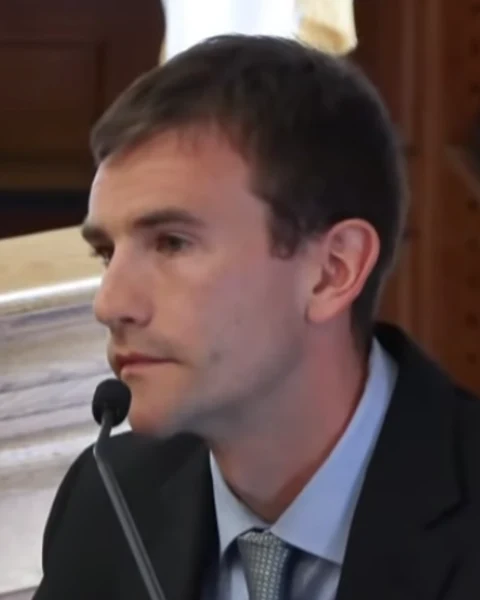
Tim Nuttall
Testimony Impact
Tim Nuttall is a Canton firefighter-paramedic who responded to the 911 call reporting an unresponsive male at 34 Fairview Road on January 29, 2022. He was one of the first medical professionals to examine John O'Keefe, documenting his injuries and initiating emergency care. His testimony centers on two things: the physical condition of O'Keefe when first responders arrived, and his account of hearing Karen Read say 'I hit him' at the scene — a statement he did not record in any report and first disclosed to Trooper Proctor ten days after the incident.
Challenges & Responses
What attorneys challenged during examination and how the witness responded.
Jackson challenged Nuttall on three main fronts across both trials: the ten-day gap before he reported the 'I hit him' statement to anyone, the evolution of his account from overhearing Read speak to another woman to being directly addressed by her, and his demonstrably inaccurate memory of O'Keefe's clothing. In Trial 2, Jackson further used dash cam video to challenge Nuttall's timeline of when Read allegedly approached him, and established that Nuttall's count of how many times he heard 'I hit him' increased between Trial 1 and Trial 2. Jackson also disclosed three pre-trial preparation meetings Nuttall held with prosecutor Brennan focused specifically on the 'I hit him' testimony.
Trial 1 vs Trial 2
Trial 2 featured significantly expanded cross-examination of Nuttall compared with Trial 1. Jackson used a later dash-cam segment showing that Read was not near Nuttall while Flatley performed CPR, but Nuttall said that was not when the statement occurred. On redirect, Nuttall identified an earlier sequence in which Read ran toward the responder group as the statement moment. On recross, Jackson established that Flatley had not yet begun CPR at that earlier point, narrowing the inconsistency to Nuttall's memory of the CPR timing rather than disproving Read's approach. Jackson also pressed differences in Nuttall's statement count and his pretrial preparation with Brennan.
Notable Quotes From The Record
“He was noted to have a hematoma on the right side of his face, just above — on his forehead. And there were some scratches on the right arm, the upper arm.”
Documents the hematoma and right-upper-arm scratches Nuttall observed under ambulance lighting.
“Those injuries seem to have been congealed. In my opinion it looked like they had been cold, which could have aided in the clotting of those injuries.”
Records Nuttall's opinion that the congealed arm injuries appeared cold, which could have aided clotting, and that they were not bleeding when observed.
“And there was one individual that replied several times, 'I hit him, I hit him.'”
A first responder's account of a bystander's repeated statement at the scene, central to the prosecution's theory that Karen Read struck O'Keefe with her vehicle.
“Mr. O'Keefe was not being touched by any individual when I first got to him. That whole group was kind of pacing around — for lack of a better term, kind of running around in circles.”
Establishes that no bystander CPR was being performed when paramedics arrived, despite the group's proximity to the victim.
“Scratches and abrasions, in my point of view, seem to go hand in hand, but the word that I used was scratches.”
Nuttall described the arm injuries as scratches and said scratches and abrasions seemed to go hand in hand from his point of view.
“I do recall that.”
Nuttall confirms his earlier statement to Proctor differs from his trial testimony
“Now she spoke directly to me, yes.”
In response to Jackson's question contrasting the accounts, Nuttall testified that Read spoke directly to him; he later said he did not believe his memories or story had changed and that any inaccurate enunciation was unintentional.
“As stated, a lot. It's not typically just physical altercations. It could be — again, a golf ball could hit you in the head, that could cause similar injuries.”
Lally elicits that many things could cause the injuries Nuttall observed, diluting the defense's attempt to suggest specific alternative causes during cross.
“So as stated, real quick, down and dirty — I asked, "Do you know this person?" to which I got, "I hit him, I hit him." And then in the background, I remember hearing over and over "I hit him, I hit him" — that was kind of pushed towards the back, and patient care took priority.”
Nuttall's consolidated account on redirect — maintains that Read said 'I hit him' directly to him in response to his question, the version Jackson challenged on cross.
“You're not dead until you're warm and dead.”
Explains the medical rationale for initiating resuscitation despite no signs of life — O'Keefe's hypothermic state required continued life-saving efforts.
“His fingers were very, very white. They were very stiff, which can be signs of hypothermia and frostbite.”
Nuttall observed that O'Keefe's fingers were very white and stiff, which he said can be signs of hypothermia and frostbite; along with a cold neck, those observations led the team further toward treating the event as a hypothermic cardiac arrest.
“I hit him. I hit him. I hit him.”
Nuttall's account of Karen Read's words, delivered in response to his question about whether she knew the patient — the central spontaneous utterance the prosecution relies on.
“I remember it very distinctly.”
Directly addresses anticipated defense attacks on memory reliability, asserting the moment stood out among thousands of calls.
“Correct. But that is how it went that morning.”
Nuttall acknowledges the inconsistency with prior testimony but insists his current version is accurate
“I did testify that way. Yes, sir.”
Nuttall concedes he testified under oath that O'Keefe wore a puffy heavy coat — which was completely wrong
“Those injuries could be sustained in a numerous amount of ways. Yes, it could be. It could be from that.”
Nuttall said he could not determine how the injuries occurred. He agreed punching was one possible mechanism but said the injuries could be sustained in numerous ways, including others.
“I have no recollection of ever saying that anybody prayed over anybody ever in this case.”
Nuttall flatly denies a detail recorded in Trooper Proctor's report, raising questions about either Nuttall's memory or Proctor's report accuracy.
“Oh, sir, I don't believe I've ever said 'praying.' That's really not something that I would have said. I didn't see it that day. It didn't happen.”
Nuttall expressly denied the report's praying detail, saying he did not see or say it, while also saying he had no recollection of the report's account.
“She's running towards where the three of us are grouped.”
Establishes from the dash cam that Read approached the firefighters, countering the defense's suggestion she was too far away to speak to Nuttall.
“I don't remember the interview with Trooper Proctor. I remember it happened. I don't remember the substance of what was discussed entirely.”
Clarifies that his memory gaps concern the later police interview, not the morning's events — a key distinction after cross suggested his overall memory was unreliable.
“I was again focused on Mr. O'Keefe's airway and ventilation.”
Explains why clothing details were inaccurate — his medical duties took priority over observing what the patient was wearing.
“Yes, sir. Three times.”
Nuttall reaffirms under redirect that Read said 'I hit him' three times directly to him, maintaining his Trial 2 account despite cross-examination pressure.
“I remember hearing 'I hit him' several other times. Again, not directed to me, just kind of off in the background.”
Adds that beyond the three direct statements, Read continued repeating the phrase to others at the scene.
“I remember hearing a generalized commotion in the background, but again, that was not our focus.”
Nuttall characterized the background noise as generalized commotion, then reasserted that he heard specific 'I hit him' words in the background; the sequence reflects tension within his account.
“I heard 'I hit him.' But again, it was in the background and it was not my focus.”
Nuttall reasserts that he heard the statement while maintaining that it was in the background and not his focus, after agreeing that he recalled generalized commotion; the exchange leaves an internal tension rather than an abandonment of the specific-words account.
“I do.”
Confirms he previously testified under oath to hearing the statement in the background, rebutting the defense's suggestion it was newly fabricated
“I don't recall.”
Nuttall said he did not recall whether he made the background-statement claim during the February 8 interview; the answer does not establish what the interview record contains.
Key Moments
- Nuttall described finding O'Keefe unresponsive in the snow with a hematoma above his right eye, a back-of-head injury with matted blood, blackened eyes, and congealed scratches on his right upper arm — injuries he noted appeared non-bleeding and cold, suggesting prolonged exposure before discovery.
- Nuttall testified that while rendering aid, he asked a bystander 'Do you know this person?' and received the response 'I hit him, I hit him' — placing Karen Read's alleged admission as a direct answer to his question, a detail central to the prosecution's case in both trials.
- During cross-examination in both trials, Jackson established that Nuttall never documented the 'I hit him' statement in any report, never told hospital staff, and did not disclose it to investigators until February 8, 2022 — ten days after the incident — when he spoke with Trooper Proctor.
- During Trial 2 cross-examination, Jackson used a selected dash cam segment to challenge Nuttall's account, eliciting that Read was not near him while Flatley performed CPR. Nuttall said that segment was not the statement moment; on redirect, he identified an earlier sequence of Read running toward the responder group, and on recross Jackson elicited that Flatley was not yet performing CPR at that earlier point despite Nuttall's earlier description.
- Nuttall acknowledged under cross in both trials that his original account had Read speaking 'to another female' rather than directly to him, a distinction that shifted between his February 2022 statement to Proctor and his trial testimony.