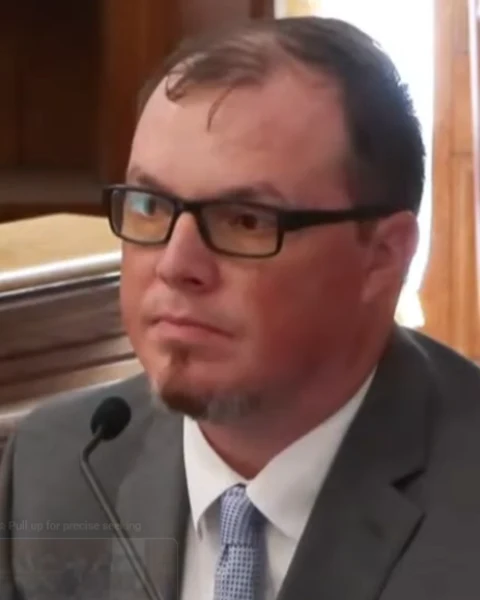
Person Shanon Burgess Trial 2← All People
🔬 Expert Witness · Aperture LLC

Shanon Burgess

Trial 2

Testimony Impact

Shanon Burgess, founder of Aperture LLC, was engaged by the Commonwealth as a digital forensics expert to conduct a supplemental examination of the Lexus LX 570's infotainment system. His analysis focused on an SD card overlooked in the initial extraction, from which he recovered vehicle power-on and power-off timestamps and calculated a 21-to-29-second clock variance between the Lexus's internal clock and O'Keefe's iPhone. Burgess also responded to what he characterized as a potentially misleading clock synchronization analysis by the defense's expert, offering his own methodology as a corrective. His testimony spanned two trial days and drew extensive cross-examination that probed his credentials, methodology, and the circumstances surrounding a mid-trial supplemental report.

Notable Quotes From The Record

“So initial impressions were that data was missed from the initial download.”

Establishes that the earlier forensic examination by Maggie Gaffney failed to recover all available data from the vehicle.

“So at that point I concluded that the data that we were missing was most likely stored on this SD card.”

Identifies the overlooked SD card on the infotainment module as the source of critical missing timestamp data.

“It was accurate to the second compared to our reference clock.”

Establishes the reliability of the infotainment timestamp data through exemplar testing.

“There was a claim of attempting to synchronize those two clocks that I believed was potentially misleading.”

Indicates Burgess was motivated to conduct his own clock synchronization analysis in response to what he considered a flawed prior calculation, likely from a defense expert.

“The clock variance is between 21 and 29 seconds.”

Core finding — quantifies the time difference between the Lexus internal clock and O'Keefe's iPhone, directly bearing on when the TechStream events occurred in real time.

“No, I do not.”

Burgess confirms he does not hold a Bachelor of Science degree despite it being listed on his LinkedIn, Aperture website, and a linked CV

“Correct. I did make an error.”

Burgess concedes the bit-byte conversion mistakes across three chips after initially calling them 'misinterpretations'

“This would be the only one that I recall.”

Burgess admits submitting a supplemental report mid-trial is unprecedented in his 10-year career

“That adjustment is the only adjustment that can be applied due to the data.”

Burgess concedes the three-point turn method is the only way to place the TechStream event after the phone lock, though he frames it as a data limitation rather than bias.

“Not by itself.”

Burgess concedes that the black box data alone does not indicate a collision occurred.

“No one. My job is to assist the jury. Assisting the jury means presenting all the information.”

Burgess asserts independence from prosecution influence, countering defense suggestions of bias.

“So those timestamps are not coming from the vehicle. They're coming from Mrs. Read's iPhone — or the defendant's iPhone.”

Core technical point — the call logs Dogra used for clock variance actually compared two iPhones, not the Lexus infotainment clock to O'Keefe's phone, undermining Dogra's entire analysis.

“GPS point 154 is a GPS point that occurs just before the three-point turn starts.”

Directly contradicts Dogra's use of GPS 154 as representing the end of the three-point turn, which was the foundation of one of Dogra's variance calculations.

“That is 21 to 29 seconds.”

Burgess's final clock variance opinion, placing the adjusted Techstream backing event at 12:32:04-12:32:12 on O'Keefe's phone clock — overlapping with the 12:32:09 last user interaction.

“So again, the Techstream event ends somewhere between 12:32:04 and 12:32:12. But that does not represent that the backing maneuver has ended — just the recorded data has ended.”

Establishes that the vehicle was still backing up beyond the captured data window, meaning the maneuver continued past the last phone interaction.

“Sure. So that is an error. Clearly, BGS stands for bachelor of general studies, and that should have 'with minor in mathematics and business administration.'”

Burgess's attempt to explain the discrepancy as a mere acronym error, while simultaneously admitting the degree as listed does not exist.

“Correct. Yes, it was.”

Burgess's final concession that an incorrect statement about his educational background was filed in federal court — directly contradicting his earlier testimony.

“No, I did not.”

Burgess denies submitting the Texas federal court document himself or seeing it before filing

“That I would complete my degree in 2024.”

Explains the 2024 date on a 2023 filing as an expected graduation year, not a false claim of completion

“As most people can probably relate, work, family, and life many times get in the way.”

Humanizes the incomplete degree — reframes it from credential fraud to relatable life circumstances

“No, I have not.”

Direct denial that he ever represented to a court that he held a degree he did not earn

Key Moments

Locations Touched By This Testimony

Appearances (6)