Person Robert Alessi Trial 2← All People
🛡️ Defense · Defense team

Robert Alessi

Trial 2 4,364 lines
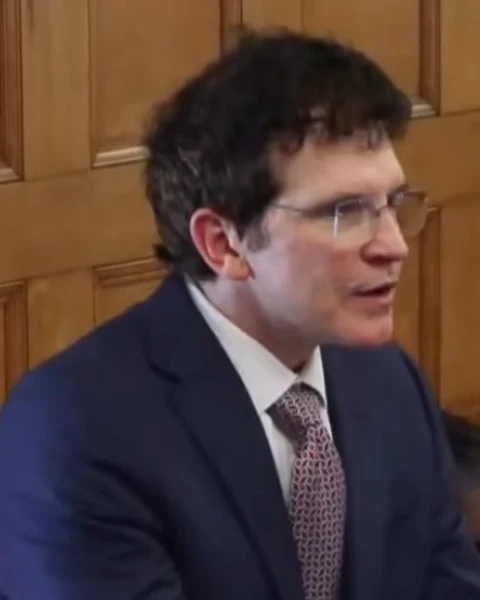
Courtroom still of Robert Alessi.

Courtroom Impact

Robert Alessi served as a key member of Karen Read's defense team in Trial 2, handling cross-examination of the prosecution's most technically complex expert witnesses across digital forensics, forensic science, meteorology, and accident reconstruction. His approach was methodical and document-driven — building impeachments by first establishing scientific standards through the witness's own concessions, then systematically demonstrating those standards were not met. Alessi examined nine witnesses over 25 proceedings, including Cellebrite expert Ian Whiffin, digital forensics analyst Jessica Hyde, forensic scientist Maureen Hartnett, medical examiner Dr. Irini Scordi-Bello, and accident reconstruction expert Dr. Judson Welcher, while also conducting the direct examination of defense expert Dr. Marie Russell.

Notable Quotes From The Record

“Cell phone data, when correct and when correctly analyzed, can help tell a story of what may have happened under various circumstances.”

Sets the framing for the cross — that correctness and completeness of analysis matter, previewing the theme that Whiffin's presentation was incomplete.

“So now we have at 12:29:44 the phone's out in front of 34 Fairview. There's an incoming call from Jen McCabe. It's answered. 7 seconds is how long the duration of the call was. Is that correct?”

Establishes that an incoming call from a contact named Jen McCabe was answered while the phone's location data placed it in front of 34 Fairview. Whiffin agreed it was answered by the phone user, but had not checked whether a secondary Face ID user was set up.

“So you altered it right now. And that alteration was made after Cellebrite had removed the 2:27 a.m. timestamp from its programs. Correct?”

Alessi's culminating compound question proposed a temporal connection between the current alteration and Cellebrite's removal of the disputed timestamp.

“What I want to do is, with regard to her 2:27 timestamp and her anticipated testimony on that — where she uses a tool, Cellebrite, to determine and come to a conclusion about that timestamp — she is not using Apple source code to find out where that's located specifically in the phone and what it means. She is using a surrogate — a surrogate — to do that.”

Articulates the defense theory that Hyde's methodology is unreliable because she lacks access to Apple's proprietary source code.

“They can't have it both ways. You can't say I need to do it in direct, but no, I want to handcuff the defense on cross-examination.”

Defense framing that the prosecution triggers the 2:27 issue on direct and therefore cannot restrict cross-examination on the same topic.

“We cannot tell by this particular artifact what time that search occurred.”

The quoted prior-testimony language was read by Alessi during this proceeding and confirmed by Hyde as limited to the BrowserState DB artifact; it does not by itself determine the broader multi-artifact search-time opinion.

“Do they state what that research is?”

Alessi highlighted that the release notes did not describe the further research underlying the change.

“So, doesn't matter what kind of movement, but that phone was moving starting at 12:31:56 and still moving until 12:32:16 a.m. on January 29, 2022. Correct?”

Alessi's question asserted that the phone registered motion from 12:31:56 to 12:32:16 a.m., and Hyde answered yes. The recross exchange did not identify the possessor or cause of that motion.

“You didn't do any analysis of what could have caused that hole in the sweatshirt. Did you?”

Core defense point — damage was documented but never causally linked to a vehicle impact.

“Could 3,700 compressions from a Lucas machine explain hemorrhaging in the pancreas?”

Alessi asks whether his assumed calculation of 3,700 Lucas-machine compressions could explain pancreatic hemorrhaging; Scordi-Bello says it could.

“Mr. Burgess in his original report months ago has a whole section on clock drift. That's not a new concept for him. He's just changing the drift.”

Core defense argument that the amendment uses long-available data and cannot be justified as responsive to new information

“If there's ever an example of an ambush, this is it.”

Defense framing the amended Aperture report as a paradigmatic discovery violation

“It prejudices the defendant because it almost ipso facto gives a double rebuttal to the defense.”

Alessi argued that the proposed sequence would prejudice the defense by effectively giving the prosecution a second rebuttal.

“Literally one second can not only completely turn the Commonwealth's theory around and debunk it, but also the jury's analysis of it.”

Frames the clock drift issue as potentially case-altering, emphasizing how narrow the timing dispute is.

“We would need four days to be able to address it. We will not ever be able to recover strategically or substantively from it, given all that's been presented to the jury.”

Defense's formal time estimate and acknowledgment that the damage to their trial strategy may be irreparable.

“We have a serious concern that the sequestration order has been violated. He has changed a very key aspect of this matter after the testimony of Mr. Whiffin.”

Defense raises the possibility that Burgess's updated analysis was influenced by Whiffin's trial testimony, which would violate the witness sequestration order.

“64 megabits is 8 megabytes. Correct?”

Alessi used this conversion question in examining capacity errors affecting three chips in the protocol.

“Turns out that the entire foundation of your proposal was based on a fundamental misinterpretation of the difference between a computer bit and a computer byte. Correct?”

Alessi proposed that the protocol's entire foundation was the bit-byte error; Burgess rejected that proposition, saying the error was only partial.

“In point of fact, Mr. Burgess, none of the five timelines that we just reviewed from your presentation are accurate at all, and certainly not down to the second. Am I right or am I wrong?”

Alessi challenged Burgess's timeline accuracy. Burgess denied that the five timelines were inaccurate; the exchange later established that the slides were correctly dated January 30 and narrowed the issue to a possible prior oral misstatement.

“Choosing the three-point turn as the independent data source is the only way you could ever get the text stream event to even possibly occur after the lock event on Mr. O'Keefe's phone. Correct.”

Core confirmation bias argument — Burgess's methodology choice was the only one that supported the prosecution's timeline.

“Assume the data shows that in the mere 8-month period that Miss Read owned her vehicle, the Lexus in question, there were 30 text stream trigger events. Assume that. You would not conclude that there were 30 collisions in that 8-month period, would you?”

In Alessi's assumed 30-event hypothetical, Burgess agreed that the premise would not support concluding there had been 30 collisions.

“You know how to write 'currently pursuing' on your CV.”

Alessi used the CVs containing 'currently pursuing' to contrast that language with its absence from the Texas CV; the comparison was an impeachment theory and did not establish intent.

“A bachelor of general science in mathematics and business administration does not exist as an offered degree at the University of Alabama-Birmingham. Does it?”

States Alessi's impeachment premise that the listed degree title was not offered at the University of Alabama-Birmingham; Burgess later described the BGS line as an error.

“Is it probable that that injury was caused by the application of force directly to that area of the front of his head?”

Alessi asks whether direct force to the front of the head probably caused the eyelid laceration after Wolf said such force was possible; Wolf does not answer the probability question.

“But my question, sir, is the change means now that with the Mr. Burgess variance moving, you now have part of the moving range that occurs after the device lock. Whereas before your change, the device lock occurred after every bit of your range of 11622. I have that correct, don't I, sir?”

Alessi asks whether the revised timing places part of the trigger range after the device lock, whereas the original range was entirely before it.

“The question of whether there was a collision is the ultimate question for the jury. That is why we are having this trial.”

Core of the defense objection — framing collision as the ultimate issue experts cannot opine on

“Neither Dr. Wolfe nor Dr. Rentschler talk about a collision conclusion. It's consistency.”

Defense distinguishes their own experts' approach to argue the prosecution should be similarly limited

“So, the Commonwealth is obligated to pay at least $325,000. Is that correct?”

Alessi asks about the contract obligation; Welcher said he understood the amendment to authorize that amount but cautioned that he was not an attorney and did not know what Aperture had been paid.

“You put in your slide presentation information from the autopsy report of Dr. Scordi-Bello for a reason. Correct, sir?”

Sets up the simple logical trap: inclusion equals consideration.

“It was remarkable on redirect. I've never seen a prosecution essentially go after the opinions and conclusion of their own medical examiner when they basically said the medical examiner, 'I can't call this a homicide. The manner of death is undetermined.'”

Defense highlighting the internal tension between the prosecution's medical examiner (Scordi-Bello) and their reconstruction expert (Welcher).

“Dr. Welcher himself can't cherry-pick — grab things that he needs from Trooper Paul to do his analysis, and then have the Commonwealth say, 'But you can't go after that because it somehow has Trooper Paul's name on it.'”

Core defense argument that an expert who uses another expert's data must face cross-examination on all of that data, not just the favorable parts.

“So, however, you want this jury, sir, to conclude that the glancing blow that you contend occurred at 34 Fairview Road by the same 6,000-lb Lexus in contact with a mere 216-lb man did register an event on the Lexus. Correct?”

Alessi posed a comparison between the One Meadows contact and the 34 Fairview event; Welcher rejected the premise that an impact registered the event, explaining that the trigger was throttle behavior and TechStream does not register crashes.

“you acknowledge that TechStream data— what you have called a trigger— that was on that slide, does not tell you if a collision even occurred. Correct?”

Immediately undercuts the redirect's framing of slide 33 data as objective proof by reestablishing that the data does not indicate a collision

“Can you point to one document that shows that you analyzed whether there was no contact between the Lexus and Mr. O'Keefe? Point to one document.”

Direct challenge to Welcher's claim of following null hypothesis methodology — demands documentary proof of alternative hypothesis analysis

“The defense has been incredibly assiduous and meticulous about not mentioning DNA in any fashion, directly or indirectly, with regard to the hoodie, shirt, and the hole.”

Establishes the defense's position that DNA was deliberately avoided and the prosecution breached that boundary.

“There was no swabbing of the wounds to the right arm of Mr. O'Keefe. That is a major, major investigative flaw in this case that should not be befallen upon the defendant.”

Defense highlights that the absence-of-DNA argument is undermined by the fact that the wounds themselves were never tested.

“Is that a close call for you to come to that conclusion?”

Sets up Russell's emphatic 'Not at all' — reinforcing confidence in her opinion

“In totality, the injuries documented in the autopsy report and photographs are non-specific and may be the result of a variety of different mechanisms. No additional information was provided regarding the possible circumstances or events surrounding the death. The absence of additional information prohibits the attribution of injuries and contribution of findings to a specific underlying cause of death.”

After the court had declined to admit the Walsh report, Alessi read this passage from the Walsh letter and Russell confirmed that he read it correctly. The letter was then marked for identification, so the passage remains counsel-read report language rather than Walsh testimony.

“Those holes in the back of the hoodie sweatshirt are clearly, unequivocally, without doubt, caused — nothing to do with any type of event on or about January 29th, 2022.”

Core of the mistrial argument — the holes were lab cuts, not evidence of a collision.

“What could be more egregious? What could be more misleading than that? And what could be more important for context than the alleged collision that never occurred?”

Defense frames the incident as deliberate misconduct on the central issue of whether any collision occurred.

Key Moments

Appearances (25)

Trial 2

Day 5 Cross Ian Whiffin - Cross of Ian Whiffin April 28, 2025 Day 6 Cross Ian Whiffin - Cross of Ian Whiffin April 29, 2025 Day 6 Recross Ian Whiffin - Recross of Ian Whiffin April 29, 2025 Day 10 Cross Gilman - Cross of Robert Gilman May 6, 2025 Day 11 Procedural Procedural - Sidebar (Hyde Daubert Motion) May 7, 2025 Day 11 Cross Jessica Hyde - Cross of Jessica Hyde May 7, 2025 Day 11 Recross Jessica Hyde - Recross of Jessica Hyde May 7, 2025 Day 15 Cross Maureen Hartnett - Cross of Maureen Hartnett May 14, 2025 Day 16 Cross Maureen Hartnett - Cross (Continued) of Maureen Hartnett May 15, 2025 Day 16 Recross Maureen Hartnett - Recross of Maureen Hartnett May 15, 2025 Day 16 Cross Irini Scordi-Bello - Cross of Irini Scordi-Bello May 15, 2025 Day 16 Cross Irini Scordi-Bello - Cross (Continued) of Irini Scordi-Bello May 15, 2025 Day 16 Recross Irini Scordi-Bello - Recross of Irini Scordi-Bello May 15, 2025 Day 18 Cross Shanon Burgess - Cross of Shanon Burgess May 19, 2025 Day 19 Cross Shanon Burgess - Cross (Continued) of Shanon Burgess May 20, 2025 Day 19 Recross Shanon Burgess - Recross of Shanon Burgess May 20, 2025 Day 20 Cross Dr. Wolf - Cross of Dr. Aizik L. Wolf May 21, 2025 Day 21 Voir Dire Judson Welcher - Voir Dire of Judson Welcher May 27, 2025 Day 22 Cross Judson Welcher - Cross of Judson Welcher May 28, 2025 Day 22 Recross Judson Welcher - Recross of Judson Welcher May 28, 2025 Day 23 Cross Judson Welcher - Cross (Continued) of Judson Welcher May 29, 2025 Day 23 Recross Judson Welcher - Recross of Judson Welcher May 29, 2025 Day 25 Direct Marie Russell - Direct of Marie Russell June 2, 2025 Day 26 Redirect Marie Russell - Redirect of Marie Russell June 3, 2025 Day 26 Redirect Marie Russell - Re-redirect of Marie Russell June 3, 2025