Person Maureen Hartnett Trial 1Trial 2← All People
🗣️ Witness

Maureen Hartnett

Also known as: Hartnett

Trial 1Trial 2

Testimony Impact

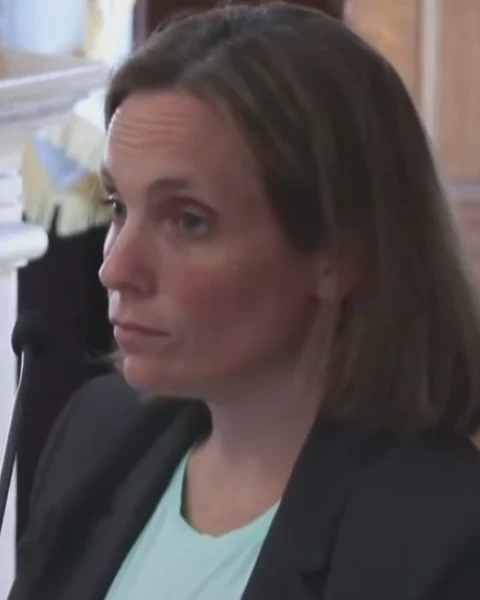
Maureen Hartnett is a forensic scientist with the Massachusetts State Police criminalistics unit who examined Karen Read's black Lexus SUV at the Canton Police Department and conducted laboratory analysis of John O'Keefe's clothing items. Her testimony covers her inspection of the vehicle's rear passenger area — where she documented a dent, scratches, and a broken tail light — as well as blood screening, trace evidence collection, and damage classification on O'Keefe's sweatshirt, jeans, T-shirt, and sneakers. She testified in both trials, with cross-examination in the second trial expanding significantly to challenge evidence handling, chain of custody, and the absence of biological transfer evidence linking the vehicle to a pedestrian strike.

Trial 1 vs Trial 2

In Trial 1, cross-examination by Alan Jackson focused primarily on documentation gaps, the incorrect date entry, the absence of debris photography, and the six-week chain of custody void. In Trial 2, Robert Alessi pursued a broader challenge: he established that no biological testing was performed on tail light fragments, confronted Hartnett with before-and-after photographs of the hair on the quarter panel, and dwelt extensively on the co-mingling of clothing evidence from two shirts into a single submission without separation or individual documentation. The Trial 2 redirect by Hank Brennan also introduced a more explicit suggestion — not present in Trial 1 — that evidence could have been planted on the tail light.

Notable Quotes From The Record

“I noted there was a dent in the trunk door, there were scratches on the rear bumper, and there was a broken tail light.”

Documents the three categories of damage observed on the rear passenger area of Karen Read's Lexus.

“Due to the case history, there was no visible red-brown stains on the item, as well as the fact there was a very limited surface area for me to sample from. In addition, I was informed that the car had been towed through a blizzard.”

Explains why no blood screening was performed on the tail light — conservative decision to preserve limited biological material for DNA testing.

“I determined the hair was consistent with a human hair with a root.”

Establishes the hair recovered from the vehicle's rear quarter panel was human, with a root suitable for DNA testing.

“It was told to me that potentially the victim may have been bitten by a dog during an incident, so I was taking swabs of that area to be sent out to determine if there's any dog DNA on that area.”

Introduces the dog bite theory as a line of investigation, with swabs collected from damage areas on O'Keefe's right sleeve for canine DNA analysis.

“I performed blood screening test as well as a blood confirmatory test.”

Confirms red-brown stains on O'Keefe's sweatshirt were tested and confirmed as blood through the standard two-step process.

“One of the sneakers was recovered from 34 Fairview Road and one of the sneakers was recovered from the hospital.”

Establishes the two sneakers were found at different locations, relevant to reconstructing O'Keefe's movements.

“I saw visible red-brown stains, which I screened for blood. I also performed a confirmatory test for blood. There was one stain on the orange T-shirt, however, that was too small to perform that confirmatory test, so for that instance I noted that the stain was quantity limited and I preserved it after the positive screening test instead of performing a confirmatory test, in order to preserve enough material for any DNA analysis.”

Demonstrates forensic judgment in preserving limited biological material for DNA over confirmatory testing.

“As far as the sneakers, given their dark color, I did not see any visible red-brown stains on the black area of the sneakers, so I used an alternate light source to aid in visualizing any potential blood on those sneakers. With that alternate light source, I tested several stains on the sneakers, one of which screened positive for blood.”

Shows methodological rigor in using alternate light source on dark-colored evidence where visual inspection alone was insufficient.

“I did not see any visible stains or tissue on the vehicle.”

Forensic scientist confirms no biological transfer evidence was found on the SUV despite examining it for a pedestrian strike.

“DNA testing was not done on those swabs.”

Blood from Solo cups collected at the scene was never DNA tested, leaving the source of the blood unconfirmed.

“To my recollection, they were just sitting on the bumper, yes.”

Glass fragments were merely perched on the bumper surface, not embedded, despite the vehicle having traveled through a blizzard — suggesting possible post-incident placement.

“Correct, because they were housed together, stored together.”

Witness concedes that co-mingling of the two shirts in one bag makes it impossible to determine the source of any debris collected.

“I personally do not have any data that would indicate where those items of evidence were prior to them being accepted into the lab.”

Establishes a complete chain of custody gap for all submitted evidence between collection on January 29 and lab submission on March 14 — over six weeks.

“I took them from what would have been the exposed area of the tail light, should the tail light have been intact. So I did not collect from any of the interior portions of the tail light that would have been protected by the exterior plastic piece.”

Establishes that DNA swabs targeted the exterior contact surface of the broken tail light, not protected interior areas — relevant to whether biological material found there is consistent with impact.

“Not to my recollection, no.”

Hartnett does not recall frozen snow or ice on the vehicle exterior, addressing the defense's point about the vehicle traveling 60 miles through a blizzard with loose evidence on its surface.

“I noticed there was some damage to the rear passenger area of the vehicle.”

Initial observation establishing the focus area of vehicle damage relevant to the case theory.

“Those were negative.”

Blood screening on the vehicle undercarriage was negative — a key fact for the defense challenging the pedestrian-strike theory.

“It had missing pieces, but nothing was loose on the tail light housing itself at the time that I collected it.”

Establishes the condition of the tail light at collection, relevant to chain of custody questions about loose pieces found later in the evidence bag.

“This item was quantity limited. The swab itself was quantity limited, meaning that they'd have to use up the whole swab in order to run DNA analysis.”

Explains why the entire tail light swab was consumed for DNA testing, leaving no material for retesting.

“That scraping was combined with the scrapings from the sweatshirt.”

Debris from the orange T-shirt and sweatshirt were combined into a single submission (item 7-18), a packaging decision relevant to trace evidence analysis.

“That would be outside the scope of my expertise. I don't make any conclusions on injuries on the person.”

Witness cannot connect arm wounds to anything on the vehicle, limiting the prosecution's ability to link vehicle damage to victim injuries through this witness.

“Correct. At this time, those were not tested for blood at all. So I couldn't confirm that they were blood, and no additional testing was done.”

Solo cup stains were never confirmed as blood and never DNA tested — a significant gap in the forensic workup.

“No, they were resting on the bumper.”

Establishes glass fragments were not embedded — central to defense argument they could have been deposited at any time.

“It was not difficult.”

Glass was trivially easy to remove with tweezers, supporting defense theory it was loosely deposited rather than impact-driven.

“No, it in fact wasn't secured in any way on that quarter panel.”

Hair evidence was completely unsecured on a smooth vertical surface, undermining its evidentiary weight.

“No, there was not.”

Confirms no biological testing was performed on tail light fragments found at 34 Fairview Road.

“Yes, the items were packaged together, so they were already co-mingled, so there was no way for me to determine which debris came from which item, and it would be misleading to label them as such, so I combined them.”

Establishes that the two clothing items were already co-mingled before lab analysis, making it impossible to attribute debris to a specific garment.

“No, I don't know the source of the debris.”

Hartnett cannot identify whether debris on the clothing originated from the scene, an ambulance, a hospital, or elsewhere.

“I have no knowledge of where they were stored or anything like that before that.”

Confirms Hartnett has no chain of custody information for evidence items submitted by the Norfolk Detective Unit prior to lab receipt.

“No, I was not.”

Confirms Hartnett was not at the scene the morning O'Keefe was found, establishing she has no firsthand knowledge of evidence collection conditions.

“I did not note any. I also did not examine the interior of the vehicle.”

Confirms all damage evidence — hair, scratches, dents — was limited exclusively to the right rear quarter panel, with nothing found elsewhere on the vehicle exterior.

“No. To the best of my recollection, there was no snow on the vehicle when I saw it.”

Establishes the vehicle's condition changed between the night of the incident (snow-covered) and Hartnett's examination, raising questions about what else may have changed.

“I think there are really just too many variables to say either way.”

Hartnett concedes she cannot determine when evidence was placed on the vehicle, supporting the defense planting theory.

“I would be looking for any item of evidence. I'm not specifically looking for anything. I'm just looking for anything that could potentially be evidence.”

Establishes that Hartnett's examination methodology would not distinguish between evidence from a collision and evidence placed after the fact.

“No, I did not.”

Concession that no causation analysis was performed on the hoodie damage.

“I wanted to correct something from the record yesterday. I wasn't sure when it was appropriate to do that.”

Unusual moment where witness tries to amend prior testimony but is not permitted to do so by the judge.

Key Moments

Locations Touched By This Testimony

Appearances (10)