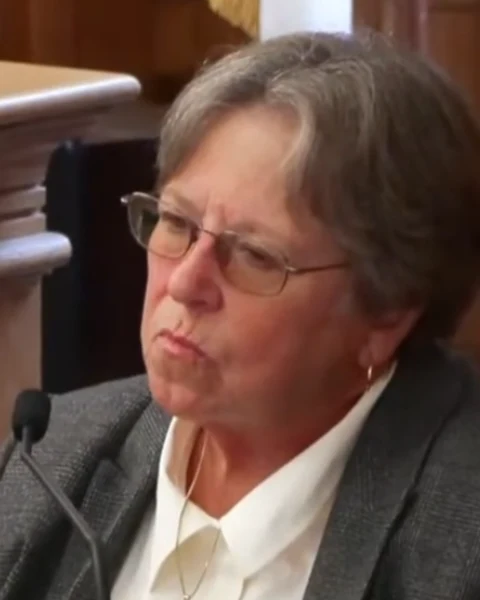
Marie Russell
Testimony Impact
Dr. Marie Russell is a retired emergency physician with 29 years as an attending physician at LA County USC Medical Center and prior coroner's office experience, called by the defense to offer an alternative explanation for the wounds on John O'Keefe's right arm. She initiated contact with the defense herself after reading Boston Globe coverage of the case, and was permitted to testify after surviving voir dire challenges to her qualifications in both trials. Her core opinion — that parallel striations, punctate marks, and an arch pattern near the wrist are consistent with a large dog attack and inconsistent with a motor vehicle strike — directly countered the prosecution's theory that Read's Lexus caused O'Keefe's injuries.
Trial 1 vs Trial 2
In Trial 1, the prosecution's challenge was primarily focused on Russell's qualifications and the compressed timeline of her opinion, with voir dire conducted by ADA Lally before a relatively streamlined direct and cross. In Trial 2, the examination expanded significantly — spanning parts of two trial days — with prosecutor Brennan adding new lines of attack including the sequestration violation, Russell's use of a trial photograph on a professional listing service, the absence of dog DNA on O'Keefe's clothing despite Russell's acknowledgment that bites should leave DNA, and a detailed confrontation with Dr. Walsh's Armed Forces pathology report. The Trial 2 cross also introduced a more systematic challenge to Russell's methodology using her own cited literature, a technique not employed in Trial 1.
Notable Quotes From The Record
“Those injuries appear to be consistent with an animal attack.”
Russell's core opinion — that O'Keefe's arm wounds are from an animal, not a vehicle — directly supports the defense's alternative theory of the case.
“Well, of course I considered what else could have caused these wounds, and before coming to my conclusion I wanted to rule out other things. And there were no significant major bodily injuries outside the head. There was nothing there — no fractures, the long bones, the chest, the pelvis, the arms. So, having seen hundreds and hundreds of car accident victims and people hit by cars, I ruled that out very quickly.”
Russell explains why she excluded a motor vehicle strike — the absence of fractures, deep bruising, or soft tissue injuries typical of pedestrian-vehicle collisions.
“I contacted a district attorney that I had worked with in the past. We were discussing a different case — a case I autopsied in 1995 — and I mentioned that I heard that there was a case in Massachusetts that might have been being handled by one of his colleagues, his former colleagues, and that there was an issue of whether something was a dog bite, and that I might be able to help in that case to clarify.”
Reveals that Russell initiated contact about the case herself after reading Boston Globe coverage, rather than being sought out by the defense team.
“I have a very strong interest in wounds in general, and I have a strong interest in dog bites in particular.”
Establishes Russell's specialized focus area directly relevant to her opinion in this case.
“I believe that these injuries were sustained by an animal, possibly a large dog, because of the pattern of the injuries.”
The core defense expert opinion — arm wounds are from an animal, not a vehicle strike.
“And these are all, by the way, on the exterior surface — or what doctors would call the posterior surface of the arm — which is the part of the arm that would sustain defensive-type wounds.”
Russell begins to characterize the wound location as consistent with defensive injuries before being cut off by objection.
“There are a number of patterns here. On the upper part of the arm there are parallel lines, and those were inflicted by either teeth or claw marks.”
Russell identifies specific wound characteristics — parallel lines and punctate marks — as the evidentiary basis for her animal attack conclusion.
“I haven't been asked to write a report, sir.”
Russell deflects responsibility for the missing report to defense counsel
“Not with 100% certainty, no.”
Russell concedes she cannot identify what type of animal supposedly attacked O'Keefe
“I'm an ER doctor. I need to make a diagnosis quickly when I see something, and I'm trained to do that. That's my specialty.”
Russell's closing defense of her methodology — framing rapid assessment as professional competence rather than hasty analysis
“I believe the report says that that is not reliable, as it once was thought to be. Like a fingerprint identifying a human being, DNA identifying a person, or a bite mark identifying a person — NAS said no, the bite mark doesn't work that way.”
Reframes the NAS report as irrelevant to Russell's opinion — it concerns identifying who left a bite mark, not whether injuries are from an animal.
“So animals, and dogs in particular, can inflict a wide variety of injuries on the skin — from just individual puncture wounds, to abrasions where there's a scratching of the skin, to where there's actually a pulling away — and pulling away of the skin from the underlying tissues, your ripping effect.”
Explains why O'Keefe's injuries need not match specific dog bite photos shown during cross — animal attacks produce diverse wound patterns.
“Those wounds were inflicted as the result of a dog attack.”
Russell's central opinion — the arm wounds are from a dog, not a vehicle strike.
“What I see are multiple strikes from a dog.”
Russell identified at least four distinct groupings of bite or claw marks across the arm.
“Pathognomonic in medicine means that the characteristics of a condition are so highly specific and unique that they basically say that it can only be from a certain condition and no other condition.”
Russell characterized the wounds as pathognomonic for dog bites, the strongest possible medical attribution.
“They have what we call a vital reaction. So there is ever so slight vital reaction or inflammation around the edges of the wounds, and so that supports the fact that they were inflicted during life.”
Establishes that the wounds were sustained before death, meaning O'Keefe was alive when bitten.
“I believe this hole was made by a canine tooth, and with the tooth going into the shirt, reaching the skin, and then coming out of the shirt, pulling out some fabric with it.”
Russell connected the clothing defects to her dog bite theory, linking holes in the hoodie to canine tooth punctures.
“I did so for a reason. And the reason being that I knew I was one of the only people in the United States board-certified and residency-trained in emergency medicine and also residency-trained in forensic pathology.”
Russell's self-assessment of unique qualifications, which Brennan uses to frame her involvement as self-promotional.
“A forensic evaluation? No. Never.”
Russell's direct admission that she has never performed a forensic evaluation of a wound to determine if it was a dog bite before this case.
“I agree.”
Russell concedes the arm wounds had no punctures and no measurable depth — consistent with the medical examiner's findings and potentially undermining the dog bite theory.
“I said, 'Mr. Alessi.'”
Russell admits the defense attorney helped with her report, contradicting her initial testimony that it was not one of the attorneys.
“There is no published standard from an organization that I am aware of.”
Russell concedes there are no accepted standards for forensic dog bite identification, undermining her methodology claims.
“Not with a reasonable degree of medical certainty on individual wounds.”
Russell cannot identify a single mark from a dog's lower jaw anywhere on O'Keefe's arm, undermining the bite theory given that dog bites involve both jaws.
“Individually, no.”
Russell admits that no single wound on O'Keefe's arm can independently be identified as a dog bite to a reasonable degree of medical certainty.
“Not before I came up with the opinion. No.”
Russell admits she did not study the vehicle, debris field, or scene photographs before concluding the injuries were not from a collision.
“I disagree with his assessment.”
Russell's direct rejection of the Deputy Medical Examiner's conclusions, which Brennan then tried to leverage as grounds for admitting Walsh's report.
“I looked at it, but I honestly did not understand it.”
Russell admits she could not interpret the telematics data yet still excluded vehicle collision as a cause.
“Well, first of all, my opinion came long before that report ever came out. So the answer to that is no.”
Reveals Russell formed her opinion before key evidence was available, undermining her differential diagnosis methodology.
“They can cause superficial abrasions, but not in that pattern that we saw on the arm.”
Russell's final position — conceding tail light fragments can cause abrasions but maintaining the pattern is inconsistent with that mechanism.
“I do not believe that they could have caused those wounds.”
Russell's definitive rejection that 1/16th-inch tail light fragments could cause the arm abrasions
“This should be considered pathognomonic for dog bites, especially when accompanied by tissue defects and claw marks — the latter being narrow, superficial linear abrasions arranged parallel to one another, four or five in number and usually found in the vicinity of the bite.”
Reading from De Munnich study — provides published forensic literature directly describing the wound pattern Russell identified on O'Keefe's arm
“In practice, it is hardly expected that all six incisors of a jaw will act uniformly.”
From Pollock study — supports Russell's 'incomplete bite' theory by establishing that partial bite impressions are expected in the literature
“There were no injuries that she mentioned, nor any injuries that I saw on the pictures. And no injuries.”
Absence of internal leg injuries despite thorough autopsy dissection — undermines vehicle strike theory
“There are no accepted standards.”
Russell concedes there is no accepted methodology for diagnosing dog bite wounds from photographs, undermining the scientific foundation of her testimony.
“There are no punctures on this arm that I see. However, again, the wounds don't have to have every single characteristic.”
Russell concedes the absence of punctures — a key dog bite characteristic — while attempting to preserve her opinion through qualification.
“I agree. However, in that case, those were dog bites that killed the victim. In this case, we do not believe that these dog bites killed the victim.”
Russell's attempt to distinguish fatal versus non-fatal dog bites after conceding all three characteristic traits are absent.
“The purpose was to identify that pattern recognition is an important component in identifying wounds, and particularly in dog bite wounds. It did not mean that the victim had to have every single characteristic that was listed.”
Directly rebuts Brennan's recross strategy of listing individual wound characteristics absent from O'Keefe's arm — Russell frames the methodology as pattern-based, not checklist-based.
Key Moments
- During voir dire in Trial 1, Judge Cannone identified that Russell had not reviewed records about Chloe the dog or UC Davis DNA testing — materials directly relevant to her opinion — exposing a gap in her preparation before she had even testified before the jury.
- On direct examination, Russell identified specific wound characteristics — parallel lines on the posterior surface of the arm and an arch-like dental impression near the wrist — as the evidentiary basis for her conclusion that the injuries were caused by an animal, possibly a large dog, rather than a vehicle.
- In Trial 2, prosecutor Brennan revealed during cross-examination that Russell had violated the sequestration order by discussing testimony strategy with defense attorney Alessi, a disclosure that reframed her independence as a witness.
- During recross in Trial 2, Brennan turned the peer-reviewed articles Russell herself cited on redirect against her, methodically establishing that each characteristic dog bite trait described in those studies was absent from O'Keefe's actual wounds.
- On re-redirect in Trial 2, defense attorney Alessi closed by reading a passage from the Armed Forces forensic pathology report of Dr. John C. Walsh stating that O'Keefe's injuries were 'non-specific' — using the prosecution's own referenced expert to support Russell's broader point about diagnostic uncertainty.