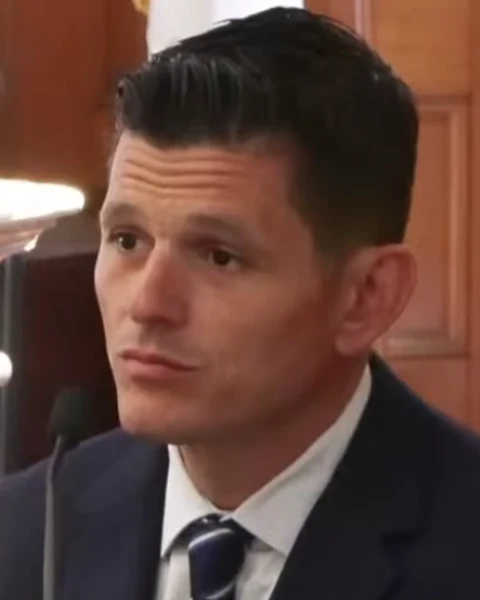
Jonathan Diamandis
Testimony Impact
Jonathan Diamandis is a Canton-area man who has known Michael Proctor since middle school — a friendship of roughly 30 years. He was called by the defense in Trial 2 to authenticate a group text chain among Proctor and childhood friends, a chain containing messages in which Proctor expressed bias toward Karen Read from the earliest days of the investigation. Diamandis's testimony spanned voir dire and a full jury appearance across Days 24 and 25, covering the text chain's authenticity, its participants, and the content Proctor shared through it.
Notable Quotes From The Record
“I've known him since middle school, probably the sixth grade. Grew up with him essentially. Been friends for 30 years.”
Establishes the long personal friendship between Diamandis and Proctor, giving him standing to authenticate the text chain.
“Michael Proctor.”
Identifies 'local user' in the text records as Proctor, linking the extracted phone data to the lead investigator.
“I believe this to be a record of our text chain for this period of time.”
Key authentication testimony — confirms the document is a complete and accurate record of the group conversation.
“I do not have a memory of this happening.”
Prosecution elicits that Diamandis has no independent recollection of the conversations, potentially undermining the weight of his authentication.
“It's one that's been in existence for many years. We've been texting on that text chain for 10 plus years, I would suggest.”
Establishes the text chain as a longstanding group communication, not something created around the investigation.
“He's listed as local user.”
Key authentication point identifying Michael Proctor as the author of the 'local user' messages in the text records.
“Chip and Bear.”
Identifies Proctor's nicknames, which may appear in the text chain and help the jury follow who is speaking.
“That's another animal we won't be able to prove. The next one: they arrived at the house together, got into an argument, she was driving, and left.”
Reading Proctor's early case theory from his texts, showing Proctor had already formed a narrative about what happened within days of the incident.
“These are not my words. I'm not really comfortable reading these. Do I have to say these words out loud?”
Diamandis's visible discomfort reinforced that even Proctor's own friends found the texts objectionable, while also distancing him from the content.
“Absolutely not.”
Diamandis's emphatic denial when asked whether Proctor ever suggested framing a defendant or planting evidence — the core point of Brennan's cross.
“I didn't know anything about this case at all.”
Confirms the information flow was one-directional — Proctor leaking to friends who had no other source
“My understanding was it was due to the text messages. I don't know the other details of the situation.”
Diamandis's limited knowledge cuts both ways — he cannot confirm the defense's broader misconduct narrative but also cannot rule it out.
Key Moments
- During voir dire on Day 24, Diamandis identified 'local user' in the extracted phone records as Michael Proctor, providing the direct link between the text messages and the lead investigator in the case.
- Diamandis confirmed he believed the document to be a complete and accurate record of the group text chain — key authentication testimony — while also acknowledging he had no independent memory of the specific conversations, a concession the prosecution elicited.
- An admissibility hearing followed Diamandis's voir dire, during which Yannetti read aloud Proctor's texts about Karen Read — including 'We're going to pin it on the girl' — to argue that the messages demonstrated investigator bias from the very start of the investigation; Brennan conceded the texts showed bias but argued the defense should confront Proctor directly.
- Before the jury on Day 25, Diamandis authenticated the full nine-person group text chain — 38,777 messages spanning more than a decade — and identified phone numbers and nicknames for each participant, establishing the chain as a long-standing communication among friends rather than something created around the investigation.
- On cross-examination, Brennan walked Diamandis through the offensive texts but then established that in all those messages, Proctor never discussed planting evidence, framing a defendant, or tampering with the investigation — a point the prosecution used to limit the inference the jury could draw from the texts.