Person Jason Becker Trial 1Trial 2← All People
🗣️ Witness · Canton Fire

Jason Becker

Trial 1Trial 2

Testimony Impact

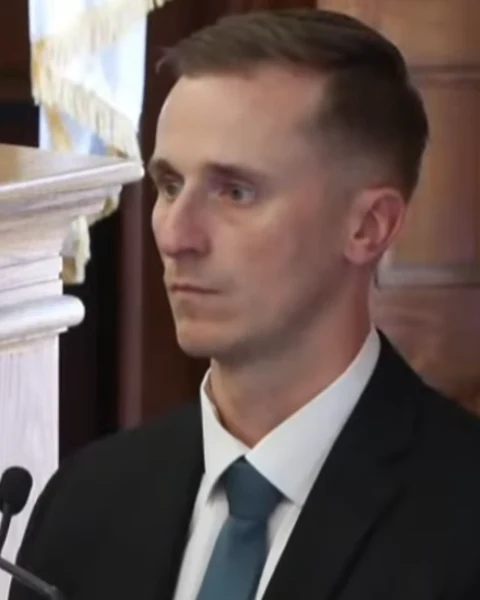
Jason Becker is a Canton Fire Department firefighter paramedic who was dispatched to a Section 12 psychiatric evaluation call for Karen Read on the morning of January 29, 2022, hours after O'Keefe's body was discovered. During transport to the hospital, Read made several statements to Becker that became central to the prosecution's case, including asking whether O'Keefe could be dead and questioning whether she could have hit him. Becker testified in both trials, recounting Read's emotional state, her mention of a prior argument with O'Keefe, and her initial denial of alcohol consumption.

Trial 1 vs Trial 2

Trial 2 featured a significantly expanded cross-examination by Alan Jackson compared to Yannetti's shorter T1 cross. Jackson probed Read's demeanor and signs of trauma more extensively and introduced the detail that Read tried to show Becker missed calls on her phone when discussing her last words to O'Keefe — an angle absent from Trial 1. Trial 2 also added a redirect and recross, with Brennan's redirect establishing that Read described an argument and never mentioned voicemails, and Jackson's recross pressing on the temporal ambiguity of 'earlier in the night.'

Notable Quotes From The Record

“She was in shock, she was crying. She kind of told us that the statements she may have made — she didn't mean it — because of the current events that she had just gone through.”

Read's first words to Becker — walking back earlier suicidal statements while explaining her emotional state.

“She kept asking if he was dead, or could he be dead.”

Establishes Read's repeated questioning about O'Keefe's condition during transport.

“She had said that they had gotten into an argument, that she was sad because that was the last thing she had said to him was the argument, but she didn't go into detail on what the argument was about or what was said.”

Establishes that Read and O'Keefe had an argument before his death, relevant to the prosecution's theory of motive.

“I asked if she had taken any drugs or alcohol, and she had denied it. At that point she said she had not.”

Read denied alcohol consumption to the paramedic, relevant to later evidence about her drinking that evening.

“She was asking if he was dead — 'could he be dead, could he be dead' — and she said 'could I have hit him.'”

The prosecution's key statement from this witness — Read's own words suggesting she may have struck O'Keefe with her vehicle.

“So when I ask a patient about any drugs or alcohol, I'm talking about at that point in time — an hour before, two hours before — not days before, weeks before.”

Clarifies the limited scope of the drug/alcohol question — Becker wasn't asking about the entire night, just the immediate timeframe.

“It was a call for a section 12 psych eval.”

Establishes the nature of the dispatch — Read was being evaluated as a potential danger to herself or others.

“In this specific situation, we didn't know the circumstances. We just knew that Miss Read had found her husband, whom she was calling dead on the side of the road. So it was a traumatic call.”

Establishes Becker's limited knowledge and neutral posture — he was a medical provider, not an investigator.

“Initially she was agitated because she didn't feel like she needed to go to the hospital. She said the statement she made, she didn't mean, she just kind of said in jest because of the events that she went through. But then there'd be periods where she'd be calm and then it would fluctuate. She would have pressured speech, repetitive, but all in all she was cooperative.”

Read's demeanor description and her attempt to walk back whatever statement triggered the Section 12 call.

“One of the reasons why she was saying that stuff is because the last thing—the last conversation she had with her husband at the time was an argument. I didn't feel like it was my role to really find out the details on what was said.”

Establishes Read disclosed an argument with John O'Keefe as her last interaction, without providing specifics.

“I did.”

Becker confirms he connected Read's distress about her 'last words' with the missed calls she showed him on her phone — the argument was via voicemail, not in person.

“Her demeanor was consistent with having gone through a significant trauma for the situation.”

First responder corroborates that Read's behavior was consistent with genuine trauma, not guilt or evasion.

“She didn't give any details.”

Establishes that Read never specified the nature or content of the argument, undermining any prosecution inference about an in-person confrontation.

“Uh, so she — she was also um — she was upset also because she said they had, you know, the last time they had talked she had gotten into an argument. So she was upset that that was like her last words to him.”

The full grand jury statement in context — Read described an argument from when they last talked, not a voicemail, directly countering the defense's cross-examination framing.

“I did not.”

Becker's unequivocal denial that Read ever mentioned voicemails or voice messages, repeated multiple times during the redirect.

“I didn't feel it was — you know, at the time we went about the call — we didn't, you know, think we would be witnesses in a murder trial. Um, you know, we were there to support Karen and ultimately get to the hospital safely.”

Explains why Becker didn't probe further about the argument — contextualizes the limited detail as appropriate paramedic behavior, not an investigative gap.

“She tried to.”

Confirms Read attempted to show Becker her phone, supporting the defense narrative that Read was referencing phone-based communication

Key Moments

Locations Touched By This Testimony

Appearances (6)