Person Irini Scordi-Bello Trial 1Trial 2← All People
🔬 Expert Witness · Norfolk County

Irini Scordi-Bello

Trial 1Trial 2

Testimony Impact

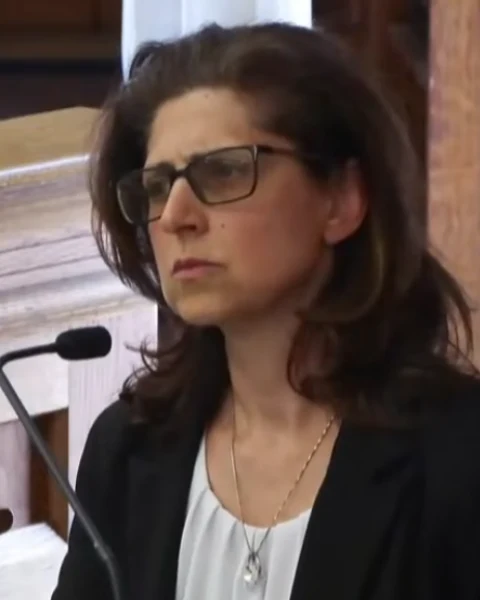
Dr. Irini Scordi-Bello is a board-certified forensic and anatomic pathologist employed by Norfolk County who conducted the autopsy of John O'Keefe on January 31, 2022. She testified in both trials as a prosecution witness, presenting her autopsy findings including skull fractures, arm abrasions, hand contusions, and signs of hypothermia. Her official determination — cause of death as blunt impact injuries of head and hypothermia, manner of death undetermined — placed her at the center of the trial's central dispute, as her findings neither confirmed nor excluded the prosecution's vehicle-strike theory.

Trial 1 vs Trial 2

In Trial 1, cross-examination by Elizabeth Little focused primarily on the injury patterns — the absence of lower-body injuries and whether the arm and facial wounds were more consistent with a physical altercation than a vehicle strike. In Trial 2, Robert Alessi pursued a substantially deeper methodological challenge, attacking Scordi-Bello's reliance on information from Trooper Proctor, her failure to perform differential diagnosis, the absence of Wischnewski ulcer terminology in her report, and the lack of frostbite findings despite extreme cold — framing the medical examiner's analysis as incomplete rather than simply reaching the wrong conclusion. The redirect in Trial 2 also introduced rehabilitation on the grand jury testimony that had no equivalent in Trial 1.

Notable Quotes From The Record

“Cause of death was blunt impact injuries of head and hypothermia.”

The official cause of death determination from the medical examiner who performed the autopsy.

“I listed could not be determined.”

The manner of death — the central contested issue at trial — was left undetermined by the medical examiner, meaning she could not distinguish between accident and homicide from the medical evidence alone.

“the skull is a pretty thick bone — it takes a considerable amount of force to fracture the skull — so that was a pretty considerable impact.”

Establishes that O'Keefe's skull fractures required significant force, relevant to evaluating whether a vehicle strike or a fall could have caused the injuries.

“I do believe the injuries — the blunt impact injuries — were sustained first. These are not injuries that are immediately lethal.”

Establishes the prosecution's timeline theory: head injury first, then incapacitation, then hypothermia onset while lying in the snow.

“I didn't see any major signs of what I would call a significant altercation.”

Absence of defensive wounds (intact nails, no knuckle bruising, no hand fractures) is relevant to whether O'Keefe was in a fight before his death.

“My response was that I am responsible for what goes on the death certificate, and unless I have enough information — clear and convincing evidence — I cannot determine a manner.”

Establishes the medical examiner's independence from law enforcement pressure regarding manner-of-death determination.

“They're not the classic pedestrian injuries that we observe. No.”

Concedes that O'Keefe's injuries don't match the typical pattern seen in pedestrian-vehicle collisions.

“In Mr. O'Keefe's case, I did not see any injuries in the lower extremities. And looking at the car, I did note that it was a much bigger car, with much higher — I would say much higher — tail light, bumper.”

Notes the absence of leg injuries typically caused by bumper impact, and that the SUV's higher profile changes the expected injury pattern.

“I would consider the amount of force to be significant — again, without being able to quantify it.”

Establishes that substantial force was required to produce the skull fractures observed.

“Correct. Yes, that's correct.”

Confirms that hand bruising is consistent with defensive wounds, undermining the prosecution's theory that all injuries came from a single vehicle impact.

“I don't know. I am not a reconstruction expert. I'm not a biomechanics expert. I never personally inspected the car, so I can't offer an opinion on that.”

The ME declines to connect injuries to the alleged vehicle strike, limiting the prosecution's ability to use her testimony for accident reconstruction.

“It's possible.”

Scordi-Bello concedes it is possible for someone to be punched hard enough to lose consciousness and fall backward — the core of the defense's alternative theory.

“It could be a single impact, but it also could be multiple impacts, correct. It could be, yes.”

Opens the door to the defense theory that O'Keefe sustained facial blows before the fatal head impact.

“Could be impact during a fall. It could be coming in contact with any blunt object.”

Broadens the explanation for facial injuries beyond the punching theory raised on cross-examination.

“Not typical, but possible.”

Concedes the isolated abrasion near the head laceration is atypical for dragging, supporting that it resulted from impact rather than being moved.

“I would expect to see — or I have seen — multiple bruising to the — again — posterior aspects of the forearms. I have seen cuts, lacerations, depending on how a person might be defending themselves, the position of their arms. And with that, also includes breaks in the fingernails and fractures to the hands.”

Lists typical defensive wound indicators absent from O'Keefe's body, undermining the defense theory that his hand injuries were defensive wounds.

“Again, a single impact with a fall could cause all the injuries that were seen in the brain and the skull.”

Reaffirms that all head trauma — fractures, hemorrhage, and raccoon eyes — is explainable by a single fall impact, consistent with the prosecution's vehicle-strike theory.

“I can state to a reasonable degree of medical certainty that that's a bruise, a contusion. But I cannot tell you how it occurred.”

Demonstrates the limits of autopsy findings — the ME can identify injuries but not attribute them to a specific mechanism for most wounds.

“The cause of death was determined to be blunt impact injuries of head and hypothermia.”

States the official cause of death finding.

“Not the primary. It contributed, but the primary cause of death was blunt impact injuries of head.”

Clarifies the hierarchy between the two causes — head trauma was primary, hypothermia contributory.

“The amended death certificate in this case stated that the cause was blunt impact injuries of head and hypothermia, and the manner was undetermined.”

Confirms the medical examiner classified manner of death as undetermined — could not distinguish between accident and homicide.

“I did not have sufficient information that pointed to one manner of death over another manner of death. And therefore I stated that the manner of death was undetermined.”

Reaffirms the ME could not determine manner of death, central to defense argument that homicide was not established

“I don't come up with hypothetical scenarios on how those injuries occur. I tried to state the injuries, describe the injuries, state the cause of death and why that person died.”

Reveals the ME's approach did not include generating or testing alternative explanations for the injuries

“There's nothing inconsistent with this injury and a fall on the back of the head with a blunt surface.”

ME concedes the injury pattern is consistent with a fall, not exclusively a vehicle strike

“I did not see evidence of grass. No, I did not make any determinations.”

No grass found in wound undermines the theory of a fall onto a grass lawn

“No, I did not make physical notes of my considerations.”

Establishes that no alternative theories were documented despite the ME claiming internal consideration of other possibilities

“I don't believe a Lucas machine causes hemorrhage to the mucosa of the stomach.”

While conceding Lucas machine could explain pancreatic hemorrhaging, Scordi-Bello draws a line at gastric mucosal hemorrhage, attempting to preserve her hypothermia finding.

“I would say somewhere between 10 and 15%.”

Scordi-Bello concedes the gastric hemorrhages covered far less of the stomach than the majority coverage she typically sees in hypothermia deaths, weakening the hypothermia diagnosis.

“I did examine his lower extremities. That is protocol in any case of suspected impact with a motor vehicle. So I did examine his legs and I did not see any evidence of an impact site.”

The medical examiner found no lower-extremity injuries consistent with being struck by a vehicle, undermining the prosecution's vehicle-strike theory.

“Not from falling backwards and hitting one's head, but that area at some point came in contact with a blunt object or surface.”

Scordi-Bello agrees the eyelid laceration required a separate blunt impact event, not a backward fall — supporting the defense theory that O'Keefe was struck in the face.

“The rest of the statement was that I have to take those findings in the context which was presented to me. So in the case of this particular case, those hemorrhages in the context of a body found in the snow, I believe they were due to hypothermia.”

Completes the grand jury statement defense selectively quoted, reaffirming her hypothermia opinion in full context

“I don't believe I knew about Miss McCabe.”

Establishes limits of information available to the medical examiner before filing the death certificate

“No.”

Direct answer confirming no one revisited the death certificate findings with her despite new evidence

“Most pedestrian fatalities that we see are with impact with the front of the vehicle.”

Contextualizes her earlier testimony about lower-extremity injuries — her frame of reference was frontal impacts, not sideswipe scenarios

“Well, they don't treat them, they prevent them, but that would be a proton pump inhibitor such as omeprazole, right?”

Establishes O'Keefe was on medication specifically for alcohol-related gastric ulcers, providing an alternative explanation for stomach findings attributed to hypothermia.

“It's possible. Correct.”

Scordi-Bello concedes the gastric ulcers could have come from alcohol consumption rather than hypothermia, weakening a pillar of her hypothermia diagnosis.

“Correct. Correct.”

Confirms she could not determine manner of death even after having Karen Read's incriminating statements, reinforcing that the medical evidence alone is ambiguous.

Key Moments

Locations Touched By This Testimony

Appearances (9)