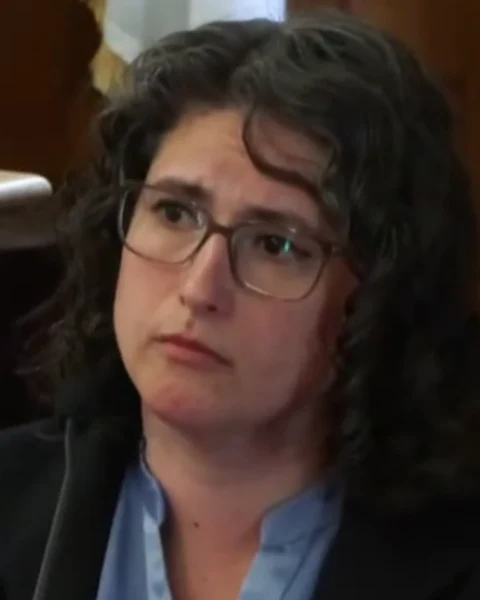
Hannah Knowles
Also known as: Knowles
Testimony Impact
Hannah Knowles is a forensic toxicologist employed by the Massachusetts State Police Crime Lab who testified in Trial 2 Days 8 and 9. Her testimony centered on converting a 93 mg/dL serum ethanol reading from a Good Samaritan Hospital blood draw at 9:08 a.m. into a whole blood alcohol concentration, and then performing a retrograde extrapolation to estimate Read's BAC at the time of the incident — producing a range of 0.14–0.28%. Her cross-examination by defense attorney David Yannetti extended across two days and focused on the reliability of the hospital lab results underlying her calculations and the assumptions built into her extrapolation methodology.
Notable Quotes From The Record
“The results are recorded as an alcohol result with a value of 93 mg per deciliter.”
The hospital serum ethanol reading that forms the basis for all subsequent BAC calculations.
“So the 93 mg per deciliter serum ethanol concentration would convert to between 0.078 and 0.082%, or grams percent.”
The converted whole blood alcohol concentration at the time of the hospital blood draw (9:08 a.m.).
“We usually subtract 2 hours from the time interval when we're doing that minimum calculation to have a more conservative estimate.”
Explains the methodology's built-in conservatism, preemptively addressing potential defense challenges about absorption phase uncertainty.
“That based on the 93 milligrams per deciliter value that was obtained at Good Samaritan, that the blood alcohol concentration for that individual at 12:45 a.m. could be between 0.14 and 0.28%.”
The retrograde extrapolation result — the central forensic conclusion of this proceeding, placing Read at nearly twice to over three times the legal limit at the incident time.
“The testing was not performed in my laboratory. I don't have any direct knowledge or understanding of their QC procedures, of their accreditation requirements, or their testing procedures at all.”
Establishes a complete gap between the accredited forensic standards Knowles upholds and the unknown standards of the hospital lab that produced the source data.
“The reliability of the results that my calculations were based on — my calculations are only as good as the numbers that I was provided. And like I said, the same math that I did here, I would do to my own internal standard or my own internal testing, anything that I performed testing on in the lab myself. But the results that I started from, I don't have any direct knowledge on their accuracy or reliability.”
The prosecution's own toxicology expert concedes she cannot vouch for the reliability of the blood test that underpins her entire BAC calculation.
“Correct. I have no direct knowledge of the accuracy or reliability. My calculations are solely based on the results of the Good Samaritan lab.”
Establishes that the entire BAC analysis is built on hospital results the expert cannot independently verify.
“It certainly is. .28 is double .14.”
The prosecution's own expert concedes the extraordinary width of the BAC range, undermining the precision of the calculation.
“The foundation of my calculations would be incorrect. I would need to perform different calculations or factor in the information as it would become available and issue a different report.”
Knowles admits that if Read drank after 12:45 a.m., her entire analysis collapses — the central vulnerability Yannetti was building toward.
“The conversion factors come from published studies involving individuals that consumed alcohol, had samples collected from them, and their whole blood and their serum alcohol concentrations were compared.”
Reinforces the scientific basis of the conversion factors challenged on cross.
“Less than 5%. The vast majority of alcohol is eliminated from the body by an enzyme that breaks it down from alcohol into carbon dioxide and water.”
Minimizes the defense's line of questioning about bladder elimination affecting BAC calculations.
“That range is intentionally wide to ensure that the actual blood alcohol concentration lies somewhere between it. It's intending to account for a lot of the factors that we've been discussing.”
Reframes the wide 0.14–0.28% range as conservative methodology rather than unreliable science.
Key Moments
- On direct examination, Knowles presented the core forensic conclusion of the prosecution's alcohol case: a retrograde extrapolation placing Karen Read's BAC between 0.14% and 0.28% at approximately 1:00 a.m. — potentially nearly twice to over three times the legal limit — based on a hospital serum ethanol reading of 93 mg/dL taken hours later.
- Yannetti's cross-examination surfaced a foundational vulnerability in Knowles's analysis: she acknowledged that her calculations were entirely dependent on the Good Samaritan Hospital lab results, and that she had no knowledge of the hospital lab's accreditation status, quality control procedures, or whether confirmatory testing had been performed — a concession that the prosecution's own expert could not vouch for the reliability of the source data.
- On the second day of cross-examination, Yannetti highlighted that the 0.14–0.28% BAC range — a spread Knowles herself acknowledged was double at its endpoints — depended critically on the unverified assumption that Read's last drink occurred at or before 12:45 a.m. Knowles admitted that if that assumption were incorrect, her entire analysis would need to be reconsidered.
- On redirect, prosecutor Adam Lally worked to rehabilitate Knowles's methodology, reinforcing that the serum-to-blood conversion factors she applied reflected the current 2024 scientific consensus and that the retrograde range, while wide, was scientifically grounded.