Person Robert Gilman Trial 2← All People
🔬 Expert Witness

Robert Gilman

Also known as: Gilman

Trial 2

Testimony Impact

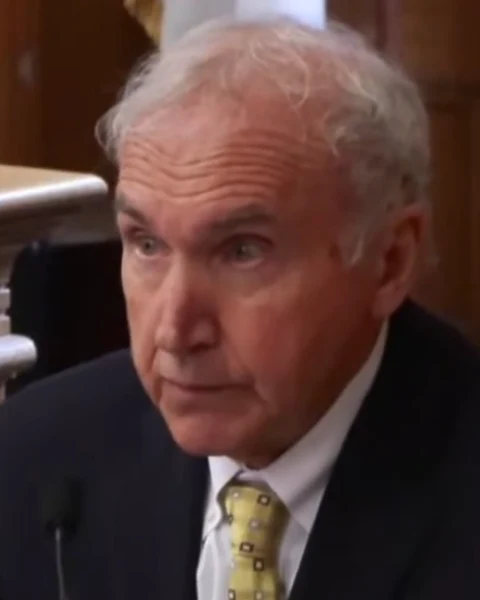
Robert Gilman, a professional meteorologist and founder of Precision Weather Forecasting Inc., was called by the prosecution to establish the weather conditions at 34 Fairview Road on the night O'Keefe died. Drawing on data from three nearby stations — Blue Hill Observatory, Logan Airport, and Norwood Airport — Gilman testified that while the region was in the opening phase of a historic blizzard that would ultimately deposit 23.8 inches of snow, only trace accumulation had fallen by midnight, the ground was frozen solid, temperatures were dropping through the low 30s, and the vast majority of snowfall came after 6 a.m.

Notable Quotes From The Record

“This was the biggest January storm in history uh with 27 inches of snowfall and it snowed heavily for several hours. Uh visibility under a quarter of a mile and the temperature was dropping during that time and the winds were gusting frequently to 40 and 50 miles an hour in this area.”

Establishes the severity of the storm at the time of the incident.

“Very little — enough to track a cat — 2/10 of an inch.”

Establishes that only trace snow had fallen by the end of January 28th, relevant to what ground conditions were like in the early morning hours.

“So based on this, it was pretty steady through around 2 in the morning. And then because of the nature of this type of storm — it's deepening rapidly, it's low pressure offshore — so the wind tends to back from the northeast to the north-northeast to the north.”

Explains the temperature drop mechanism during the critical early morning timeframe of the incident.

“the ground was frozen, the soil was frozen, and the surface of the ground was frozen. And it would have made the ground impenetrable — that hard”

Establishes the hardness of the ground surface at the time of the incident, relevant to injury causation.

“Enough to track a cat.”

Gilman's memorable characterization of the minimal snow on the ground around midnight — defense uses this to minimize storm conditions during the relevant timeframe.

“Oh, a lot of factors would come into play. Most importantly, since this was a forecasted storm event, the town may have pre-treated the road. That lowers the freezing point of the precipitation.”

Gilman concedes that actual road conditions could have had even less snow than the chart shows.

“Between 1:00 a.m. and 3:00 a.m. — so we have 3/10 of an inch up to 2 a.m., and another 4/10 of an inch — or a total of 0.7. So between 1 and 3:00 a.m. there's only an accumulation of 0.7.”

Confirms minimal accumulation during the timeframe most relevant to the case events.

“Visibility reported at 1:00 a.m. was 1.25 miles in light snow.”

Establishes that visibility during the critical early morning hours was sufficient to see nearby objects.

“So it may have felt like zero to even 10 below zero at the lowest temperature and the highest wind gusts.”

Establishes extreme windchill conditions relevant to exposure and hypothermia considerations.

“During that time frame, about 3/10 of an inch.”

Establishes minimal snow accumulation during the critical midnight-to-1 a.m. period.

“I have this chart — I showed the graph, the map. It just showed a trace of zero there, that was less than an inch on the ground.”

Reinforces that snow cover was negligible, meaning frozen ground was essentially exposed.

“A car in front of you, a building in front of you, a person — you know, anything other than weather.”

Qualifies his earlier visibility testimony — the 30-foot figure assumed no physical obstructions.

“The way it would feel to the human body based on the wind on a certain temperature.”

Defines windchill for the jury, connecting the sub-zero estimates from cross to actual human exposure risk.

Key Moments

Locations Touched By This Testimony

Appearances (3)