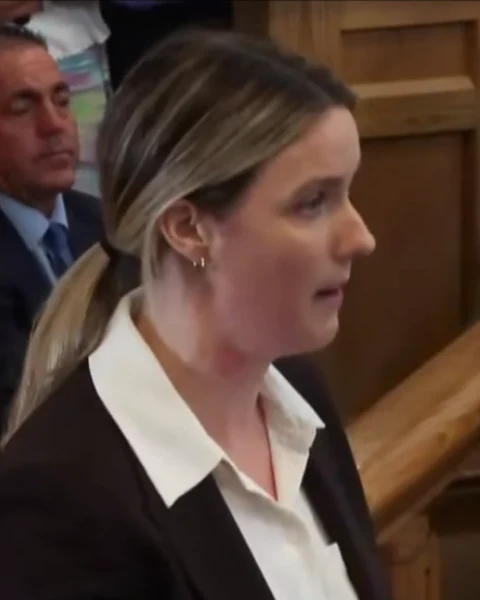
Elizabeth Little
Courtroom Impact
Elizabeth Little, a partner at Werksman Jackson & Quinn LLP alongside co-counsel Alan Jackson, served as a core member of Karen Read's defense team across both trials. Her courtroom role centered on two complementary tasks: systematically dismantling the prosecution's forensic and medical expert witnesses through technical, step-by-step deconstruction of their methodologies, and impeaching lay witnesses from the Albert family circle using prior statements and documentary records. She also conducted the direct examination of defense forensic pathologist Dr. Frank Sheridan in Trial 1, presenting the affirmative case that O'Keefe's injuries were inconsistent with a vehicle strike. Her questioning style was consistently methodical — building concessions incrementally rather than confronting witnesses head-on — and she relied heavily on the witnesses' own prior statements, reports, and records to expose contradictions.
Notable Quotes From The Record
“You were also lying next to a first responder, correct?”
Final question establishing that Brian Albert, a trained first responder, was in the bedroom during the emergency but never came outside to help
“This interview actually took place at your family's defense attorney's office correct?”
Establishes the controlled, legally protected setting of the first interview — 18 months after events.
“But you did not see a 220-pound man lying in the snow in your front yard. Is that something that you saw?”
Central defense theme — if visibility was sufficient to see tire tracks, it should have been sufficient to see O'Keefe's body.
“From the neck down, he did not have a single broken bone, right?”
Culmination of a systematic inventory establishing O'Keefe had no documented injuries below the neck aside from forearm abrasions — inconsistent with a vehicle strike.
“And when you get a test result from a serum test, that information does not establish when alcohol was consumed. Correct?”
Establishes a critical limitation — the test cannot show whether Karen Read was intoxicated at the time of the alleged incident versus hours later at the hospital.
“And so you're just assuming the accuracy of a single test that was performed by the hospital.”
Frames the entire extrapolation as built on unverified hospital results outside forensic accreditation standards.
“If Miss Read drank alcohol after 12:45 a.m. and before her blood was drawn at 9:08 a.m., your entire calculation would be invalid?”
Final question establishes a clear condition that would completely invalidate the prosecution's BAC evidence.
“You said that you were given 12:45 as the time that you based your analysis on, and clearly that was not something that was provided to you by my client, right?”
Establishes the police report as the sole source of the last-drink time, distancing the defendant from the assumption driving the BAC calculation.
“That was something that was provided to you from a police report, correct?”
Pins the source explicitly to law enforcement documentation, reinforcing the defense theme that the analysis depends on the prosecution's version of events.
“From the neck down, he did not have a single broken bone — again, aside from those CPR-related injuries you discussed — correct?”
Establishes the absence of lower-body injuries that would be expected in a pedestrian collision with a large SUV.
“And all of those results were negative.”
Establishes that every drug test other than alcohol came back negative, narrowing the prosecution's intoxication theory to a single contested result.
Key Moments
- During her cross-examination of Nicole Albert in Trial 1 Day 9, Little systematically established that Nicole had never mentioned her brother-in-law Colin Albert to police investigators, used Cellebrite phone records to contradict Nicole's claim that she had not received calls from Jennifer McCabe on the morning O'Keefe's body was found, and confronted her with Sergeant Lank's report showing Caitlin Albert left the house at 12:15 AM — details collectively suggesting the Albert family had withheld information from investigators.
- Little's cross-examination of toxicology expert Dr. Nicholas Roberts in Trial 1 Day 18 methodically dismantled his retrograde extrapolation of Karen Read's blood alcohol level, walking him through each foundational assumption before landing on the pivotal closing question that established the 12:45 AM last-drink cutoff came entirely from a police report rather than from Read herself — leaving the jury with the impression that the prosecution's BAC timeline rested on an investigator's record rather than independently verified facts.
- In cross-examining emergency physician Dr. Justin Rice during Trial 1 Day 18, Little used Rice's own medical report to contradict his trial testimony, then conducted what proceedings notes describe as a 'rapid-fire body-part inventory' — systematically going through each part of O'Keefe's body to dramatize the near-total absence of injuries below the neck that would be expected if he had been struck by a vehicle.
- Little's cross-examination of medical examiner Dr. Irini Scordi-Bello in Trial 1 Day 29 built the defense's alternative theory directly from the prosecution's own expert, cataloging the absent lower-body injuries expected from a vehicle collision and eliciting concessions that O'Keefe's arm and facial wounds were individually consistent with a physical altercation rather than a car strike.
- In directing Dr. Frank Sheridan's testimony during Trial 1 Day 30, Little navigated multiple sustained objections by methodically relaying proper foundation before eliciting Sheridan's core opinions: that O'Keefe's arm injuries were inconsistent with being struck by a vehicle and more consistent with an animal attack, and that his fatal head injury would have rendered him immediately unconscious — directly countering the prosecution's vehicle-strike theory.