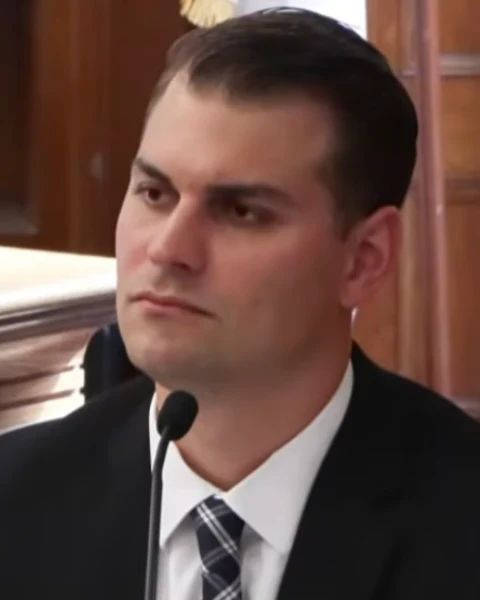
Daniel Wolfe
Testimony Impact
Dr. Daniel Wolfe is a principal at ARCCA Inc., an accident reconstruction and engineering firm with federal government contracts, who was retained as an independent third-party analyst through the Department of Justice and FBI to evaluate the physical evidence in the Karen Read case. His testimony centered on whether damage to the rear tail light of Read's Lexus LX 570 was consistent with striking John O'Keefe's body. Across both trials, Wolfe presented results from projectile and drop testing — including impacts with a drinking glass and a crash test dummy — concluding that the observed damage pattern was inconsistent with a pedestrian strike at the speeds alleged by the prosecution. His appearances in both trials spanned voir dire qualification, direct examination, and extended cross and redirect exchanges focused on his methodology and independence.
Trial 1 vs Trial 2
In Trial 1, Wolfe's voir dire and testimony focused primarily on establishing his independence and the physical inconsistency between the tail light damage and a pedestrian strike, with prosecution challenges concentrated on the scope of materials he had been provided and the completeness of his methodology documentation. By Trial 2, the prosecution had significantly expanded its attack on his independence, centering the voir dire on the deleted text messages, Signal use, and the pre-testimony outline he sent to Jackson — evidence that was not part of Trial 1 proceedings. Trial 2 also featured a much longer and more detailed cross-examination of Wolfe's crash testing methodology, including the arm weight discrepancy and the absence of fabric research, and Wolfe's testimony extended into a second trial day with redirect, recross, re-redirect, and re-recross sequences not present in Trial 1.
Notable Quotes From The Record
“Right. It's based on the evidence. That's correct.”
Wolfe affirms his opinions are evidence-driven, not aligned with either side.
“As far as I'm concerned, it would be the Department of Justice and the FBI.”
Reveals the retaining entity is the federal government, adding institutional credibility to the expert's independence.
“Nothing.”
Wolfe's unequivocal answer that no reviewed material suggested the head fracture was caused by direct vehicle contact directly supports the defense theory.
“No. The rest was remarkably intact.”
Establishes that beyond the isolated tail light damage, the Lexus showed no bumper displacement or sheet metal deformation expected in a pedestrian strike.
“So the tail light itself is not comprised of any glass — it is all plastic — so that glass on the top bumper cover could not have come from the right tail light.”
Eliminates the tail light as the source of glass fragments found on the bumper, supporting the drinking glass theory.
“We performed projectile testing to the tail lamp with a drinking glass as well as a hybrid headform.”
Describes the two key tests — glass projectile and head drop — that form the basis of Wolfe's conclusions.
“From a damage standpoint, it was inconsistent.”
Wolfe's direct conclusion that the tail light damage was inconsistent with striking O'Keefe's head.
“If you're talking about only an interaction between the arm and the back of the vehicle, no, there wouldn't be any projection. Again, if you think about this, the arm weighs about — with Mr. O'Keefe it would be about 11 pounds — so you still have another 200-plus pounds being held down by gravity.”
Physics-based explanation for why striking only an outstretched arm could not project a body, undermining the Commonwealth's strike-and-project theory.
“I don't believe that's explicitly stated.”
Concedes the temperature preconditioning of tail lights was not documented in the written report
“There was no events recovered on the black box.”
Confirms EDR recorded no crash event, which Wolfe explains is normal for pedestrian strikes due to the weight differential
“At that speed, no.”
Acknowledges a 0-5 mph collision would not produce the observed tail light damage, relevant to low-speed backing scenario
“Absolutely not.”
Unequivocal rejection of all evidence raised on cross as affecting his expert conclusions
“I just said I delete texts routinely. You're asking me to specifically give you a location and a time when I deleted those? I don't recall that.”
Wolfe's admission of routinely deleting texts becomes a focal point — Brennan frames it as intentional destruction of evidence.
“Yes. It was earlier this year. Mr. Jackson had communicated with me indicating that it was his preferred method of communication.”
Establishes that Signal — an encrypted messaging app — was used at Jackson's suggestion, and only for this case.
“I never discussed this with him. This is something that I sent to him that I did on my own and that I sent to him. But he never asked this of me and we never discussed it.”
Wolfe's defense — that sending a direct examination outline with strategic comments is not 'discussing' the case — strains credibility.
“So we were -- again, because we were still under contract with the Department of Justice, we could not have any other formal agreements, contracts, retainers, anything of that nature, because we were still under contract with the Department of Justice.”
Establishes the contractual prohibition that prevented any formal defense retention during Trial 1
“No, sir. And I will note I am not a part of the invoicing or accounting at ARCA -- when a bill goes out, how much it goes out for, who it goes to. I'm not a part of that at all.”
Distances Wolfe from the July invoice sent to the defense, suggesting he had no knowledge of the billing arrangement
“No, he didn't. Mr. Jackson didn't even respond. And I think when I sent the direct outline, it was Sunday evening before I hopped on a plane. And I think by the time I got into Boston, it was like 1:00 a.m. So I didn't even have a chance.”
Directly rebuts the implication that the outline was used for coordinated testimony preparation
“I didn't learn. I didn't know that it was paid. I didn't even know it was sent.”
Rebuts any inference that Wolfe was motivated by defense compensation
“No. I don't even know what we would be responding to then.”
Establishes that ARCCA's Trial 2 work was impossible without the new Aperture materials, countering any suggestion of premature defense collaboration
“I think it was as it relates to the arm being outstretched and I think some of the kinematics of the pedestrian. I also think there was some mention of potentially some DNA evidence.”
Reveals the specific substantive information the DOJ fed Wolfe about other witnesses before he testified — directly relevant to his own opinions on the collision.
“I was never made aware of that.”
Wolfe's admission that no one informed him of the sequestration order, despite receiving DOJ updates about other witnesses' testimony before his own.
“My understanding from communication with the Department of Justice is that all communication and work product is protected and cannot be disclosed.”
Establishes that Wolfe's Trial 1 raw data, videos, and notes remain permanently unavailable for vetting by the Commonwealth's experts.
“When we did the test, the impact to the tail light was at 15 mph and we observed that the damage to that tail light was significantly more than the subject tail light at the 15 mph speed. Furthermore, it did not generate, according to my colleague Dr. Rentschler, enough forces to cause a skull fracture.”
Establishes that even at 15 mph, a head strike produces more tail light damage than was observed on Read's Lexus and insufficient force for O'Keefe's skull fracture.
“It was inconsistent from a damage perspective.”
Wolfe's repeated conclusion across all tests — the subject tail light damage does not match arm strike at any speed tested.
“I'm not aware of him making any type of force calculations or measuring accelerations or anything of that nature.”
Central critique of Dr. Welcher's methodology — no force analysis, acceleration measurements, or speed calculations were performed.
“There were no punctures, holes, or fraying of the material during this impact test.”
Undermines the theory that tail light fragments caused the holes in O'Keefe's hoodie sleeve — no test replicated that damage pattern.
“The rear window is completely shattered. There's deformation and crush to the liftgate section of the vehicle. The bumper step was popped out.”
A 29 mph center-of-mass impact produced catastrophic vehicle damage far beyond what was observed on the subject Lexus, ruling out a full-body pedestrian strike.
“Mr. Jackson had indicated that he and his defense team utilize an application known as Signal for their communications amongst their defense team. Ultimately asked if I would also use that application to communicate, which I agreed to.”
Establishes the defense directed Wolfe to use an encrypted messaging app that leaves no records — the first time Wolfe used Signal with any client
“I did not cite any in my report.”
Wolfe concedes he has no literature supporting his methodology for the clothing/abrasion opinions he presented to the jury
“They would have to be going faster. If they're moving at a common velocity with the arm, relative to it, they would somehow have to accelerate with more speed to catch up and go beyond the arm essentially.”
Establishes physical impossibility of tail light debris penetrating the sweatshirt during a vehicle strike — undermines the prosecution theory that tail light fragments caused the sleeve punctures.
“Mangled. So there was not only significant road rash to the clothing all over the torso section, the left arm, the right arm, there were holes in many different locations of various sizes.”
Contrasts full-body impact damage pattern with the isolated puncture holes on O'Keefe's right sleeve, suggesting the sleeve damage is inconsistent with being struck and launched by a vehicle.
“No, this is distinctly road rash. There's a clear distinction between the two, looking at this particular set of defects in the arm.”
Expert distinguishes road rash damage from the puncture holes on O'Keefe's sweatshirt, undermining the prosecution's vehicle-strike theory.
“It doesn't. And that's part of the reason why we increased the speeds to almost 30 mph to look at— again, when you're bringing that much more kinetic energy from the vehicle, that's going to overcome any mass that that arm has.”
Directly rebuts Brennan's cross-examination attack on the 26% arm weight difference by explaining the kinetic energy equation renders the mass differential negligible.
“After the impact, the dummy was projected and sliding on the pavement surface. So again, this is consistent with the front side of the body sliding, making sliding contact with the pavement, creating those abrasions and holes and again that asphalt material transfer that you see on the front.”
Establishes that a 29 mph vehicle-pedestrian impact produces extensive road rash damage across the entire body — damage absent from O'Keefe's clothing.
“The test clothing was inconsistent compared to that of John O'Keefe's.”
Direct conclusion that the full-body damage pattern from a 29 mph impact does not match O'Keefe's sweatshirt, which only had damage on the right arm.
“if you double the velocity, you quadruple the amount of kinetic energy. So you get a significant increase from small changes in speed because of that speed differential.”
Explains why the velocity increase from 24 to 29 mph more than compensates for the lighter arm weight — the quadratic relationship means speed dominates mass in kinetic energy calculations.
“It would be more force and more energy in the 29 mph impact test.”
The bottom line of the kinetic energy demonstration — the actual test delivered more energy than the hypothetical heavier-arm scenario Brennan constructed on cross.
“No.”
Wolfe's final answer — confirming he did no studies on sweatshirt damage from falling on broken tail light shards — ends the examination on a concession
“I don't have a paper because Dr. Rentschler is addressing the forces and the injuries to the arm.”
Wolfe deflects responsibility to his co-expert, a pattern Brennan repeatedly exploits
“Yes. But again, I don't know where you got that 11.8 from.”
Wolfe maintains confusion about the arm weight figure even after conceding he himself testified to 11 pounds under oath in a prior proceeding
“A Hybrid III, 50th percentile male. The same that we used in our testing.”
Establishes that the Commonwealth's own expert Dr. Welcher used the same dummy Brennan attacked Wolfe for using
“No. There was no holes, punctures, fraying, nothing to the material.”
Definitive statement that no tail light fragment penetrated the test garment in any test
“There was no test where the tail light caused any type of punctures, holes, or fraying to the material.”
Final emphatic restatement of the key defense finding across all testing
“Destroyed.”
The 29 mph full-body impact destroyed the back of the test Lexus — damage far exceeding what was found on Read's vehicle
“The best way I can characterize it is it's moving with the arm, sir.”
Wolfe's repeated refusal to concede Brennan's embedded-fragment premise, maintaining common velocity throughout
“Again, my area of expertise is not injuries to the arm. So whether or not those fragments would be embedded or cause any type of damage to the arm, no. What I would say is that I would agree with the tail light being pushed into the arm — it's going to cause the tail light to fracture, and then the arm will move with the tail light.”
Wolfe concedes the tail light contacts the arm but maintains fragments travel with it rather than penetrating independently
“Well, if it's just the arm, his arm is going to get accelerated to move and then his body will be there still. And that broken tail light — if Randy is not restrained on a forklift — is going to be pushed like this by the broken tail light. It's going to move with the arm.”
Wolfe uses Brennan's own video demonstration to reinforce rather than undermine his common-velocity argument
Key Moments
- During Trial 1 voir dire, Wolfe disclosed that his retaining agency was the Department of Justice and FBI — establishing him as an independent analyst rather than a witness hired by the defense — and testified unequivocally that nothing in the materials he reviewed suggested O'Keefe's head fracture was caused by direct vehicle contact.
- On redirect in Trial 1, Wolfe explained that the tail light of the Lexus is made entirely of plastic, not glass, meaning glass fragments found on the bumper could not have originated from the tail light — a finding the defense used to support the theory that a drinking glass, not the vehicle, was the source of the debris.
- In Trial 2 direct examination, Wolfe presented ARCCA's systematic impact testing across a range of speeds from 10 to 29 mph, showing that none of the test scenarios — arm strikes, full-body impacts, or projectile tests — produced damage consistent with the pattern observed on Read's tail light.
- During Trial 2 voir dire, ADA Brennan confronted Wolfe with a detailed pre-testimony direct examination outline he had emailed to defense attorney Jackson the night before Trial 2 testimony began, undermining his claim of no substantive pre-testimony coordination with defense counsel.
- On recross in Trial 2, Brennan pressed Wolfe on his use of a 50th-percentile crash test dummy arm for a victim who was at the 95th percentile in body weight — a discrepancy Wolfe initially characterized as insignificant before conceding that a heavier arm would produce greater impact force in the tests.