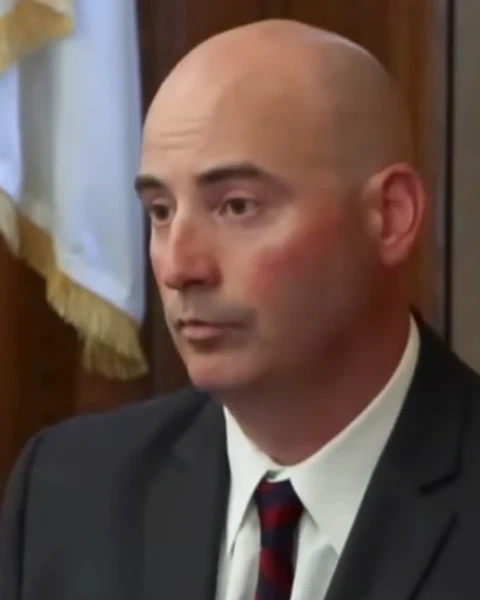
Daniel Whitley
Testimony Impact
Daniel Whitley is a paramedic with Canton Fire who responded to a call at Good Samaritan Hospital on January 29, 2022, and transported Karen Read under a Section 12 psychiatric hold. During the ambulance ride, Read made several statements — about the children she couldn't care for, about whether someone could survive in the snow without a coat for many hours, and about not wanting to live if her husband died — that Whitley documented and later testified to in both trials. His testimony was contested on the grounds that his account evolved across four sworn appearances and that he had personal connections to several Canton figures involved in the case.
Trial 1 vs Trial 2
Trial 2 featured a substantially expanded cross-examination focused on Whitley's ties to Canton insiders and on systematic impeachment using his four prior sworn statements — grand jury testimony, police interview, and two trial appearances. The defense introduced a more structured timeline of how his account evolved, specifically targeting the 'many hours' and 'sitting outside' language as additions that did not appear in his earliest testimony. Trial 1 cross was comparatively brief and centered primarily on Karen Read's MS diagnosis recorded during transport. Redirect in Trial 2 gave the prosecution an opportunity to address the discrepancies directly and have Whitley affirm he had no stake in the outcome.
Notable Quotes From The Record
“She kept saying — if my husband dies, I don't want to be alive anymore.”
The statement that triggered the Section 12 psychiatric hold, though Whitley and his crew initially viewed it as normal grieving rather than a genuine threat of self-harm.
“She asked if somebody could be alive in the snow without a jacket for many hours.”
Read's specific question about surviving without a jacket in the snow — establishes her awareness of the conditions in which O'Keefe was found.
“She kept saying, "I can't take care of these kids. They're not my kids and they're not his kids."”
Read's statement about the children helped Whitley identify the victim as John O'Keefe, known locally for raising his niece and nephew.
“There would be episodes where she would go from crying in her hands to all of a sudden perking up.”
Whitley's observation of Read's fluctuating demeanor during transport, which the prosecution used to characterize her emotional state.
“Generally we get pertinent medical history to pass on to the hospital, so if something were to happen where the patient wasn't able to describe their past medical history, it gets passed on to the next caregiver — which would be the nurses and doctors at the hospital.”
Establishes the routine and reliability of the medical history collection process.
“Just — multiple sclerosis.”
Establishes Karen Read's MS diagnosis as part of her medical history taken during transport.
“It's a disease that's progressive, and— ...has neurological muscle control things involved with it.”
Whitley describes MS as affecting neurological muscle control, potentially relevant to Read's physical state or behavior.
“She picked her head up and said, 'Do you know Kerry Roberts?' And I said, 'As a matter of fact, I do.' And she said, 'Anybody who knows Kerry Roberts wouldn't say that about her.'”
Read's negative reaction to Kerry Roberts is presented as notable given that Roberts had come out in the blizzard to search for O'Keefe.
“She kept asking if there was any chance her husband could be alive, even sitting outside in the snow with no coat on for many hours.”
Read's repeated focus on whether someone could survive exposure is a central prosecution theme regarding her knowledge of O'Keefe's circumstances.
“There is a saying in the medical field: 'You're not dead until you're warm and dead.' And I was basically telling her the stories of children falling through ice and falling into rivers and being underwater for multiple hours.”
Establishes the context in which Read was asking about cold exposure survival — Whitley was trying to offer hope, while Read kept pressing the question.
“She kept saying, 'I can't take care of these kids. I can't take care of these kids. They're not my kids and they're not his kids.'”
Prosecution presents Read's statements about the children as revealing her mindset about her relationship and responsibilities.
“I don't think I mentioned snarkiness that day. No.”
Whitley concedes the damaging characterization was not contemporaneously reported.
“She was crying in her hands. And I said, 'You know, it looks like you have a very strong support system.' And she picked up her head — she had her face in her hands, she picked up her head out of her hands, looked at me and said, 'Do you know Kerry Roberts?' And I said, 'Matter of fact, I do.' And she said, 'Anybody who knows Kerry Roberts wouldn't say that about her.'”
The full account of the Kerry Roberts exchange that Yannetti then systematically undermines as a late-emerging characterization.
“Not in April of 2022. No.”
Whitley concedes the 'many hours' language was not in his grand jury testimony given less than three months after the events.
“Correct. It could have been a different word.”
Whitley admits his testimony about Read saying 'sitting outside' may not have been accurate, further undermining reliability of his evolving account.
“She asked if he could be alive without a jacket in the snow for many hours. So again it was a question, sir.”
Whitley concedes Read's statement was a question born of distress, not a declarative admission of knowledge.
“No, not even close.”
Explains why grand jury testimony was less detailed — it was much shorter, accounting for omissions the defense highlighted.
“I remember it distinctly. She was looking at me.”
Whitley affirms a vivid memory of Read's question about surviving in the snow, reinforcing its significance despite cross-examination suggesting it was embellished.
“No, we do not write — generally we only write patient complaint, what happened, and what they did. Not their opinions or anything like that as to what's going on.”
Explains why certain conversations with Read were absent from written reports — standard EMS documentation practice excludes patient opinions.
Key Moments
- Whitley testified that during transport, Read repeatedly asked whether someone could survive outside in the snow without a coat for many hours — a question the prosecution presented as evidence of her knowledge of the circumstances in which O'Keefe was found.
- Read's statement that she couldn't care for 'these kids' because 'they're not my kids and they're not his kids' helped Whitley identify the victim as John O'Keefe, known locally for raising his niece and nephew after the deaths of his sister and brother-in-law.
- Read's declaration that she didn't want to live if her husband died triggered the Section 12 hold, though Whitley and his crew initially assessed it as normal grieving rather than a genuine self-harm threat.
- Whitley's observation that Read alternated between crying into her hands and suddenly perking up during transport was presented by the prosecution to characterize her emotional state.
- On cross-examination in Trial 2, Yannetti demonstrated through comparison of Whitley's grand jury testimony, police interview, and trial testimony that key details — including the phrases 'many hours' and 'sitting outside' — were absent from his earliest sworn account and appeared only later, raising questions about whether the account had sharpened or shifted over time.