Person Christina Hanley Trial 1Trial 2← All People
🔬 Expert Witness · MSP Crime Lab

Christina Hanley

Trial 1Trial 2

Testimony Impact

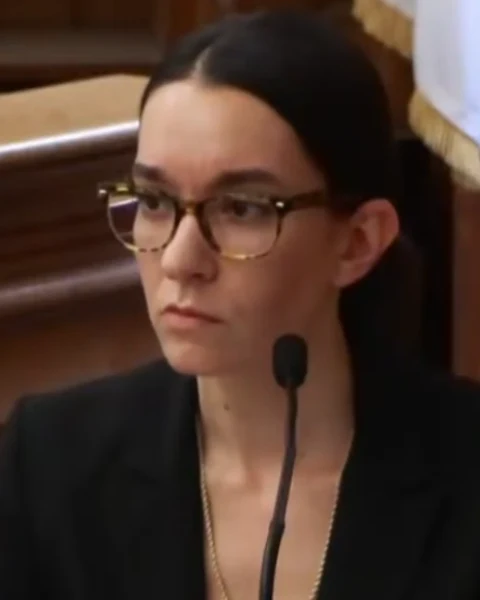
Christina Hanley is a forensic scientist with 16 years at the MSP Crime Lab, specializing in trace evidence analysis using microscopy, GRIM refractive index measurement, FTIR spectroscopy, and microspectrophotometry. She was called by the prosecution in both trials to present her findings on glass and plastic debris recovered from the scene, the victim's clothing, and Read's vehicle. Her testimony centered on whether glass fragments from the scene matched the defendant's broken tail light or a drinking glass, and whether plastic debris on the victim's clothing could be linked to Read's vehicle.

Trial 1 vs Trial 2

In Trial 2, Hanley's testimony was expanded across two days (Days 19–20) compared to a single day in Trial 1, with more detailed walkthrough of photographs and instrumental data under Lally's direct. Jackson's cross in Trial 2 was more structured, deploying a visual comparison chart to systematically walk through which items matched which — a technique that made the gaps in the glass evidence chain more explicit. The recross in Trial 2, which did not occur in Trial 1, further underscored that the only bumper-to-scene glass connection ran through the piece recovered by Trooper Proctor, whose conduct was itself under scrutiny.

Notable Quotes From The Record

“An individual characteristic is when a material can be associated with a single source — for example, a physical match.”

Explains the distinction between class and individual characteristics, contextualizing why some findings are definitive matches and others are consistency findings.

“So item 3-2 and the six pieces from 7-12 were at one time together as one unit.”

Establishes a definitive physical match — the broken drinking glass and scene glass were once a single object.

“the examined portion of the piece of clear glass that I labeled as E from item 3-3 could have originated from the examined portion of the piece of clear glass from item 7-14, or from another source with the same characteristics.”

Links glass from the vehicle's bumper to glass found on the road, though stops short of a definitive match — consistent with but not uniquely identified.

“the red plastic from 7-18.18 could have originated from the red plastic from item 3-1, the tail light, or from another source with the same characteristics.”

Links plastic debris found on the victim's clothing to the defendant's broken tail light, a key piece of the prosecution's theory connecting the vehicle to the victim.

“They were found to be consistent — sorry, they are found to be consistent in physical and instrumental properties.”

Hanley corrects Jackson's use of 'match' to the weaker forensic standard of 'consistent,' a distinction that cuts both ways.

“Correct. That is correct.”

Confirming that the cup was not found to match any items found on the bumper — severing the prosecution's implied glass-to-vehicle link.

“So, 7-14 — there was no physical match between 7-14 and 3-2 or any of the pieces in 7-12.”

Confirms the single scene glass piece stands alone — not matching the cup or the other nine scene pieces, weakening its evidentiary connection.

“Yes, it was six pieces from 7-12. And then it was piece E from item 3-3, from the bumper of the defendant's vehicle, that was found to be — — consistent with clear glass that was found on the ground at 34 Fairview Road, correct.”

Hanley reconfirms both the drinking glass match and the bumper glass consistency finding in a single answer, reinforcing the prosecution's physical evidence connections.

“So the Locard exchange principle — it's kind of the foundation or basis of trace analysis. It is a principle that states that when two objects or two items come into contact with each other there is an exchange of material.”

Establishes the scientific foundation underlying all trace evidence analysis in this case.

“So a physical match is if an item is broken and those pieces are compared to each other and their broken irregular edges fit back together — and they have a jigsaw fit, that would be considered a physical match.”

Defines the physical match standard for the jury before presenting her findings.

“there were, I believe, six pieces of glass from item 7-12 that fit mechanically to the cup that was also recovered from the road, item 3-2.”

Key finding linking scene glass to the broken drinking glass through individual-characteristic physical matching.

“there was no physical match between those two pieces from the bumper, item 3-3, compared to the glass pieces and the cup that were recovered from the road.”

Establishes that the bumper glass did not physically match either the drinking glass or the road glass pieces.

“So a physical match is basically — if an item breaks and those items have broken irregular edges, if those pieces come back together like a jigsaw fit, then it's a physical match and they were at one time together as one larger unit.”

Defines the physical match standard for the jury in plain terms.

“So the largest for the red plastic, the largest piece measured — just for visual purposes — it's roughly like the size of a grain of rice. The rest of the pieces were smaller than that.”

Conveys the extremely small scale of the plastic debris recovered from O'Keefe's clothing.

“So the red plastic that I sampled from the debris from the clothing from 7-18.18 was found to be consistent in color, microscopic appearance, and instrumental properties with the portions that I sampled from the red plastic from the tail light.”

Core prosecution finding linking tail light debris on the victim's clothing to the defendant's vehicle.

“Accordingly, the clear plastic from 7-18.18 could have originated from the clear plastic from item 3-1 or from another source with the same characteristics.”

Standard forensic qualification — consistency does not mean exclusive match, leaving room for defense argument.

“Correct. It could have come from — they could have a common origin, or it could have come from another source with the same characteristics.”

Hanley concedes that the plastic match to the tail light is not conclusive — it could have come from any source with similar properties.

“I did not make any notation that I noted portions that were glass.”

Confirms the tail light is entirely plastic, meaning any glass found at the scene cannot have originated from the tail light itself.

“I did not note anything that would be maybe consistent with that.”

No biological material — blood, skin, or tissue — was observed on any glass piece, undermining the theory that glass broke during contact with a human body.

“Nothing. Um, in a physical match comparison, there was no physical match comparison to the cup.”

Hanley's final confirmation that bumper glass and the cup are unrelated.

“I just have the description um that's put in the LIMS system when it's submitted to the lab.”

Establishes Hanley's limited knowledge of evidence provenance — she works from lab submissions, not field recovery details

“No, there was not.”

Confirms the defense chart excluded the clothing-to-tail-light connection from its visual summary

“Correct. To, uh — there was no physical match to the pieces that I compared for physical match from the bumper. Um, there was no physical match to the glass cup, 3-2. 3-2.”

The witness confirms Jackson's characterization in her own technical language.

“It was consistent with item 7-14.”

Hanley confirms the connection but uses the neutral exhibit number rather than adopting Jackson's Proctor framing.

Key Moments

Locations Touched By This Testimony

Appearances (8)