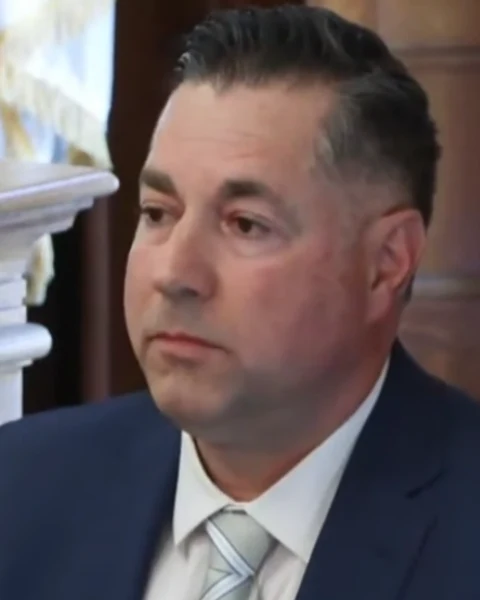
Charles Rae
Testimony Impact
Lt. Charles Rae served as a Canton PD patrol shift commander on the morning O'Keefe's death was reported. After being briefed during shift change that an unresponsive man had been found on Fairview Road, Rae drove to O'Keefe's residence at 1 Meadow Ave to check on O'Keefe's two minor children. His testimony in both trials focused on the narrow scope of that well-being check — what he observed at the property, what footage documented his arrival, and critically, what he did not do: he did not inspect Karen Read's vehicle parked in the driveway.
Trial 1 vs Trial 2
In Trial 1, Rae's direct examination was split across two days (Days 6 and 7), with cruiser and Ring footage introduced across both sessions. In Trial 2, the same testimony was consolidated into a single proceeding on Day 10. The Trial 2 examination added an explicit question about the chain of decision-making for the well-being check, with Rae acknowledging uncertainty about whether it was directed by the former chief of police or self-initiated — a detail not prominently surfaced in Trial 1.
Notable Quotes From The Record
“I was advised that there was an unresponsive man found in the snow on Fairview Road.”
Establishes how information about O'Keefe's discovery was relayed within the department.
“We believe that there may be two young unattended children, and knowing that both Mr. O'Keefe and Miss Read wouldn't be returning to the house anytime soon, we wanted to check on them.”
Explains the purpose for the trip to 1 Meadow Ave — a welfare check on O'Keefe's minor children.
“In this case, it's a fenced backyard, so I'm not going to be going back there, because in this case we weren't looking for someone that might be a dead body — we were looking for two children that would be up and active.”
Describes the limited scope of the well-being check and why no thorough search was conducted.
“After we left and weren't able to raise anybody, shortly thereafter we did find out that the children were staying with friends or family.”
Resolves the well-being concern that prompted the visit — the children were safe.
“Within the driveway itself, I noticed those two vehicles in the driveway.”
When asked if he noticed anything on the ground beyond the vehicles, Rae says no — establishing no visible debris at that time.
“It looks like I'm heading towards — from this vantage point, to the right, which, if you look at the house from the front, would be the left — to see if there's anything in plain view through the windows, if I could see anybody, any persons, any activity.”
Shows the scope of the well-being check — Rae looked through windows but found no one.
“I can't recall whether it was an order from somebody. I don't think it was an order, but it might have been at the suggestion of the former chief of police. Either that, or it just developed organically, but one way or the other we had decided that the right thing to do would be to do a well-being check of the home at 1 Meadows Ave., which is the decedent's residence.”
Establishes the chain of decision-making for the well-being check and Rae's uncertainty about whether it was directed or self-initiated.
“At that time, we were under the impression that there may be two unattended young children at the home.”
Explains the stated purpose of the well-being check — concern for O'Keefe's minor children.
Key Moments
- Rae described arriving at 1 Meadow Ave at approximately 8:23 a.m. with Sgt. Lank, accompanied by cruiser 682 dashcam footage and Ring doorbell camera footage shown to the jury documenting the visit.
- Rae testified that he observed two vehicles in the driveway — including Read's — but did not inspect them, and noted no debris or objects on the ground, establishing the condition of the scene at that early hour.
- The prosecution specifically elicited that Rae paid no attention to the right rear passenger side of Read's vehicle, anchoring the timeline of when the taillight damage was and was not observed by law enforcement.
- Rae explained the limited scope of the check: he looked through windows and checked doors but did not search the fenced backyard, as the visit was a welfare check for the children, not a search for a potential deceased person.
- The well-being concern that prompted the visit was resolved shortly after Rae left — the children were confirmed safe, staying with friends or family.